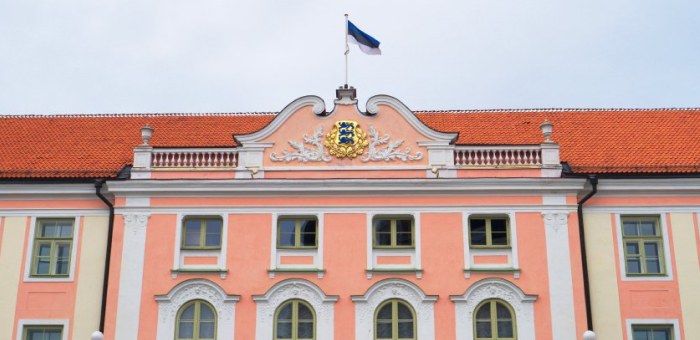


The Parliament of Estonia passed a law that allows the use of assets of Russian persons, which were frozen under international sanctions, to compensate for the damage caused to Ukraine by the war.
This is stated in a message on the website of the Parliament of Estonia.
65 deputies voted for the adoption of the law. Three members of the Riigikogu voted against.
According to Hendrik Johannes Terras, the head of the Constitutional Commission, creating a legislative regulation for the use of frozen assets is a difficult task that several allied countries and international organizations are solving, and Estonia plays a pioneering role here.
“Russia is an aggressor country, compensation for war damages cannot lie on the shoulders of Ukraine and its allies. Russia is responsible for causing damage, and it must also bear this responsibility”, – he said.
As stated by Terras, the adopted law of Estonia offers a mechanism that provides for the responsibility of those people and companies that are directly involved in the commission of aggression or contribute to it. He also added that the Constitutional Commission has gone more than halfway in creating the relevant regulations with various parties, including foreign experts.
In order to start the procedure for the use of frozen assets in Estonia, Ukraine must submit a corresponding request to Estonia and agree on the terms of the use of the property and the transfer of the right of claim to the owner of the property as an advance payment for compensation.
Only if the involvement of the owner of the property in illegal actions is proven, his property can be used to compensate for damages.
It is stipulated that the Ministry of Foreign Affairs of Estonia must find out all the circumstances and legal relations regarding the property, as well as establish the absence of exceptional circumstances that would outweigh the interests of the person concerned.
According to the law, the owner of the property has the right to appeal the decision on the use of the property in an administrative court.