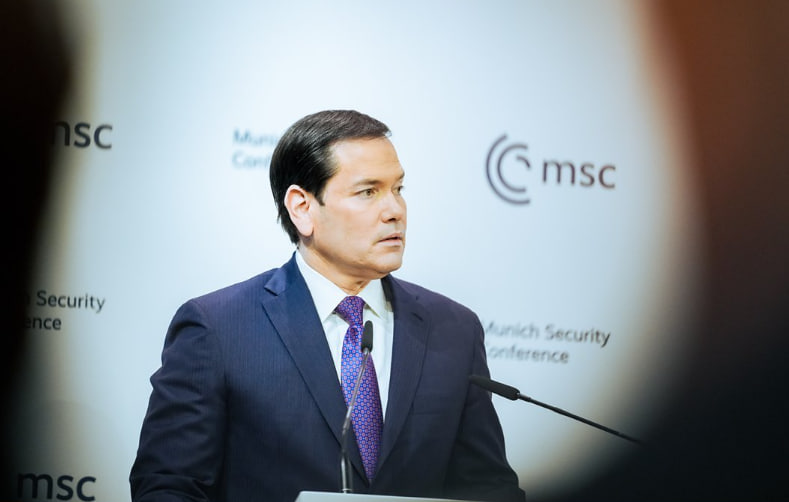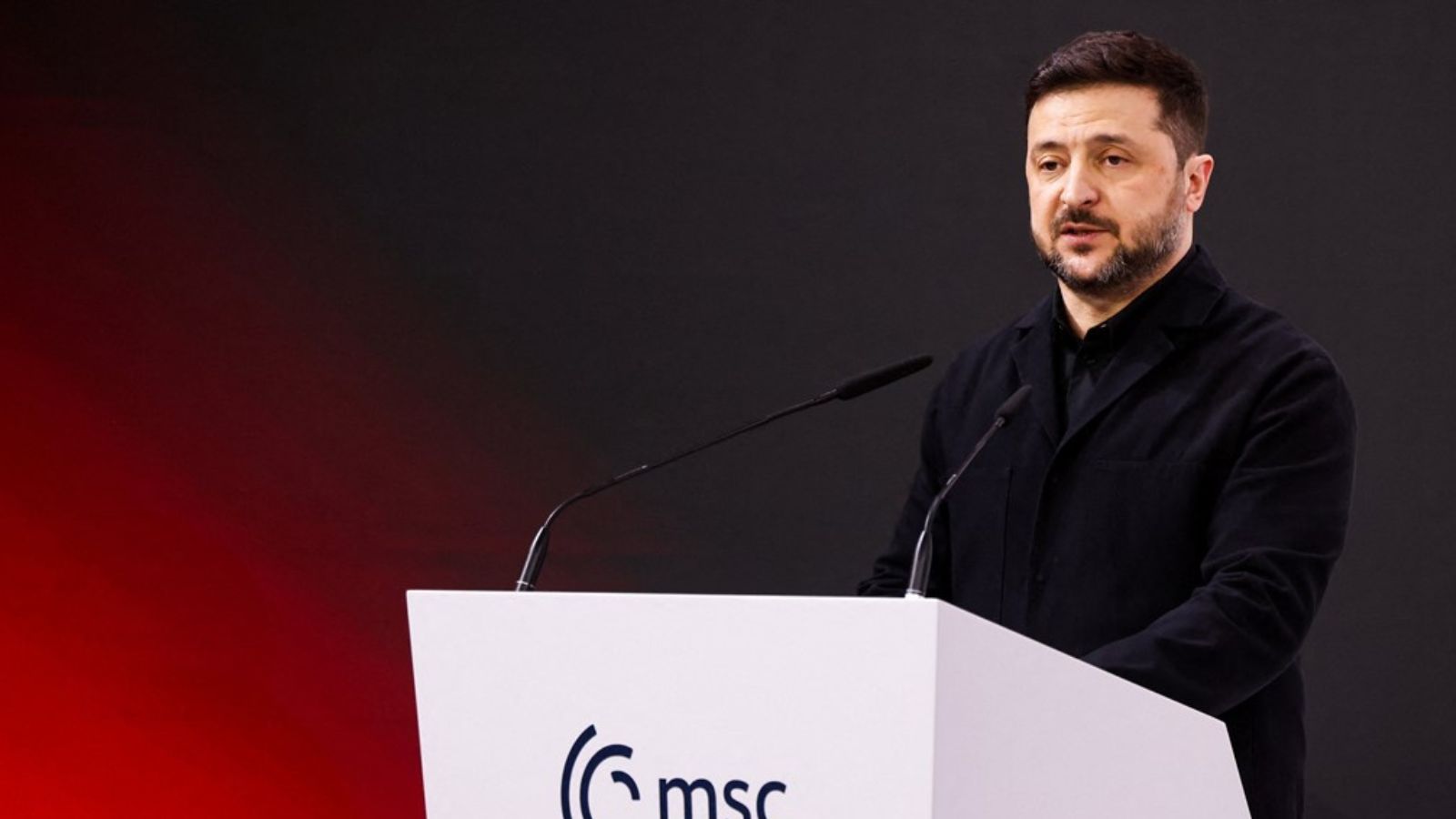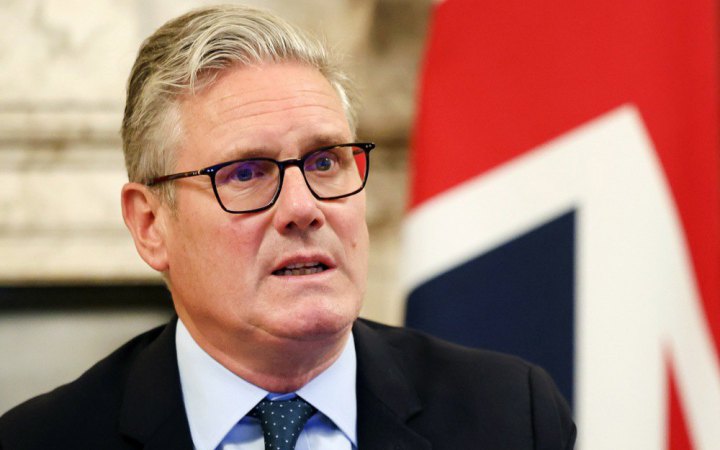


Senior officials from the EU, the UK, and China made statements at the Munich Security Conference. They were about joint efforts in response to Russia. They made statements during speeches on February 13 and 14.
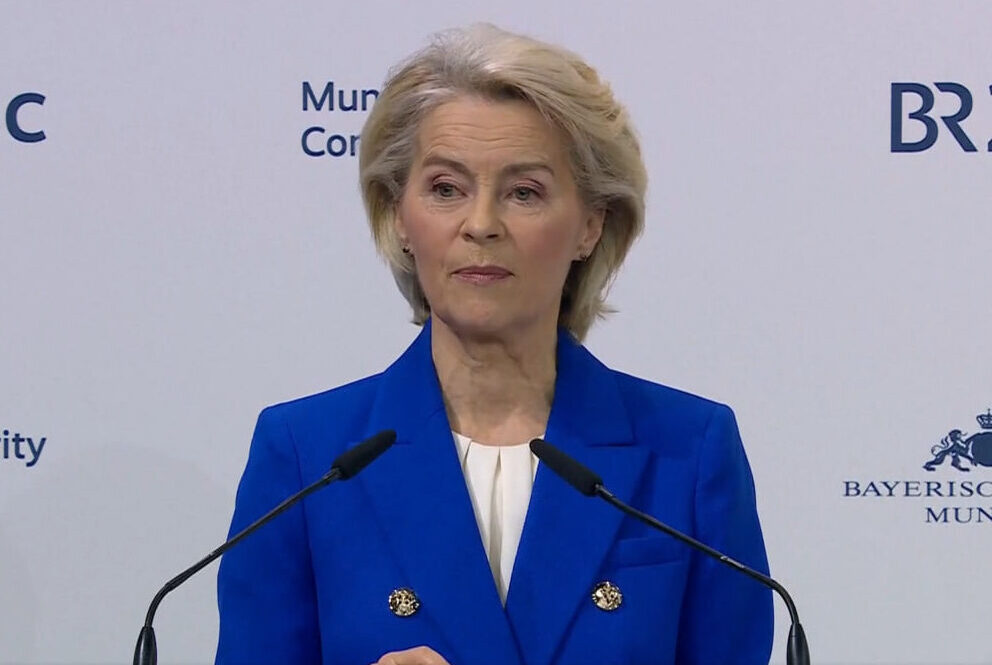
Ursula von der Leyen on Ukraine’s loan
European Commission President Ursula von der Leyen called on Europe to strengthen its defence industry during her address at the Munich Security Conference on February 13.
She said a stronger European defence base would not only contribute to the security of the EU and NATO. It will also create jobs and drive innovation across the bloc. Von der Leyen highlighted Europe’s recent progress in defence. She noted that €800 billion was mobilised for the sector in 2025, including through the SAFE joint procurement programme worth €100 billion. She also referred to a major EU loan provided to Ukraine. The package amounts to €90 billion, with €60 billion allocated for defence-related spending.
“That loan will have to be repaid by Ukraine only if Russia pays reparations,” von der Leyen said.
She added that procurement should be carried out only within Ukraine or the EU.
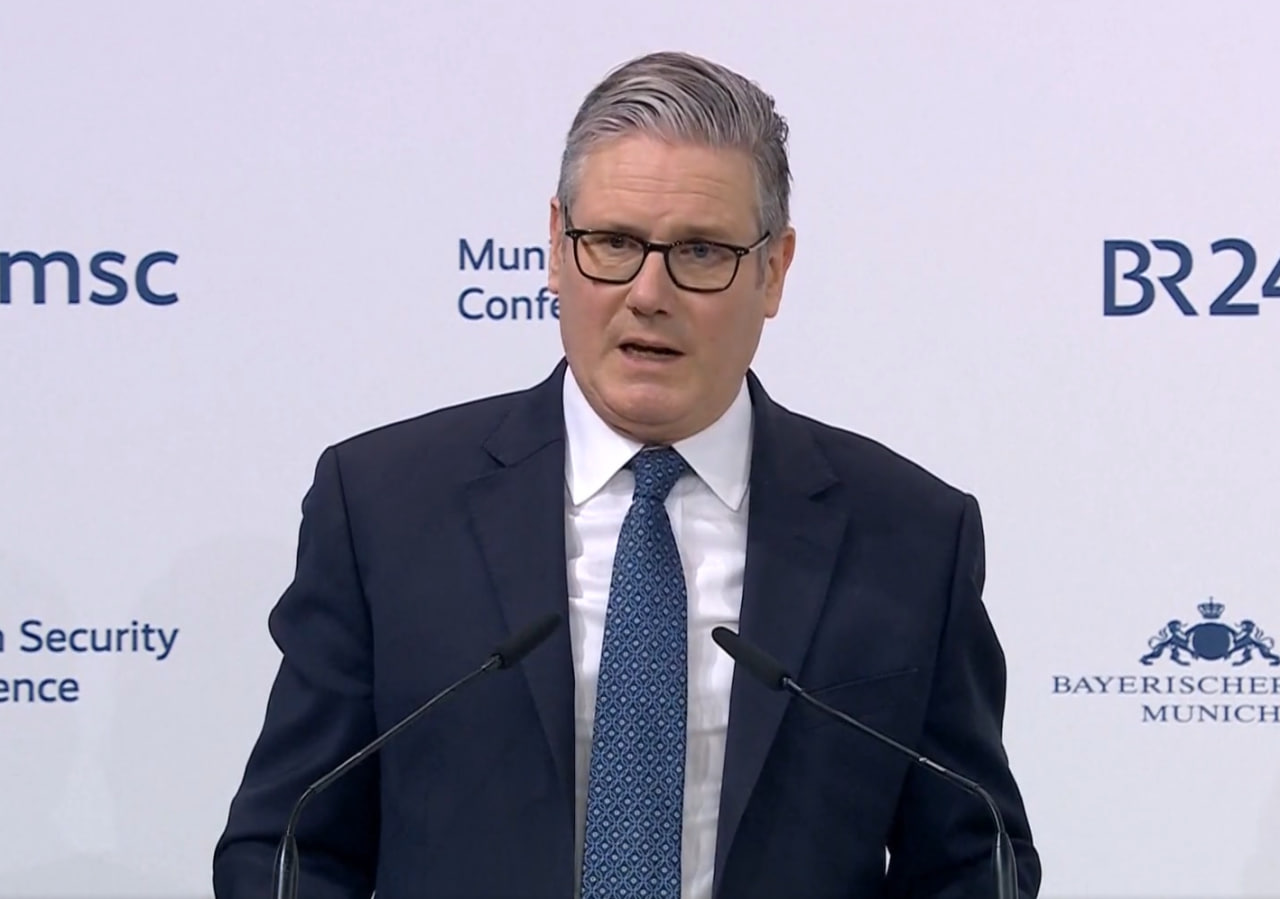
Keir Starmer on joint resistance against Russia
UK Prime Minister Keir Starmer spoke about the threat Russia poses to modern Europe. Starmer said on February 14 that Russia had made a “has made a huge strategic blunder” in Ukraine, yet continues to rearm. NATO, he noted, warns that Russia could be ready to use force against the Alliance “by the end of this decade.”
According to Starmer, a peace deal alone will not stop Russia, and the broader danger for Europe would only grow.
“We must be able to deter aggression, and yes, if necessary, we must be ready to fight, to do whatever it takes to protect our people, our values, and our way of live,” Starmer said.
He stressed that Europe must prioritise cooperation and set aside short-term political concerns. Starmer said the warning signs are there. Russia “has proved its appetite for aggression, bringing terrible suffering to the Ukrainian people.” He also pointed to the spread of Russian hybrid threats across the continent.
“[Russia’s] hybrid threats extend across our continent, not just threatening our security, but tearing at our social contract, collaborating with populists who undermine our values, using disinformation to sow division, using cyber-attacks and sabotage to disrupt our lives and deepening the cost of living crisis,” Starmer said.
China and the US: focus on cooperation
Chinese Foreign Minister Wang Yi said Beijing and Washington should focus on cooperation rather than divisions. He stressed that China and the United States must adhere to principles of equality and mutual respect.
“We should work together to implement the important consensus reached by the two heads of state, so that 2026 becomes a year in which China and the US move toward mutual respect, peaceful coexistence, and win-win cooperation,” Wang said.
China’s Foreign Ministry described the meeting as constructive. It added that both sides agreed to jointly implement previous agreements reached between Chinese President Xi Jinping and US President Donald Trump. So far, the US State Department has not issued a statement regarding any meeting between Rubio and Wang.
Earlier, The Ukrainian Review reported that the US administration is not sure whether Russia is truly committed to peace in its war against Ukraine. US Secretary of State Marco Rubio made the remarks while speaking at the Munich Security Conference on the morning of February 14.