

Rivne
It is impossible to travel in Ukraine without thinking about the gullibility of the West after the collapse of the Soviet Union. I am sitting in a coffee shop in Rivne, barely halfway between the Polish and Russian borders. There is peace in the west and war in the east. What does Vladimir Putin, the Russian leader, want? Is it not enough for him to lead the largest, but not the richest, safest, or most prosperous country on the planet? Apparently not.
Putin’s propaganda claims that Ukrainians are not Ukrainians, but Malorossians, natives of a greater Russia, his Russia. Even if it was true, so what? Are 40 million hostile Ukrainians forced into his fascist empire really better for Russia than a peaceful neighboring country? Why spend billions and billions of dollars and euros – and up to half a million dead and maimed Russians – on a grotesque interpretation of history? Why make yourself an outcast in the international community? Why subject yourself to sanctions and isolation? What is the meaning of it all? Maybe we are just dealing with one more example of political madness.
Over coffee in Rivne – two Ukrainians, two Danes – we discuss Western complacency about the belligerent Russia that Putin created after the collapse of the Soviet Union in 1991, complacency that has contributed to today’s political turmoil in Eastern Europe. Our democratically elected leaders first allowed Putin to destroy Chechnya, seeing it as an internal Russian affair. Chechnya was followed by wars in Georgia and Syria, then two wars in Ukraine, the latest since 2022. Actually, it is quite similar to Adolf Hitler’s Nazi Germany in the 1930s: Saarland, Austria, Czechoslovakia, Memel. Then, in 1939, Poland and the Second World War.
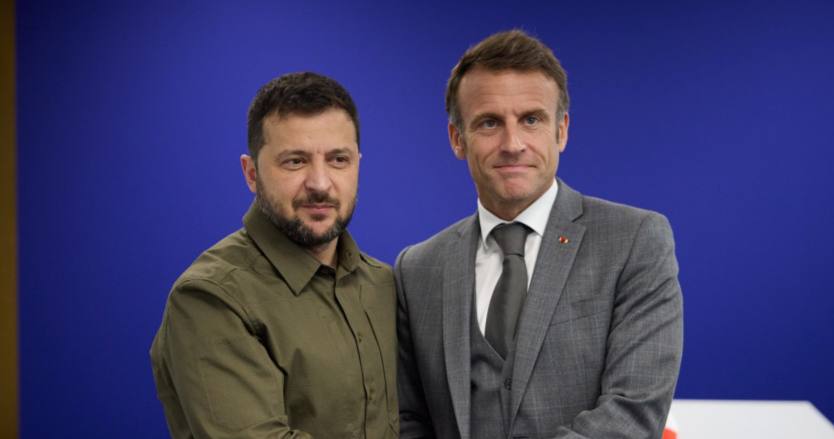
There is now a feeling – not a fear – that the barometer is pointing to World War III: on one hand the Western democracies, on the other a criminal and brutal Russia, aided by North Korea, Iran, and China. Poland’s clear eyed Prime Minister Tusk is one step ahead: “The war started two years ago. It is here and now.” French President Macron said recently that Europe risks perishing, if it does not achieve what he calls military sovereignty. He wants Europe, the whole of Europe, not only the EU, to be able to defend itself independently of the United States, which is increasingly interested in the Pacific at the expense of the Atlantic.
Eastern and Central Europe is rearming like never before, knowing from historical experience, what real Russia is. Defense budgets are exploding. The Baltic republics and Poland are building a state-of-the-art defense system from the Gulf of Finland to the Carpathians. They support Ukraine economically, politically, and militarily, and they are ready to send soldiers, who can take on security tasks in the hinterland, thereby freeing Ukrainian personnel to serve at the front. “The West cannot afford to be naive,” Ukrainian political scientist and military analyst Oleksandr Musiienko tells me. “A great war is already underway in Ukraine.” Ahead of the EU elections in June and the US elections in November he warns against hybrid and electronic warfare, espionage, disinformation, propaganda, and sabotage. “We are dealing with an axis of evil from Moscow to Tehran and from Beijing to Pyongyang,” he says. “The goal is to destroy the existing international legal order.”
The war is not immediately noticeable in Rivne (almost half a million residents in peacetime, but thousands fled abroad, and thousands more are at the front). I see no ruins and hear no sirens or guns or cannons. But the fighting is near by and is felt like a tremor in the air: genocide, destroyed cities, posing the big question: why didn’t the West stop Putin in Georgia in 2008 or in 2014, when that Hitler clone attacked Crimea and the Donbas? Why do we not, even now, provide the Ukrainians with all the weapons, which they need to stop a global catastrophe? And why do we put limits on their use of the weapons, which we do supply? Some answers, hopefully tough, may be delivered at the forthcoming NATO-summit in Washington.
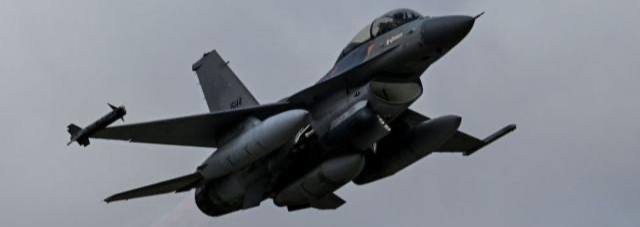
Anyone, who knows the basic figures and can distance him- or herself from the pictures of a front, which has been frozen, more or less, since the spring of 2022, will realize that with the increase in military assistance to Kyiv this summer, the Ukrainians should be able to begin an offensive a year or so from now and then, in the following four or five years, drive the Russian aggressor back towards the international frontier. Putin surely knows both the figures and the fighting ability of the Ukrainians, and for this reason has launched his offensive east and north of Kharkiv. He is in a hurry. If he has not achieved a strategic turning point by the end of this year, he faces defeat.
Putin is as vulnerable in 2024 as Hitler was in 1943. Of the army that attacked Ukraine in 2022 nothing remains. New soldiers are recruited with varying degrees of success in the poorest parts of the empire, rarely in politically sensitive cities such as Moscow and St. Petersburg. Obsolete weapons are taken out of the arsenals and polished, second or even third-class weapons are imported from Iran and North Korea. China is also helping, but not to the extent Putin would like. The ideal situation for Beijing is that the Kremlin bleeds and bleeds. Putin, who wanted his war to restore what he saw as Russia’s lost greatness, has so far ended up being the vassal of Chinese leader Xi Jinping. What a disaster.
The final document coming out of the NATO summit in Washington in July will state the inevitable: the member states may hesitate and hope, but they will not allow fascist Russia to win the war in Ukraine. Even without the Americans (no one know where the US will be in a year’s time), the Europeans can win the ongoing war. Putin’s useful idiots in the West will negotiate. To achieve a fake peace? To cede territory to an aggressor? To encourage further attacks on NATO countries around the Baltic Sea? Questions swirl across and around the coffee table in Rivne. “We have suffered so much, our soldiers have suffered, and we have suffered with them,” says Tetiana. “We have lost family, friends and acquaintances. But we have not lost faith in the West. I really hope that we are not gullible.”
By Per Nyholm
*These opinions are solely those of the author. The Ukrainian Review takes no position and is not responsible for the author’s words.
Per Nyholm has been a Danish journalist since 1960. He is based in Austria and is a columnist and foreign correspondent at the Jyllands-Posten, a liberal Danish daily newspaper.
Tetiana Stelmakh adapted this text for The Ukrainian Review.