

“Poland was always a sore point in Russian thinking. Poland lay between Europe and Russia. Whoever ruled Poland ruled Europe.
Warszawa
Poland has had its ups and downs in its thousand-year history. In the late Middle Ages, Warsaw and Krakow ruled over all the land from the Baltic Sea to the Black Sea. The Poles expelled a Turkish army from Vienna in 1683. Partitions and state dissolution followed. In the 19th and 20th centuries, while Poland did not exist at all, Polish soldiers fought on the battlefields of Europe, from Waterloo to Monte Cassino, under the slogan: “Za naszą i waszą wolność” (For our freedom – and ours).
Independence and sovereignty were reestablished towards the end of the First World War, and in the first half of the 21st century, Poland clearly is on the rise. It is being felt before Sunday’s parliamentary elections, which are taking place in the shadow of the archenemy Russia’s war of aggression against Ukraine. Poland is sheltered by its eastern neighbor, which it assists with all available military and political means, including space for a million refugees. A minor dispute over Ukrainian grain exports is just that – a minor dispute.
The election to the Sejm and Senate basically is one between Jaroslaw Kaczynski’s national conservative, EU-sceptic, and democratically not entirely spotless party, called Law and Justice (PiS), and the liberal Civic Platform under former EU President Donald Tusk. Brussels is betting on Tusk. For NATO and for the EU, the most important question is: What does Poland want in Europe, which as a whole is threatened by Vladimir Putin’s fascist Russia? The Poles’ answer is crystal clear: more defense.
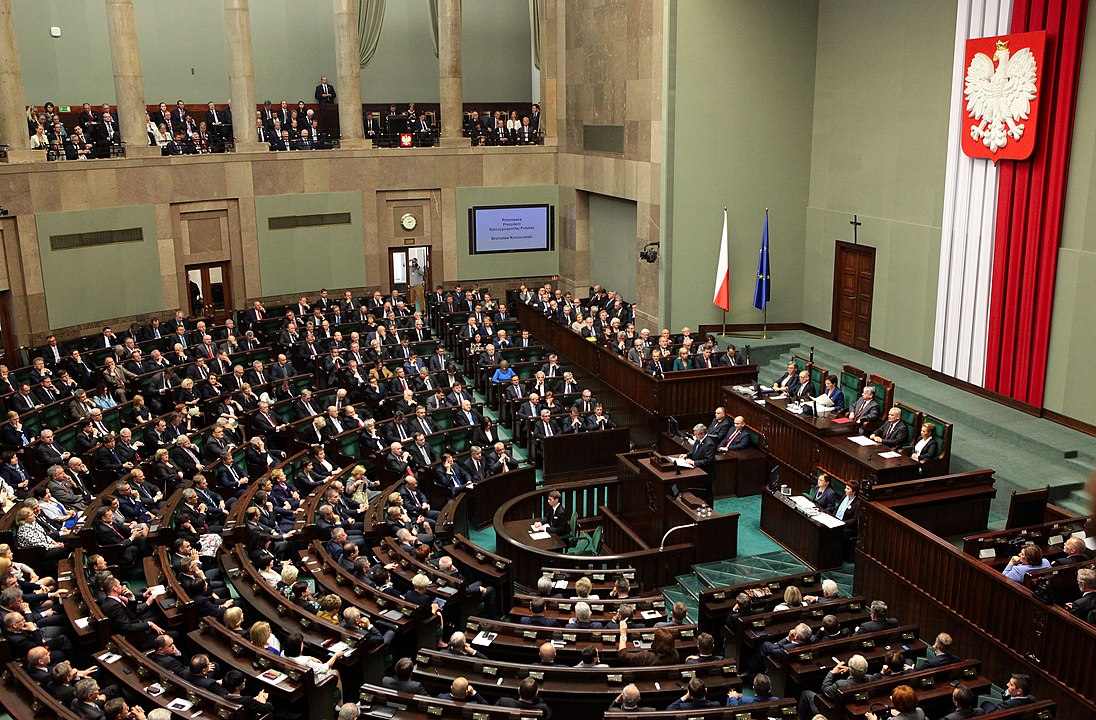
No one wants – as in 1939, when Nazi Germany and Communist Russia divided Poland between them, triggering the Second World War – to be run over by a hostile power, lurking in the neighborhood. Four percent of the gross domestic product is currently allocated to military armaments. The armed forces, including the Home Guard and Civil Defense, are to be expanded from 175,000 to 300,000 men. Everything is acquired: 180 tanks here, 800 armored vehicles there, hundreds of howitzers, precision missiles, helicopters, drones, and fighter jets. The shopping list is long, and the billions roll. “Better debt than occupation,” is Kaczynski’s slogan.
Army Day in August was a success. Recently, I walked from the traditional Sunday concert in front of the Chopin monument in Parc Łazienki back to the city center. Along the way, For about half an hour I shared a bench with two elderly ladies. They were fine with the military spending, and they intended to vote for PiS. “I grew up under the communists and worked as a teacher,” said one. “I taught English and Latin at a high school. Everything was censorship and lies. Now we have our freedom, and we must be able to defend ourselves. I know the Russians. They hate us and they want to rule us. Just like they hate the poor Ukrainians and want to rule them.”
Poland was always a sore spot in Russian thinking. Poland lay between Europe and Russia. Whoever controlled Poland – Russia or Germany – controlled Europe. Moreover, Poland was the civilized European nation that both Tsarist and Communist Russia had to dominate in order to look like, but not be, European and civilized in their own eyes. That Putin’s Russia should think the same, regarding Ukraine is obvious to everyone.
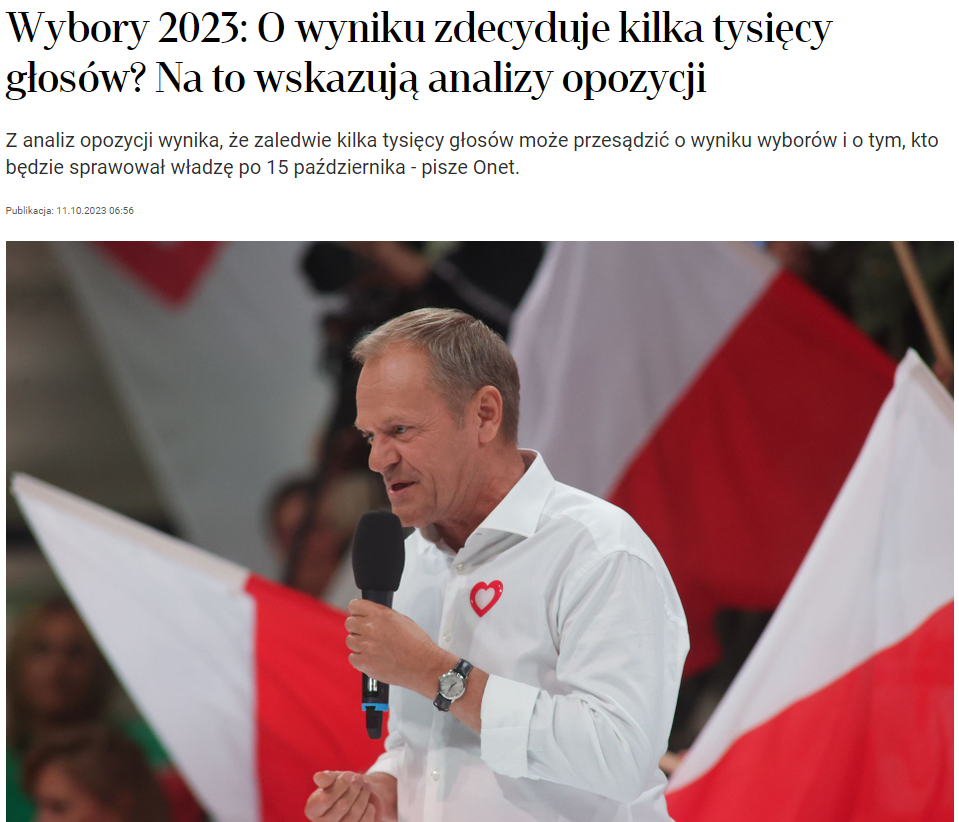
Poland, claims Rzeczpospolita, Warsaw’s leading conservative newspaper, these days is catching up on Germany, France, and Great Britain. Poland, with 38 million inhabitants, aims to be a European great power. Tusk and his liberals want the same. The Poles invest in Ukraine’s victory but prepare for war, the underlying feeling being that the big capitals of the West, Berlin, Paris and Brussels, are not quite up to the challenges of the future. Can that future belong to the energetic states of Northeast Europe? To Poland, to the Baltic Countries and to rebuild Ukraine, which has rid our continent of an old-fashioned, brutal, and clumsy Russia? I would rather bet on it.
Author: Per Nyholm
Danish journalist since 1960, based in Austria, columnist and foreign correspondent at the liberal Danish daily newspaper Jyllands-Posten. This text was translated and adapted for The Ukrainian Review by Stanislav Kinka.
Per Nyholm’s latest book, “Journeys in the Land of Blood” (Barcelona and Copenhagen, 2023), is freely available to any serious Ukrainian publisher, who might want to publish it.