

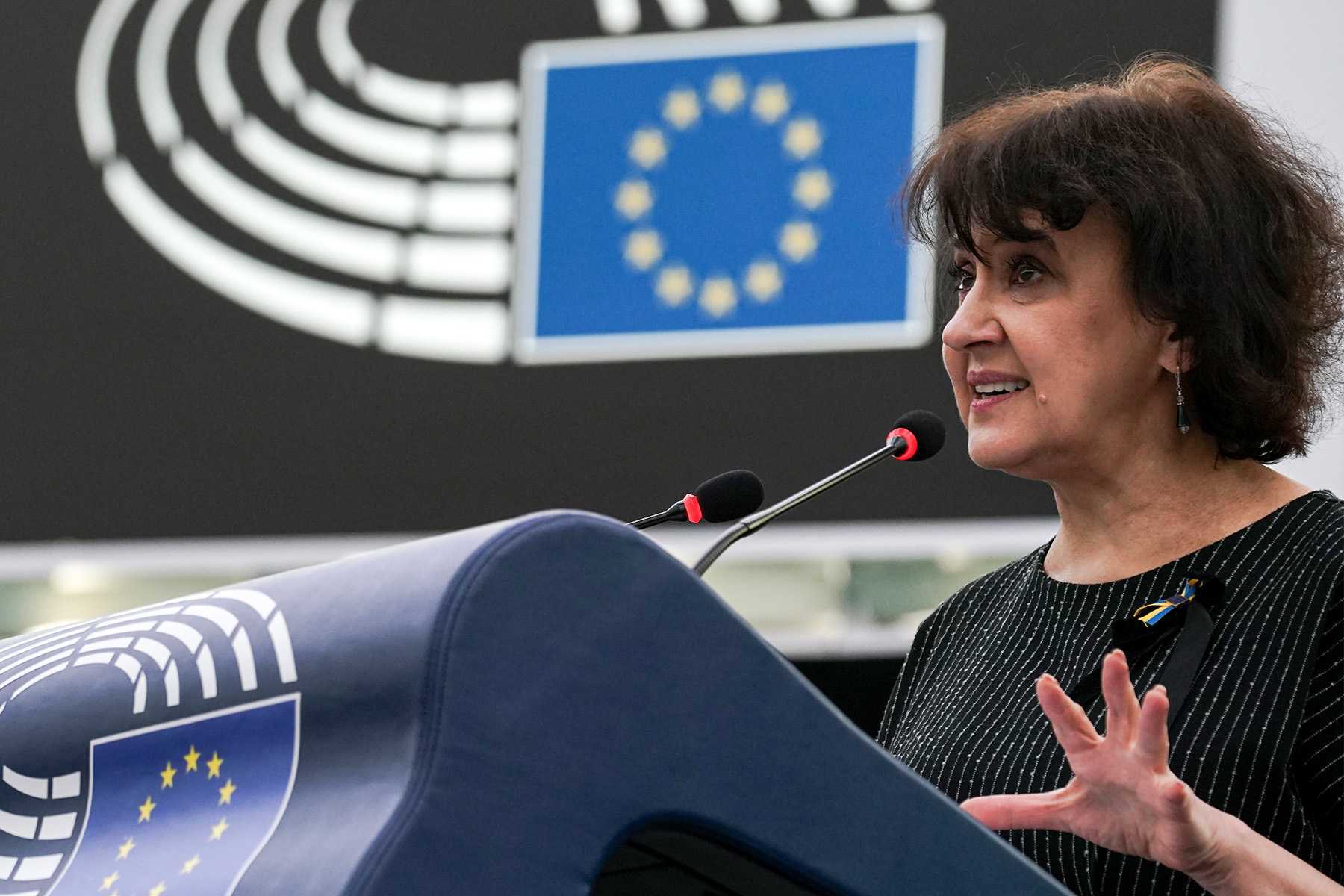
On June 26, 2024, the Parliamentary Assembly of the Council of Europe (PACE) passed a resolution titled “Countering the Erasure of Cultural Identity in Times of War and Peace,” authored by Ukrainian MP Yevhenia Kravchuk, which received 105 votes in favour.
This resolution introduces groundbreaking measures aimed at safeguarding Ukrainian culture and protecting Ukrainian identity. It condemns the systematic policy of Russification imposed by the Russian Federation since 2014 in the occupied territories of Ukraine. The policy, which aims to deny Ukrainian cultural identity, language, literature, and history. The resolution explicitly defines the deliberate destruction of cultural heritage and the erasure of Ukrainian cultural identity as war crimes and crimes against humanity. It also identifies these actions as indicative of a specific genocidal intent to obliterate Ukrainian national identity.
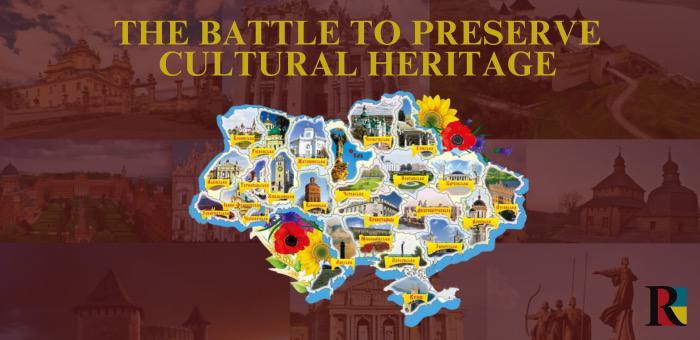
The extent of Russia’s efforts to undermine Ukrainian national identity is abundantly clear. Consequently, the Ministry of Culture and Information Policy of Ukraine (MCIP) remains vigilant in documenting the destruction of cultural heritage sites in Ukraine due to Russian aggression. From February 24, 2022, to May 25, 2024, a total of 1,080 cultural heritage sites have been reported destroyed or damaged. Among these, 121 hold national significance, 879 are locally significant, and 80 were recently identified. The majority of these sites suffered destruction in the regions of Kharkiv, Odesa, Donetsk, and Kherson.
As of July 2024, almost the entire territory of Luhansk and significant parts of Zaporizhzhia, Donetsk and Kherson regions are still under temporary occupation, which makes it impossible to calculate the exact number of cultural institutions affected by the hostilities and occupation.
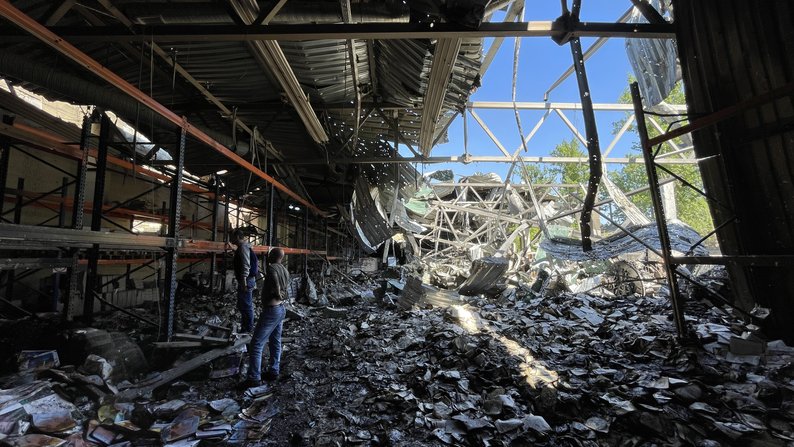
Missile strike on Factor-Druk in Kharkiv
On May 23, 2024, a Russian missile struck the Factor-Druk printing complex in Kharkiv, resulting in devastating consequences. According to the regional prosecutor’s office, over 50 employees were present at the facility during the attack. Tragically, seven individuals lost their lives, while sixteen others sustained injuries. The missile strike caused extensive damage to the printing house, resulting in the destruction of 50,000 books that were consumed by fire.
Factor-Druk stood as one of Europe’s largest full-cycle printing complexes, pivotal in printing books for numerous Ukrainian publishers. Over 15% of its production catered to European clients, highlighting its significant role in the region. The printing house played a crucial role in Ukrainian media, printing every third book and every tenth newspaper in the country. Notably, Factor-Druk was a primary printer complex for Vivat publishing house and also produced items for KSD, Ranok, Folio, Svichado and Zelenyi Pes.
In response to the devastating attack on Factor-Druk, Ukrainians initiated a supportive flash mob. Vivat, particularly affected by the loss of their books, encouraged people to share photos of their books from this publishing house on social media using the hashtag #factordruk. Despite the destruction, Vivat’s books are distributed in 26 countries worldwide, including the USA, Germany, France, the UK, Poland, Latvia, Estonia, and various Asian countries.
During the XII Book Arsenal ( The International Book Arsenal festival – An annual festival uniting books, literature and art for intellectual exchange), Vivat showcased a poignant display that included salvaged burnt books, fragments of missiles, and surviving printing presses from the attack on Factor-Druk.
A new executed renaissance
The Kharkiv-based Vivat publishing house released the poignant collection “Words and Bullets,” featuring interviews with writers and journalists who joined the Armed Forces or volunteered during times of conflict. Among the notable figures memorialised in the collection are the late Viktoriia Amelina and Maksym Kryvtsov.
Victoria Amelina, recognised with the Joseph Conrad Prize for Literature in 2021, made significant contributions to literature and cultural advocacy. That same year, she established the New York Literary Festival in the village of New York, located in the Bakhmut district. Amelina’s writings have been translated into multiple languages, including Polish, Czech, German, Spanish, Dutch, and English. Her documentation of war included photographing the devastation of schools and cultural centers, as well as preserving the testimonies of survivors and witnesses to wartime atrocities.
In the final years of her life, Viktoriia Amelina became intertwined with the tragic fate of children’s writer Volodymyr Vakulenko. Vakulenko was fatally shot by his captors during the occupation of Izium in the spring of 2022. The day before his abduction, Vakulenko buried his diary under a cherry tree near his home in Kapytolivka, his native village. Following the liberation from occupation, Vakulenko’s parents recovered the diary and entrusted it to Viktoriia Amelina. Together with a group of collaborators, she helped compile Vakulenko’s work into the book “I am Transforming… Diary of the Occupation. Selected Poems,” a project supported by PEN Ukraine, Vivat Publishing House, and the Kharkiv Literary Museum, with assistance from the International Renaissance Foundation.
Renowned writer Oksana Zabuzhko has placed Viktoriia Amelina and Volodymyr Vakulenko within the “New Executed Renaissance” framework Ukrainian artists who lost their lives due to Russian aggression. Similarly, 90 years ago, the intellectual elite of Ukraine was destroyed by Stalin’s totalitarian regime.
After the release of director Taras Tomenko’s film “Budynok Slovo. Neskinchennyy Roman” (“Word House. An Endless Novel”) in May, Ukrainians have rekindled their interest in their literary history and the phenomenon of the Ukrainian cultural “Executed Renaissance” of the 1920s-1930s. Amid the backdrop of Russia’s war against Ukraine, both young and older generations are discovering Ukrainian artists. Books by authors who were destroyed and banned by Soviet authorities are published and find their place on the shelves and in the hearts of Ukrainians.
Director Taras Tomenko describes the film as follows:
These were geniuses, and I do not shy away from using that word. When they were all under one roof, it was an incredible electric charge, an amazing synthesis of energy, imagination, discussions, arguments, and creativity. The 1920s were a time of cultural blossoming in poetry, theater, and more. Without a doubt, the Soviet authorities tried their best to channel this powerful energy towards glorifying communist ideals.
Subsequently, a confrontation unfolded between Soviet special services and writers, involving the destruction of personalities, manipulation, and both psychological and physical pressure. All these mechanisms are currently being used in Russia’s hybrid war against Ukraine but are more perfected due to the development of the internet, social networks, and television. However, I believe the foundations of this pressure were laid in the ‘Slovo’ building in Kharkiv.
The ‘Executed Renaissance’ is one of the most tragic chapters in Ukrainian history. During the 1930s, the Stalinist regime systematically exterminated the Ukrainian academics that shaped our culture. Many figures from the ‘executed revival’ are now studied in Ukrainian literature classes in schools. The Soviet government saw artists as dissidents, threatening to communist ideology, and thus exterminated entire families.
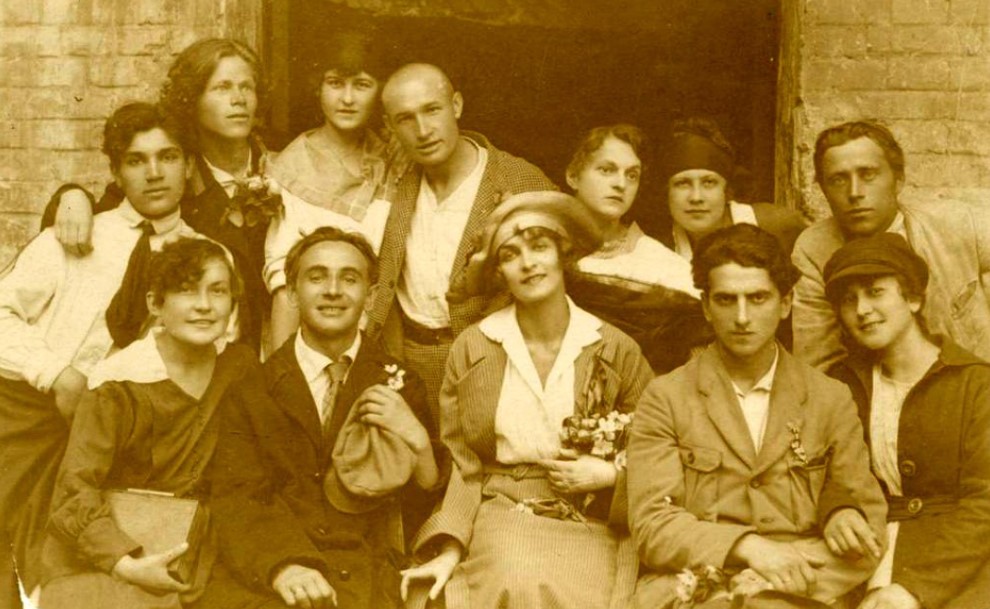
The cultural figures of the 1920s and 1930s who lived and worked in Soviet Ukraine were known as the Red Renaissance. After most of this generation was physically annihilated by the Soviet totalitarian regime, diaspora literary critic Yurii Lavrynenko introduced a new term, the Executed Renaissance.
The impetus for the ‘Red Renaissance’ was the Ukrainization policy of the 1920s. It should not be assumed that the Bolshevik regime pursued this policy out of affection for Ukraine and its culture. Ukrainization was a forced step, a concession to the strong Ukrainian resistance that continued after the defeat of the Ukrainian Revolution of 1917-1921.
The cultural life of the 1920s was closely linked to Kharkiv, the capital of Soviet Ukraine at the time, with the Slovo House of Writers becoming its symbol. Almost the entire Red Renaissance lived and worked literary under one roof, in these “Budynok Slovo” (Word House): Les Kurbas and Mykola Kulish, Volodymyr Sosiura and Valerian Pidmohylnyi, Mike Johansen and Hryhoriy Epik, Mykola Khvylovy and Pavlo Tychyna, Mykhailo Semenko and Mykhailo Yalovy, Ostap Vyshnia and Yuriy Yanovsky, among many others.
The wave of mass repression against cultural figures began in May 1933 with the arrest of writer Mykhailo Yalovy. Without waiting for his arrest, Mykola Khvylovyi, the author of the famous slogan “Away from Moscow!”, committed suicide in his apartment, No. 9, in this exact building. The destruction of the intellectual elite occurred during and after the Holodomor of 1932-1933, both part of the genocidal policy of the Soviet totalitarian regime.
The year 1937 marked the peak of the massacre of Ukrainian artists. From October 27 to November 4, to “overfulfill the plan” to eliminate “enemies of the people” and to honour the 20th anniversary of the Bolshevik coup, NKVD executioners shot 1,111 prisoners from the Solovetsky special purpose camp in the Sandarmokh tract in Karelia. More than 250 of them were members of the Ukrainian intellectual elite. After destroying the artists, the authorities attempted to “kill” their creative work as well. Books by writers and scholars were confiscated from libraries, not published for many years, and artists’ works were destroyed.
Russia’s crimes against Ukrainian culture and its figures are not limited to the 1930s. In 1921, the composer Mykola Leontovych, author of the world’s most famous Christmas melody, “Carol of the Bells,” was murdered in his home by a Soviet secret service agent. In 1985, during Gorbachev’s Perestroika, in the Perm-6 penal colony poet Vasyl Stus died from lack of medical care.
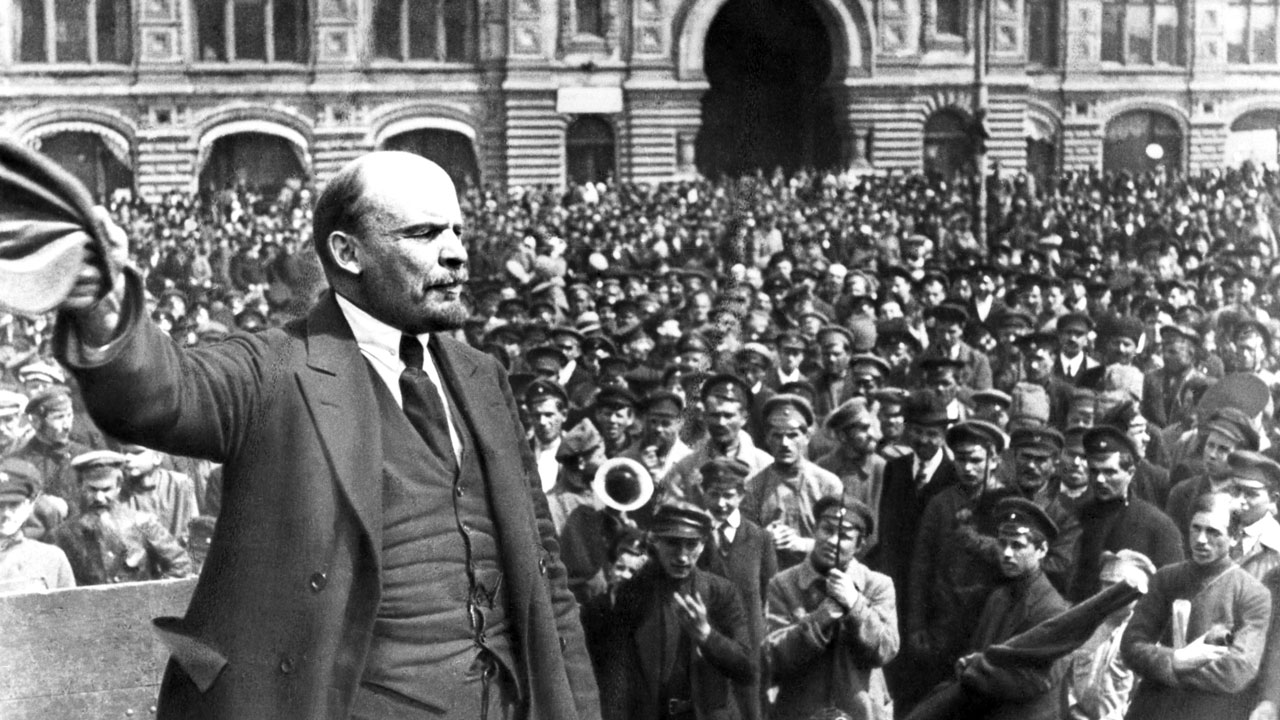
The Communist Party of the USSR viewed literature and art as crucial in the cultural struggle and sought to destroy any manifestations of cultural identity in artists. This began almost 100 years ago but continues to this day. During the full-scale invasion of Ukraine, Russians continue to kidnap and kill the country’s cultural elite.
Legal regulation of the protection of cultural property in Ukraine in times of war
Several legal acts regulate the protection of cultural property in Ukraine. These include the Law of Ukraine, “On the Protection of Cultural Heritage” and the Law of Ukraine “On the Protection of Archaeological Heritage.” Additionally, the Guidelines for the Application of International Humanitarian Law in the Armed Forces of Ukraine, approved by the Order of the Ministry of Defence of Ukraine on September 11, 2004, No. 400, provide further regulation.
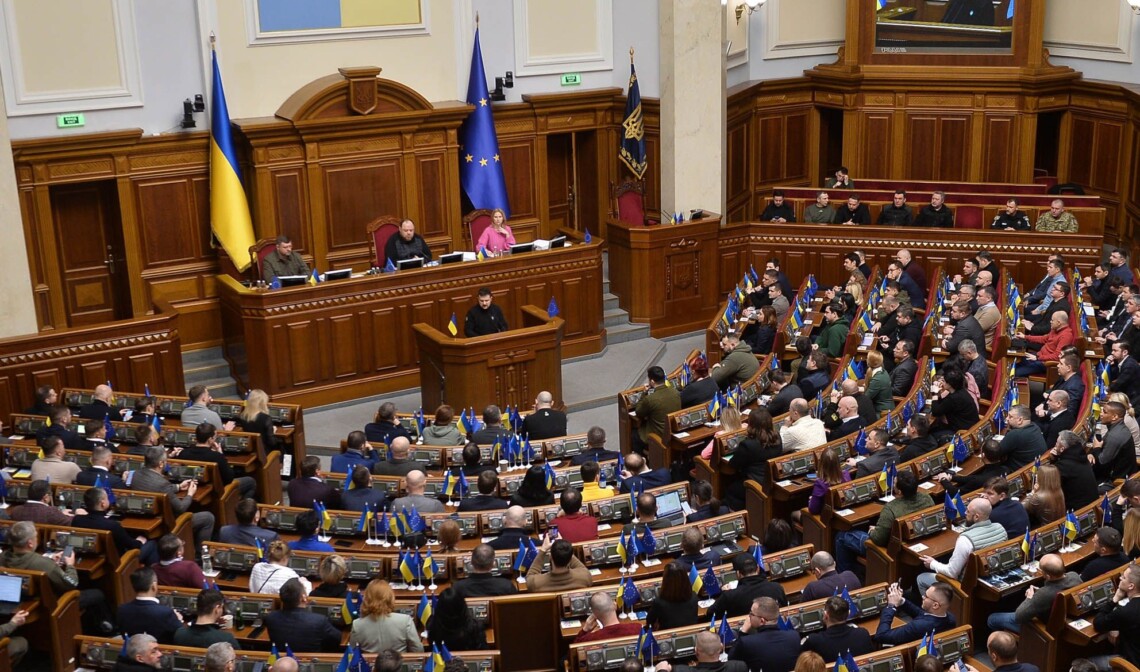
Moreover, protecting cultural property during armed conflicts is governed by international treaties ratified by Ukraine, which, in accordance with Article 9 of the Constitution of Ukraine, are part of Ukrainian legislation. The legal regime for the protection of cultural property is also detailed in subordinate legal acts, primarily in orders issued by the Ministry of Culture of Ukraine.
However, there is currently a lack of systematisation, inconsistent terminology, and outdated norms or gaps that must be addressed to ensure the adequate protection of Ukraine’s cultural heritage. This is especially important in aligning national legislation with modern international standards, including treaties and conventions ratified by Ukraine (UNESCO and the Council of Europe), as well as the norms of the European Union. It is also necessary to consider digital transformation and the introduction of electronic registration of cultural heritage sites.
In November 2022, Russia was removed from the UNESCO World Heritage Committee chairmanship. However, the organisation stated that it is not yet possible to deprive Russia of its membership in UNESCO, as only states expelled from the UN can be expelled from UNESCO.
Russia has repeatedly opposed the protection of cultural heritage in Ukraine. For example, it called the decision to add the historic centre of Odesa to the World Heritage List as apolitical one.
In 1988, Ukraine ratified the 1972 Convention concerning the Protection of the World Cultural and Natural Heritage, which serves as the basis for the status of a UNESCO World Heritage Site.
The inclusion of a site in the World Heritage List increases its visibility and highlights the political and informational consequences of an attack on it. This status can also influence the qualification of a war crime and enhance the chances of holding perpetrators accountable under international criminal law.
In November 2023, Ukraine was elected to the UNESCO World Heritage Committee for the first time. This allows Ukraine to participate in decisions regarding the use of the World Heritage Fund and the inscription of sites on the World Heritage List and the List of World Heritage in Danger.
On June 7, during the Vilnius Conference, 30 foreign countries pledged to increase support for artists and cultural workers, as well as to restore Ukraine’s monuments and cultural life through UNESCO coordination. Countries from North America, Asia, and Europe called for “putting the cultural sector at the forefront of the process of stabilization, recovery, and reconstruction of Ukraine, the reintegration of temporarily occupied territories, and sustainable post-war development.”
Culture is an important resource. UNESCO will continue to support Ukraine in the cultural segment. You can continue to count on us. Our support should align closely with your needs, – said UNESCO Assistant Director-General for Culture Ernesto Ottone Ramirez.
UNESCO’s cooperation with more than 40 international and Ukrainian institutions is aimed at improving the already established medium- and long-term action plan in six areas:
- Monitoring, assessment, and documentation of damage to cultural heritage
- Preventive and emergency measures, repairs, reconstruction, and restoration of cultural heritage
- Revival of cultural institutions and cultural education
- Strengthening cultural and creative industries
- Strengthening resilience through culture
- Digital transformation in the field of culture
Conclusions
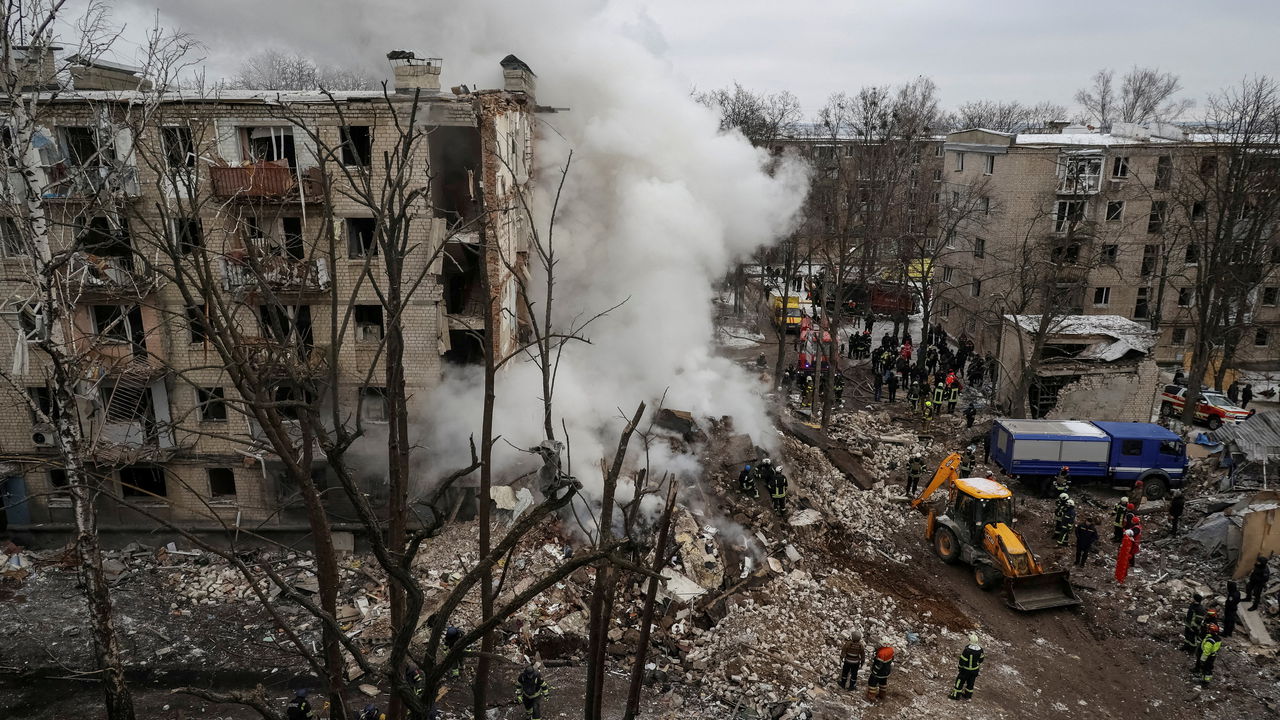
Reacting to the Russian shelling of the Factor-Druk printing complex in Kharkiv, Yale University historian Timothy Snyder described the targeted missile strikes as “an example of a larger policy of genocide.”
Russians have consistently sought to undermine the Ukrainian nation. From the era of the Russian Empire to the present day, they have repressed, persecuted, arrested, and executed Ukrainian intellectuals.
In 1934 alone, 97 out of 193 members of the Writers’ Union of Ukraine were repressed. The destruction of the main cultural centre in Ukraine halted its ability to disseminate ideas abroad. The persecution and murder during this period significantly disrupted the development of Ukrainian culture, interrupting and slowing its creative processes.
The annexation of the Autonomous Republic of Crimea by the Russian Federation in early 2014 and the subsequent war in eastern Ukraine have raised numerous issues, including the protection of civilians and civilian objects, safeguarding childhood, addressing humanitarian concerns, and ensuring the right to peaceful enjoyment of property. Equally crucial is the protection of the ‘soul’ of the people— their cultural heritage. Thousands of cultural heritage monuments, reflecting the history of various ethnic groups that once lived on the Crimean peninsula and in southern and eastern Ukraine, are currently under threat.
The ongoing war since 2014 has resulted in a humanitarian catastrophe, with the destruction and damage to cultural sites causing immense losses that extend well beyond material value. The actions of the aggressor country erode historical connections and threaten the preservation of a multi-ethnic Ukrainian identity.
Experts of the Centre for Strategic Communications and Information Security, Institute of Public Communications.
Volodymyr Khodakivskyi
Bohdana Korniychuk
Lesya Chervinska