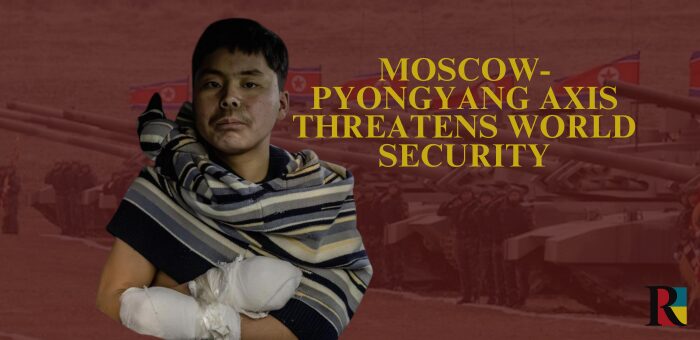


President of Ukraine Volodymyr Zelenskyy said that Russians are burning the faces of dead North Korean soldiers in the Kursk region. Thus, according to Zelenskyy, the Russian army is trying to destroy evidence of the use of DPRK soldiers and casualties among them.
The Russian army is known for its atrocities against civilians, prisoners, and its own soldiers. During the war in Ukraine, the Russians massively burned the bodies of their dead. However, burning the faces of fallen soldiers, and those of another ally country, is too much even for Russians.
The alliance of two autocracies
Analysts in many countries closely watch the cooperation between the two authoritarian regimes. The DPRK leadership supplies Moscow with large quantities of weapons and ammunition, mostly of the Soviet type, and in return can receive more modern weapons, space and nuclear technologies. The participation of the soldiers of the Korean People’s Army (Choson-inmingun in Korean) in the Russian-Ukrainian war will allow them to gain invaluable experience in modern warfare. All this poses significant threats not only to the Korean Peninsula, but also to the entire Asia-Pacific region.
The Moscow-Pyongyang axis was formed during the Korean War. The Soviet Union was the first to recognize the DPRK in 1948, provided huge military and economic support to the local communist regime, and used the country as a proxy against the Western world. During the “Perestroika” initiated by the last Soviet leader Mikhail Gorbachev, the USSR established diplomatic relations with South Korea and began to distance itself from the authoritarian DPRK. Russian dictator Vladimir Putin began to restore cooperation on the Moscow-Pyongyang axis.
When the aggression against Ukraine went completely differently from what the Kremlin’s “strategists” expected, the huge stockpiles of weapons and ammunition began to run out, and the former proxies of the Russians turned into their sponsors in arms.
Nataliia Plaksienko-Butyrska, East Asia expert, Master of Foreign Policy:
Russia needs weapons. North Korea has proven to be able to provide Russia with more than just missiles. It has a large line of weapons that it can supply. We see howitzers, self-propelled artillery systems, missiles that North Korea has provided and Russia is using against Ukraine. And I think they have other types of weapons that they can supply.
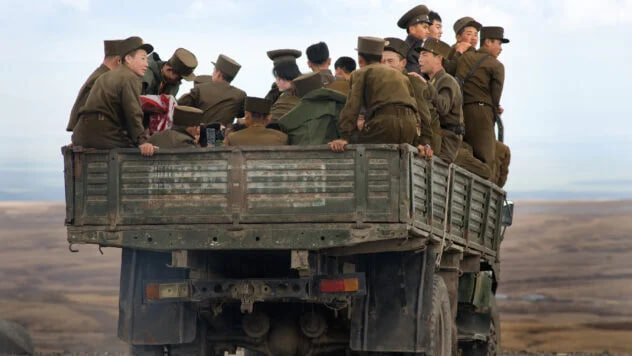
Today, few countries in the world dare to provide military support to Russia. A limited range of weapons, mainly attack drones, comes from Iran. But the DPRK shares almost everything it has with its aggressive ally. In return, it receives energy resources and technologies that it critically lacked.
North Korea has been at war since 1950 and has a powerful military-industrial complex. Having received orders and money from Russia, Pyongyang can launch its military-industrial complex at full capacity. Previously, North Korea lacked energy, but today Russia provides as much oil as it needs, despite UN restrictions. This gives the DPRK the opportunity to upgrade, improve its conventional capabilities, and test the weapons it produces on the battlefield.
The first mention of military support for Russian aggression by the “Kim Army” dates back to September 2022. Back then, US intelligence reported that Pyongyang had supplied “millions” of artillery shells and missiles to Russia. A year later, South Korean parliamentarian Sang-Bum Yoo said that from August to November 2023, North Korea supplied Russia with one million artillery shells. At the same time, the former South Korean Defense Minister said that Russian specialists had helped Pyongyang launch a reconnaissance satellite. This satellite, as the DPRK boasted, took pictures of an American military base.
Cannon fodder for dictators
In the fall of 2024, cooperation between the two authoritarian regimes reached a new level. DPRK military personnel began arriving in Russia. According to South Korea’s National Intelligence Service, the mass deployment of DPRK troops to Russia began on October 8. The first group consisted of 1,500 special forces. They were deployed to military bases in the Far East. There, they received Russian uniforms and Russian-made weapons, as well as fake IDs of residents of Russia’s eastern regions who looked like Koreans.
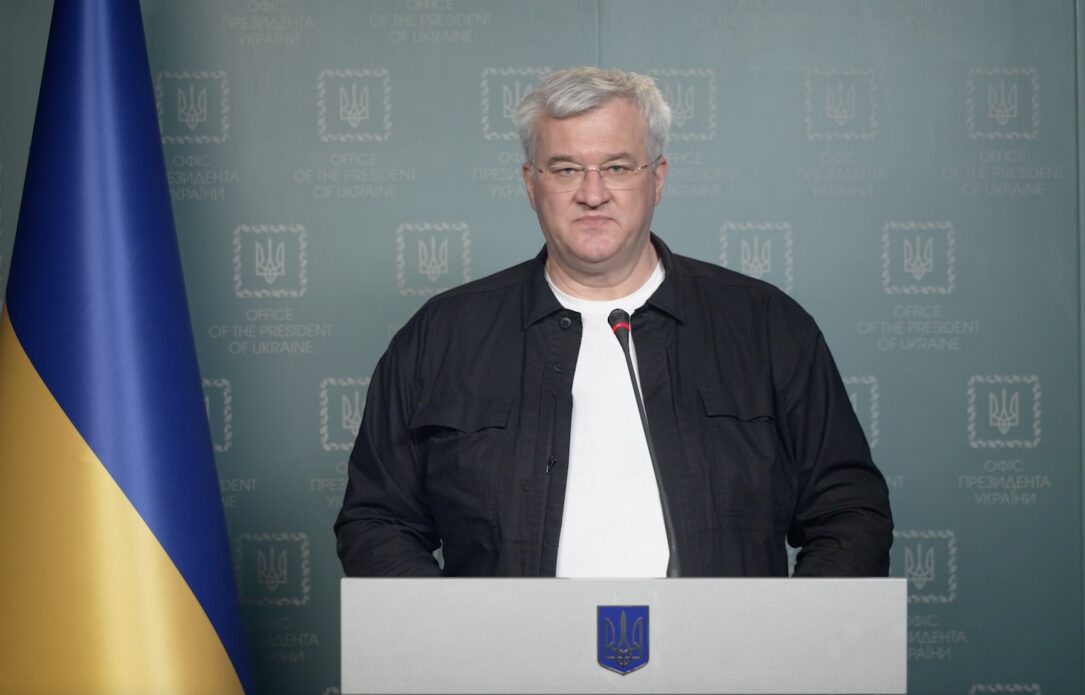
At the time, Ukraine’s Foreign Minister Andrij Sybiha called on international partners to prevent military units from North Korea from appearing on the battlefield as part of the invading army of the Russian Federation.
This is a huge threat of further escalation of Russian aggression against Ukraine. There is a great threat of its scaling up and going beyond the current borders and boundaries. We are not talking about mercenaries, it is very important to understand the difference, but we are talking about North Korean military units that will be involved and will fight on the side of the Russian aggressor’s army against Ukraine, – Sybiha said.
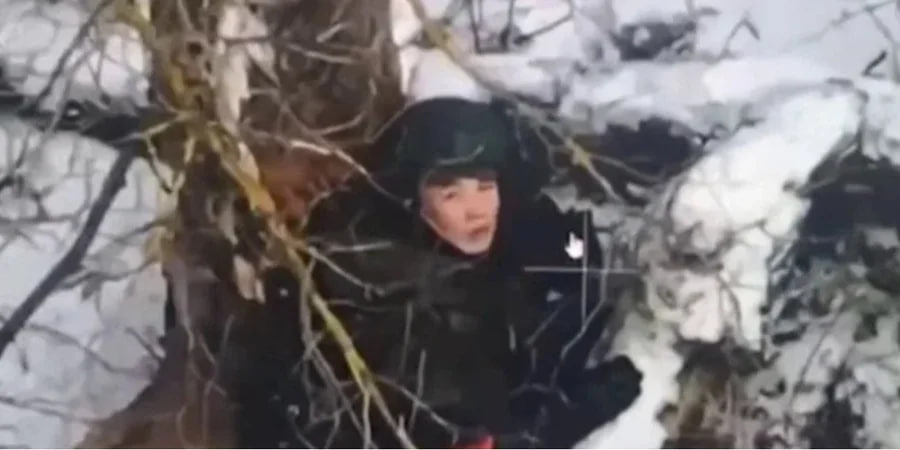
Unfortunately, the international community failed to stop the two dictators in their desire to secretly supply cannon fodder. The Russians began to actively use North Korean soldiers in assault operations against the Ukrainian Armed Forces in the Kursk region. At the end of 2024, President of Ukraine Volodymyr Zelenskyy said that the total number of DPRK troops was 12,000. The number of killed and wounded North Korean soldiers in the Kursk region exceeds 3,000.
And although the number of the “Korean contingent” is quite limited, experts emphasize the great danger of “Kim’s soldiers.” And the Moscow-Pyongyang axis could “blow up” the Asia-Pacific region.
Igor Romanenko, retired Lieutenant General, Candidate of Military Sciences, Doctor of Technical Sciences, Professor:
You see how they fight, how they advance. If someone is wounded or injured, they do not stop, but continue to perform their tasks. Our own assess the level of Korean training, discipline, marksmanship, and motivation as very high; they are very effective light infantry, even better than the Wagner infantry during the battle for Bakhmut… Most importantly, this is a relevant potential that our soldiers need to fight, and we already lack manpower.
Natalia Plaksienko-Butyrska added:
I think the risks of this cooperation are underestimated. North Korea has always been a threat to South Korea, Japan, and the United States in terms of provocations. It persistently produces various types of weapons and tests them. For example, missile elements are constantly falling into the exclusive economic zone of South Korea and Japan. So these incidents are happening all the time, we cannot ignore these incidents, we cannot ignore the growth of North Korea’s capabilities. In this case, this risk has increased many times over.
But why do Moscow and Pyongyang actively deny the use of DPRK military personnel? According to analysts at the Institute for the Study of War (USA), the Russians are trying to maintain relations with South Korea and prevent Seoul from starting direct military supplies to Ukraine. North Korea, in turn, is trying to avoid additional sanctions or strengthening the existing ones. And in general, the use of Kim’s soldiers to liberate their own Kursk region is a shame for the Russians, who until recently called their armed forces the “second army of the world.”
Igor Romanenko, retired lieutenant general, candidate of military sciences, doctor of technical sciences, professor:
It is important for them not to show that there is a contingent. Because it has bad international consequences for both Russians and Koreans.
The quintessence of the attempt to conceal North Korea’s involvement in the Russian-Ukrainian war was the burning of the faces of the dead North Korean military, described by Volodymyr Zelenskyy.
It was an agreed decision at the strategic level, and they are implementing it. Corpses are poured with incendiary mixture, there are consequences, many witnesses, – Igor Romanenko
Representatives of the Main Intelligence Directorate of the Ministry of Defense of Ukraine said they have not yet commented on this topic.
Russians began using DPRK soldiers in assault operations in November last year. But during this period, the Armed Forces of Ukraine managed to capture only two Koreans. Why so few? Analysts at The Wall Street Journal explain this as another barbaric method used by the aggressors.
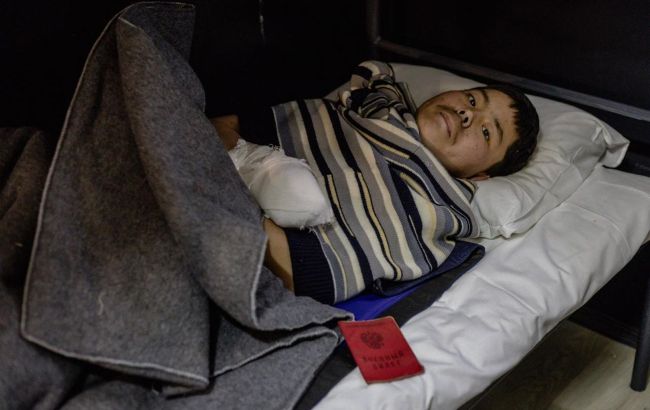
The Suspilne piece says that thousands of DPRK soldiers who fought on the side of Russia have been killed or wounded in the past, but none of them have been captured. Some were killed by their own to prevent them from being captured after they were wounded; others decided to kill themselves rather than surrender, at least one after shouting the name of DPRK leader Kim Jong Un, as evidenced by videos and accounts provided by the Ukrainian military.
But it is not even the numerous North Korean prisoners of war that are of significant value. Interrogating North Korean soldiers will provide information about the state of life and military training in North Korea in recent years. And, if they decide to defect to South Korea, it will have significant strategic and symbolic value, said Lee Seongmin, director of the Korea Department at the Human Rights Foundation.
They serve as living proof of North Korea’s illegal participation in Russia’s war,” – he said.
But the aggressor country’s military also has a widespread disdain for its dead soldiers. From the very beginning of the full-scale invasion, in order to conceal the huge losses, the Russians massively burned the corpses of their soldiers. This happened in various parts of the frontline where fierce fighting was taking place. The first such cases were reported by the Defence Intelligence of Ukraine in mid-March 2022. Back then, the occupants used the Donetsk Metallurgical Plant for this purpose. They also widely used mobile crematoriums or just vacant lots. But very often, the Russians leave the bodies of their dead right on the front line, even when there is an opportunity for evacuation.
Thus, not only the Ukrainian leadership but also representatives of the Ministry of Foreign Affairs of Ukraine point to the danger of cooperation between Russia and the DPRK. Numerous experts have spoken about the threat of undermining the security of the Asia-Pacific region from such cooperation. How will the democratic world react to this, and will the reaction be appropriate and sufficient? Or will the new Moscow-Pyongyang “axis of evil” continue to create chaos, instability and prepare for new armed conflicts with impunity? It seems that only time will tell.
Petro Chumakov