

In the campaign leading up to this Sunday’s EU-election a Danish political party, The Liberal Alliance, proposes that each and every EU-member state supports fighting Ukraine with 0.25 percent of its GNP. Quite right, report Danish journalist Per Nyholm from a summer retreat in Greece. This is what European solidarity is about.
x
This Sunday’s election to the European Parliament may not be of the greatest importance to Ukraine, fighting for its life against an unspeakably brutal power, which claims to be at least partially European, which it is not. Fascist Russia is not even a mixture of Europe and Asia. It is just another failed state, but uniquely murderous, way outside Western civilization, the very opposite of Ukraine, European and democratic Ukraine, which deserve and in due time can expect to become a member of the European Union.
What is this Union, this EU? Not yet a real union, but much more than the mere idea. Perhaps a hybrid, living, breathing, functioning, growing, a both peaceful and powerful, humane organization of states, working to become, I hope, the United States of Europe.
Will this unification of Europe take place in my lifetime? Surely not. In a couple of day, I shall be 81 years old. I am happy to have experienced the beginning of a united Europe, I am happy to have experienced the return of long suffering Ukraine to Europe, and I just hope that Ukraine, when its terrible ordeal is over, will take its rightful place in the EU-parliament and contribute to the denationalization, indeed the detoxification of the European body politic. Ukraine, with in the present generation, must assume its responsibilities, its duties, in Europe.
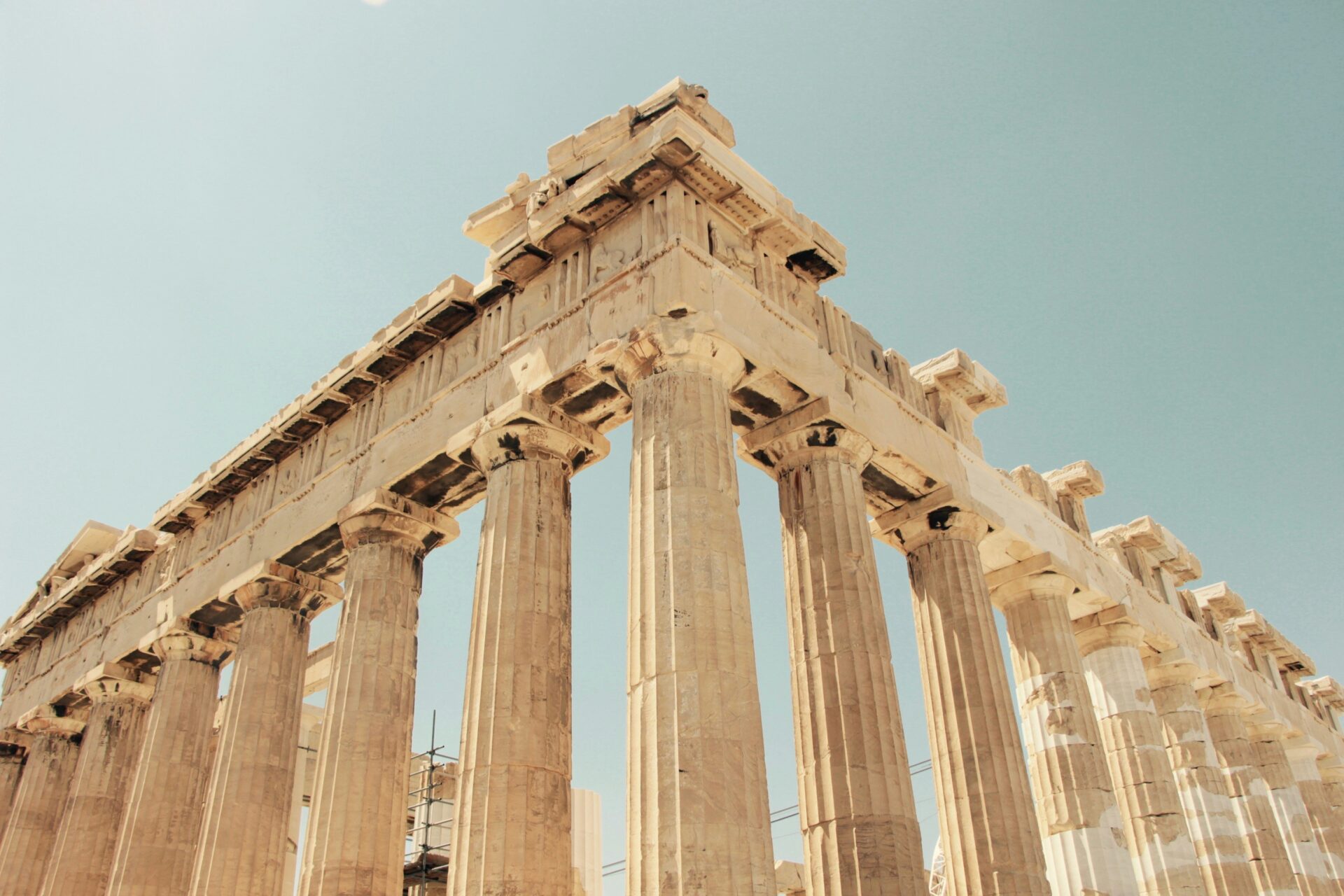
I happen to spend both the election day and my birthday on an island in the Saronic Gulf off Piraeus and Athens, occupied with a leisurely study of Greek philosophy and Greek history, including the Greek city-states, which formed a cultural whole, but could not unite politically with the result that they were conquered by the military power of Rome. Europe – we tell ourselves in our sweet talks – is based on Greek freedom and Roman law. True, but not quite true. Europe, such as we know it, grew up in the Middle Ages with its churches and monasteries, its learned schools and torture chambers, its wars, its merchants and artists, its scientists, sailors and explorers. The mobile Europe, the Europe which we can always make better.
A colleague has installed me in her house on Hydra, 200–300 meters above sea level. I am busy being idle, away from cellphones, football championships, Olympic Games and hollow summer festivities. Occasionally I write on a book about Europe, the second of a trilogy to be published over the next few year – if I live that long. My only serious occupation on Hydra is feeding broccoli to a turtle named Adonis.
It’s with the turtle as with Europe. They move slowly, but they move, one step following the other.
In the Danish campaign leading up to the election I see one such step, almost insignificant, but there it is, well thought through and well-made: The Liberal Alliance with 15 members of the parliament in Copenhagen (not a lot out of an assembly of 176 members) proposes that each and every EU-member state supports fighting Ukraine with 0.25 percent of its GNP. Quite right. This is what European solidarity is about.
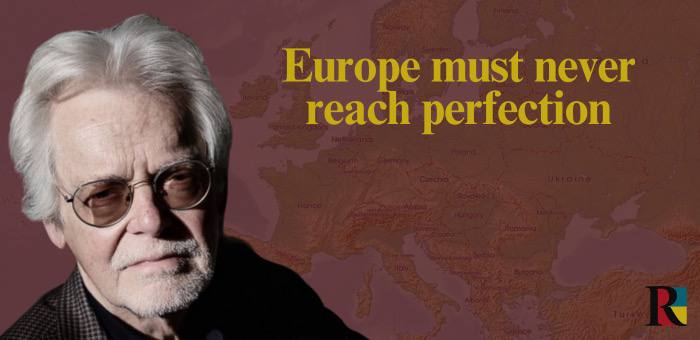
Election Day is Europe’s day, beautiful and binding, Europe in its pursuit of perfection, which we must never achieve, because then Europe will come to a stop. The perfect is totalitarian. Stalin’s Russia was perfect, Hitler’s Germany was perfect. Woe to anyone who dares to discuss the perfect. I prefer Socrates: better questions than answers. In the East, a storm threatens our culture and civilization, our imperfect freedom. In Ukraine, Vladimir Putin’s barbaric-perfect Russia is repeating the Mongol storm of the 13th century and the fascist-communist rampage of the 20th century. For the same reason, the defense of Europe – both the inner mental and the outer material – is the main theme this Sunday. Remember Pericles: “Only he, who fights for his freedom, deserves it”.
Many things await the new parliament: the EU’s enlargement with Ukraine, Moldova and the small countries of the Western Balkans, which – if neglected – can transfer their resources and strategic assets to others, a prospect that also beckons Turkey. White Russia is a question of time. Hungary under Viktor Orbán is an immediate problem, in that Budapest holds the EU presidency for the second half of 2024, an automatic order or disorder of rules, highlighting the need for the gradual abolition of the veto, protecting member states, in favor of majority decision-making, advancing the union.
The most pressing task is, what French President Macron calls Europe’s sovereignty in matters of security. Europe must cooperate with the US as much as possible, but Europe must also be mentally prepared and physically ready to defend itself, accepting that the US has a right to isolate itself or concentrate its forces on the Pacific and China. We must be able to protect our continent through an integrated European defense system, both conventional and nuclear. Ukraine tells us that Europe is the Greece of our time, the US the Rome of our time. And Russia? Russia is like the Persian Empire, which felt itself called to rule, to murder and to destroy. The fall of Western Rome in the fifth century plunged the continent into an unimaginable darkness. A 1000 years later Eastern Rome or the Second Rome fell to the Ottomans, giving Moscow the opportunity to rise as the Third Rome, obsessed with the idea of creating at any cost an orthodox empire from the Pacific to the Atlantic.
A gentle breeze from Homer’s wine-red sea whispers through the magnolias in front of the house on Hydra. I write and read (Herodotus’ “Histories” and Mark Galleotti’s “Putin’s Wars”, two complementary works). Adonis is waiting for his broccoli. He reminds me of my childhood turtle named Hermes. We didn’t know broccoli in Vangede outside Copenhagen. Hermes lived on carrots, oatmeal and cookies from the local bakery. We have come a long way since the 1940s. So far that many Danes are unaware of our modest, but decent life of that time.
My temporary neighbor is the friendly Apostolos. He picked me up the other day with his mule down at the harbour and brought me up to the house, where I think about our achievements, since far-sighted European leaders shortly after World War II realized, that if we were to avoid a Third World War, we had to create a peacefully cooperating, increasingly united Europe, a mixture of Greek freedom and Roman discipline.
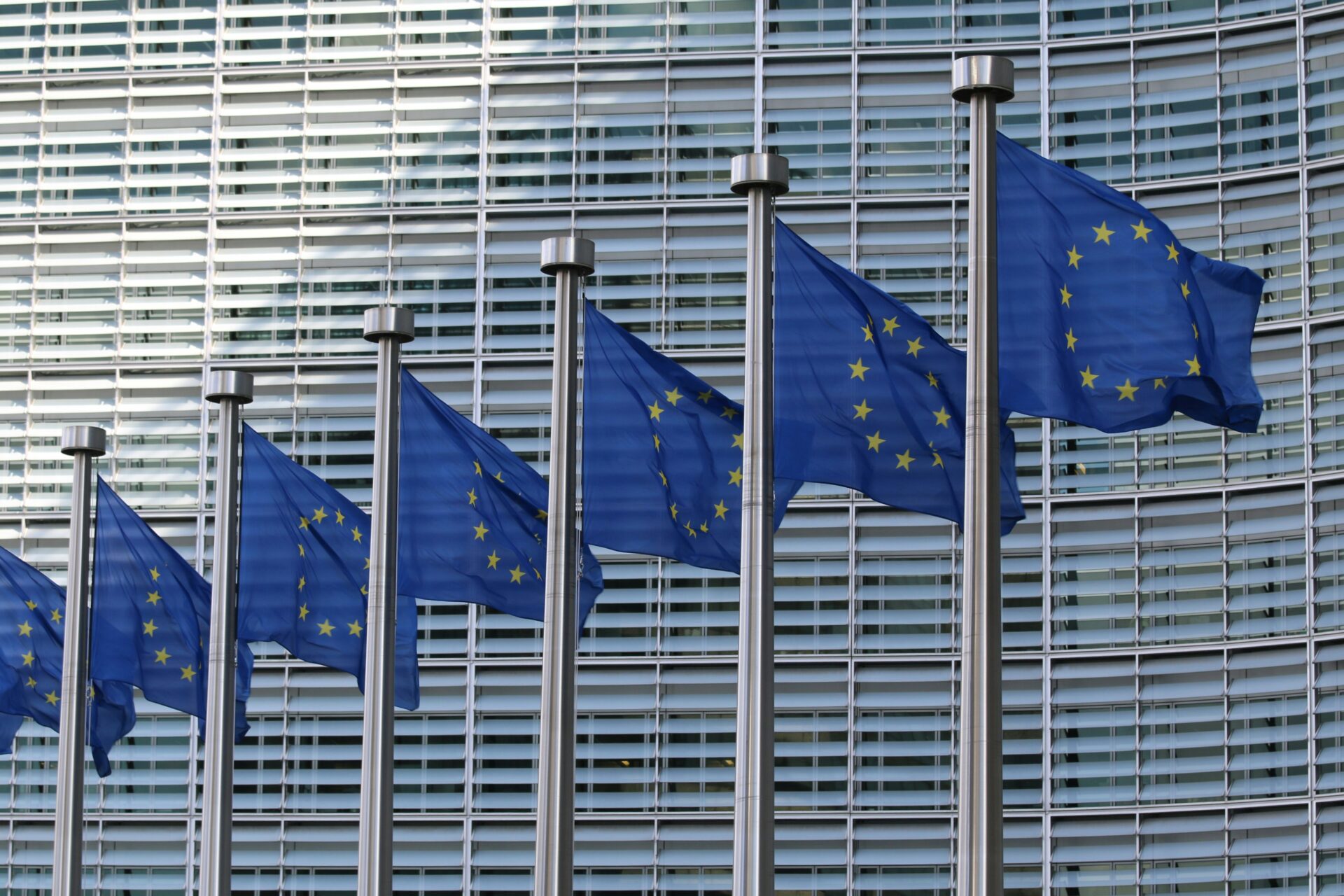
We have reached a point, where we can travel, live and work freely in 27 countries. 500 million Europeans enjoy unprecedented freedom, security and prosperity – and yet many complain. Well, they not only complain. There are demonstrations, slander and conspiracies, often instigated by the Persians of a new age. An implacable, sometimes violent right wing is expected to garner a significant number of votes, delivered by people, who are either unaware of Europe’s often suicidal behavior or prefer to let their inner pig squeal.
We need more Europe, not less Europe. We need a European empire built on voluntary action, a non-violent and non-conquering empire, which makes demands on itself and on those, who want to enter. We do not need nationalism, barbed wires and walls. We do not need politicians running after this or that popular mood. We do not need demagogues, racists and opportunists. We need solidarity and humanity, imagination and courage, brains and hearts. We need imagination, boldness and ingenuity, adventure rather than control. We need self-confidence, not self-indulgence nor indifference. We need politics that sees the EU as an institutional framework for our many cultures, not as a cash register to be emptied at the cost of others.
Opinion polls show that this Sunday will see a strengthening of the right, which intends – in line with a fascist and belligerent Russia – to weaken the EU. Will such an outcome be a disaster? The following years will tell, but I think not. Europe is like a living organism. Mistakes are being made, and mistakes are being corrected. One step back, can lead to two steps forward – towards the perfection, for which we shall strive, but must never feel that we have reached.
Evening settles over Homer’s wine-red waters. Adonis is working on his lightly cooked broccoli. On Hydra, I’m glad that I’m Danish and as such European, just like my Ukrainian friends.
By Per Nyholm
*These opinions are solely those of the author. The Ukrainian Review takes no position and is not responsible for the author’s words.
Per Nyholm has been a Danish journalist since 1960. He is based in Austria and is a columnist and foreign correspondent at the Jyllands-Posten, a liberal Danish daily newspaper.
Tetiana Stelmakh adapted this text for The Ukrainian Review.