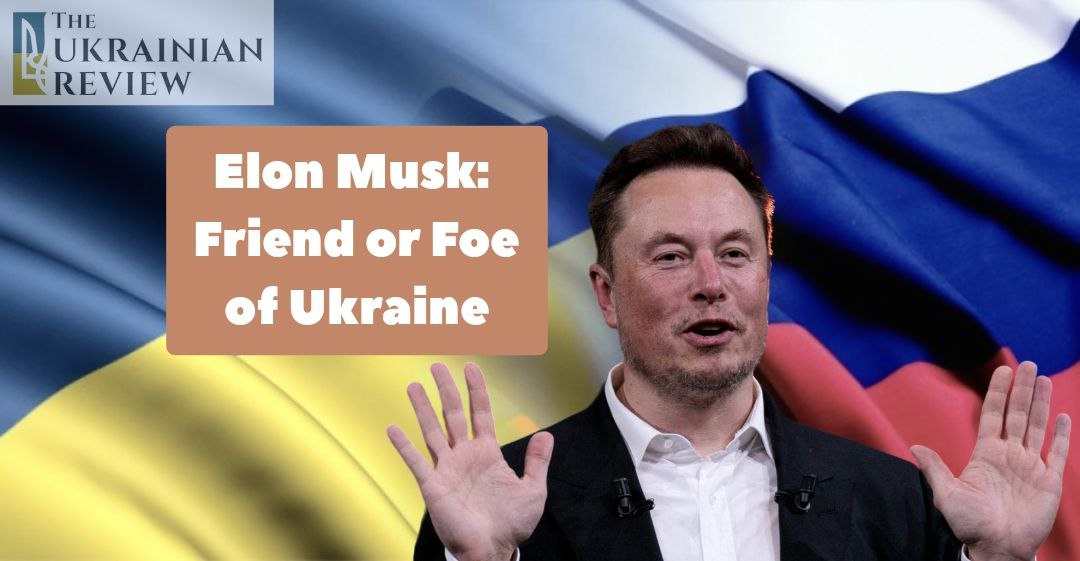


Elon Musk is an American entrepreneur who co-founded the electronic payment firm PayPal and founded SpaceX, a company that manufactures launch vehicles and spacecraft.
At the beginning of the full-scale war between Russia and Ukraine, Elon Musk expressed his support for Ukraine and sent 15,000 Starlink satellites. This “space” internet became the eyes and ears of the Ukrainian military, aiding in delivering precise strikes on the battlefield. Currently, it serves as a fast and secure communication method for the military, critical infrastructure, and government institutions.
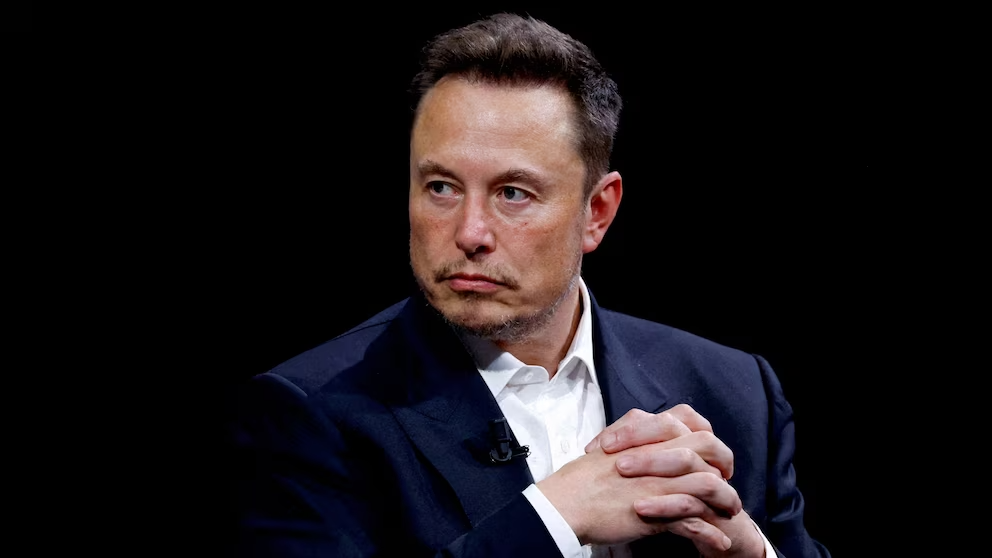
However, despite providing assistance and support to Ukraine, Elon Musk has made anti-Ukrainian statements.
In October 2022, Musk published his “peaceful plan” and conducted a poll regarding holding elections in the occupied territories, recognizing Crimea as Russian, and declaring Ukraine’s neutrality.
Elon Musk also stated that the transfer of Crimea to Ukraine by Nikita Khrushchev was a big mistake.
The businessman referred to the Revolution of Dignity as a “state coup,” accused Victoria Nuland (American diplomat and political activist, in the Biden administration she is the US Deputy Secretary of State for Political Affairs) of inciting war, criticized the counteroffensive, stating, “So many losses for such small gains,” and mocked Volodymyr Zelenskyy for requesting help for Ukraine.
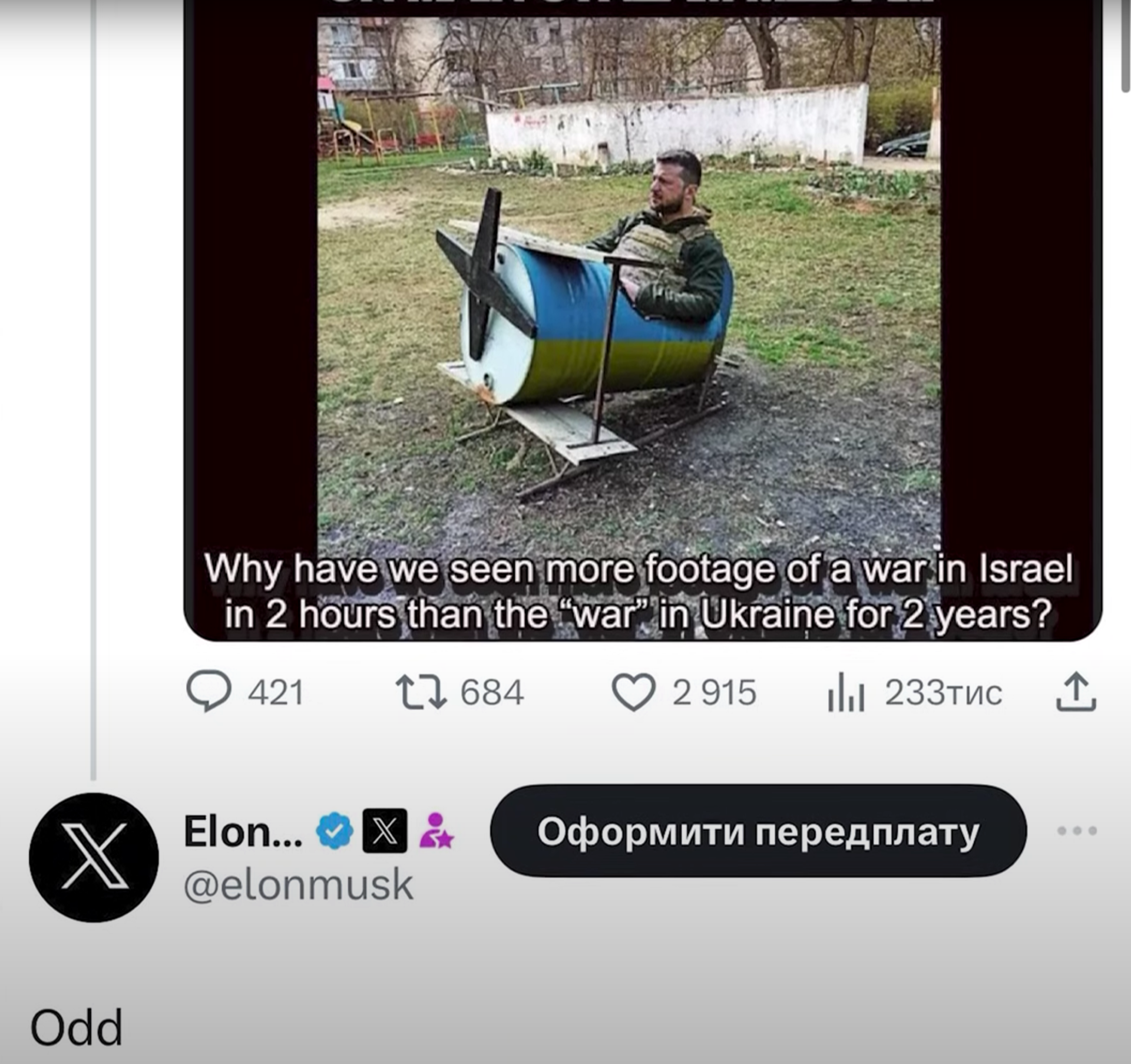
After Hamas attacks on Israel in October 2023, Musk agreed with an account that questioned the reality of Russian shelling, claiming that “more videos arrived in two days than in 1.5 years of war in Ukraine.”
In September 2022, Elon Musk disconnected Starlink for the Ukrainian military, fearing an attack on the Russian Black Sea fleet. He was concerned that Russians would retaliate with nuclear weapons.
During the same period, Musk stated that he incurred significant costs in Ukraine due to Starlink and requested the Pentagon to take them on.
Starlink and Nuclear Weapons
In reality, 85% of these systems in Ukraine were financed by the United States and other allies, as well as volunteer organizations. They also cover a portion of the subscription fees. Ukrainians themselves pay more for Starlink than the entire Europe.
Before the Ukrainian military’s attack on the Black Sea fleet, Elon Musk called the Russian ambassador in the United States:
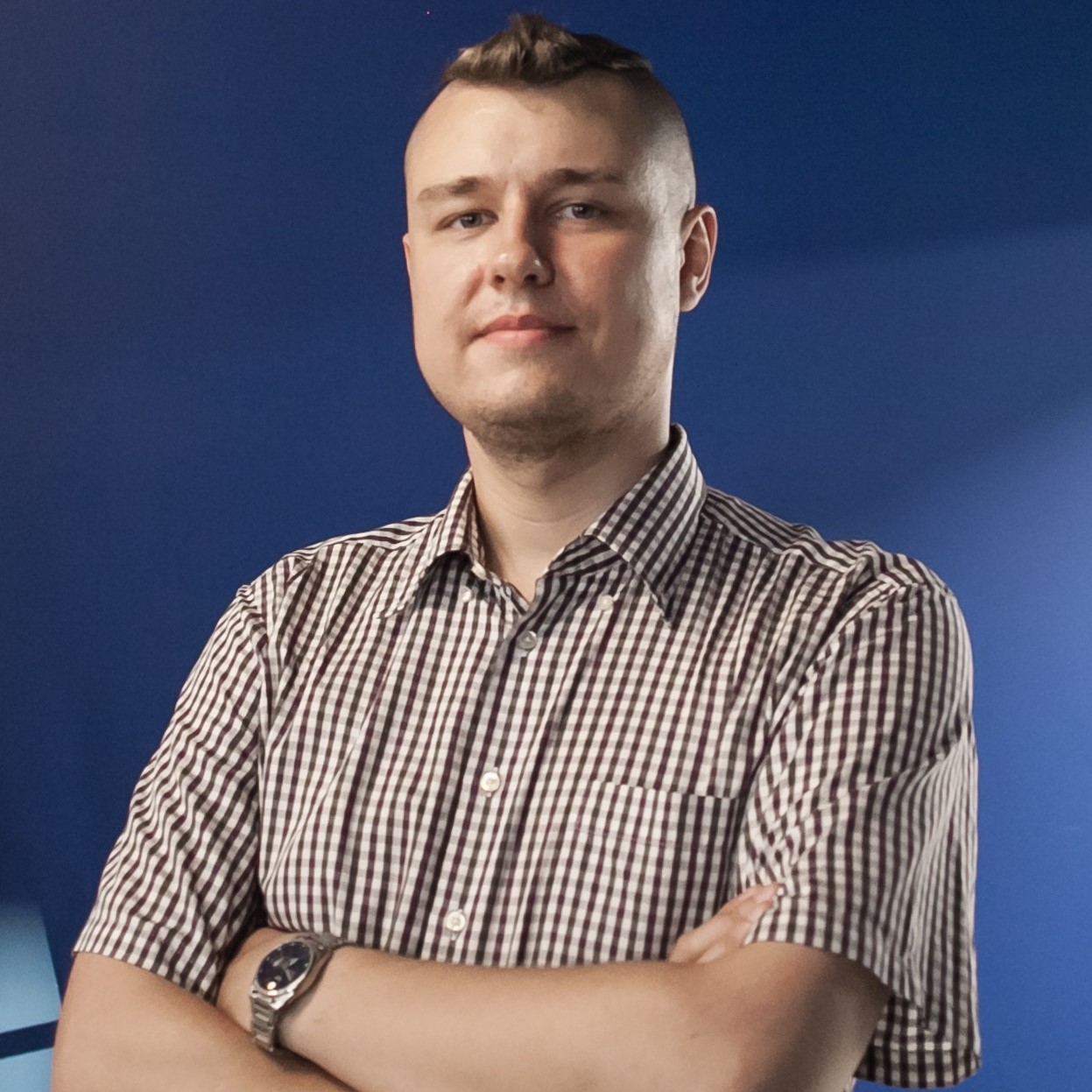
“According to Isaacson (Elon’s biographer), Elon Musk recently spoke with the Russian ambassador in Washington, who warned him that any attack on Crimea would lead to a nuclear conflict. Musk hinted to a few other people (although he later denied it) that around the same time, he was talking to Putin. And what happened next? There was no nuclear war. Despite Musk’s fears, that is, the fears instilled in him by the Russian ambassador, and perhaps Putin himself, the Third World War did not start due to this successful attack on the Crimean port. Instead, the Russian military command was so scared of the attack that for the next few weeks, they were afraid to move ships out of Sevastopol harbor,” – says Vladyslav Myronovych, a journalist at Speka.Media (online media about technology, entrepreneurship and IT News).
Elon Musk fears a nuclear war and a possible escalation leading to the Third World War.
“But if we want to deter the Russians from using nuclear weapons, we have other ways to do it. Our own nuclear weapons and our overwhelming military forces are powerful deterrents: most analysts believe that this explains why Russia deliberately did not target any NATO territory. Clear hints from China and India that nuclear escalation would be a terrible mistake, as well as statements from the G20, the UN, and other organizations against nuclear war, also help Russia,” – believes Vladyslav Myronovych.
“Russians provoke not resistance, but its absence and weakness,” – adds Yarema Dukh, a Ukrainian blogger and communications expert.
Crimea is Khrushchev’s “Mistake”
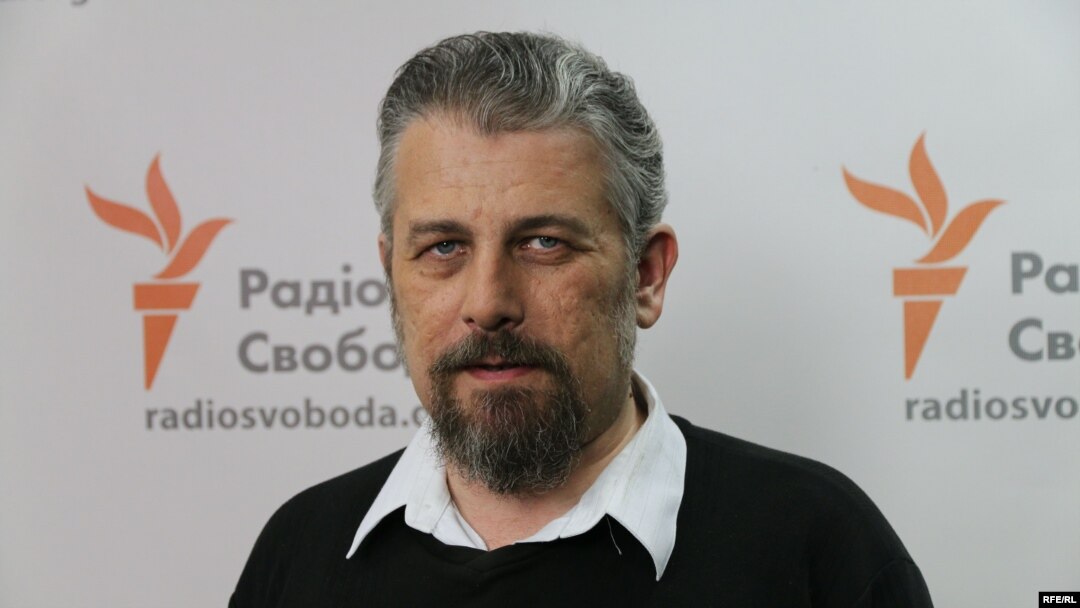
Vadim Volodarsky, a lawyer, explains the reasons behind the transfer of Crimea to Ukraine in 1954:
“Firstly, Khrushchev was not the one who unilaterally decided to transfer Crimea from the RSFSR to the Ukrainian SSR. Moreover, it happened in 1954 when the de facto leader of the USSR was Georgy Malenkov. The transfer of the then Crimea region was formalized by the Decree of the Presidium of the Supreme Soviet of the USSR, chaired by Kliment Voroshilov, whose signature is on the decree. In other words, we are talking about legal documents that were formalized by decisions of the highest state bodies of the USSR at that time, which were recognized internationally. Therefore, it is impossible to “blame” Khrushchev for some unilateral “mistake.” Furthermore, at that time, practically immediately after Stalin’s death, no one in the leadership of the USSR could make such decisions unilaterally. It was a collective decision made in accordance with Soviet legislation.
Secondly, the decision was influenced by geographical reasons, the connection of Crimea with the coastline of Ukraine, and the benefit for the economic development of the peninsula by being part of the Ukrainian SSR. In fact, the correctness of this decision was confirmed when, after the events of 2014, the supply of certain resources from the mainland Ukraine to the peninsula was cut off. Therefore, from a practical point of view, this decision cannot be considered “wrong.”
Thirdly, from an international legal perspective, all this is irrelevant since all countries recognized the borders of Ukraine, including Crimea, after the collapse of the USSR. Moreover, Russia itself entered into several international agreements with Ukraine, not only general ones, such as the “Friendship Treaty,” which would be impossible in the presence of territorial disputes. There were contractual relations specifically related to Crimea, such as the lease of military bases for the Russian fleet on the territory of Crimea, and the very fact of entering into such agreements (regardless of their specific conditions) indicates that Russia acknowledged Crimea’s belonging to the territory of Ukraine. Hence, it agreed to lease land there for its fleet bases.”
Small Amount of War Content
The war in Ukraine is often referred to as the most well-documented war on the internet and the largest online war. At the same time, many Ukrainians face restrictions on content related to the Russian invasion, especially on Facebook and Instagram.
On April 12 2022, Ukrainian human rights organizations approached Meta with proposals for content moderation in armed conflicts, but the content continues to be blocked.
“Firstly, Musk probably doesn’t follow the topic very closely, as there is already plenty of coverage on the consequences of Russian shelling. But, besides that, it is necessary to note that there would be much more content if shooting and posting, including the consequences of hits, were not prohibited. There is criminal liability for it, as it is considered that such information can help the enemy adjust their fire. In Israel, there is no such problem: as far as I know, there is no prohibition on spreading videos with the consequences of hits for civilians. Moreover, the Hamas attack itself happened to a large extent ‘live,’ and videos were posted, including by the terrorists themselves. In Ukraine, this is not the case, as the shelling of civilian infrastructure is carried out by Russians remotely,” – comments Volodarsky.
Critique of the Counteroffensive
In 5 months of the counteroffensive, Ukraine advanced 17 km and did not achieve significant breakthroughs. However, it is important to understand the conditions under which Ukrainian soldiers have to fight: Russian military entrenched themselves, spending months building defensive structures, including bunkers, anti-tank traps, and minefields. Also, there is a large number of Russian soldiers: “If we destroy a unit—100 soldiers— the next day they will bring in another. And the day after, one more,” – says Oleksiy Telegin, Lieutenant Colonel of the 108th Territorial Defense Brigade of Ukraine.
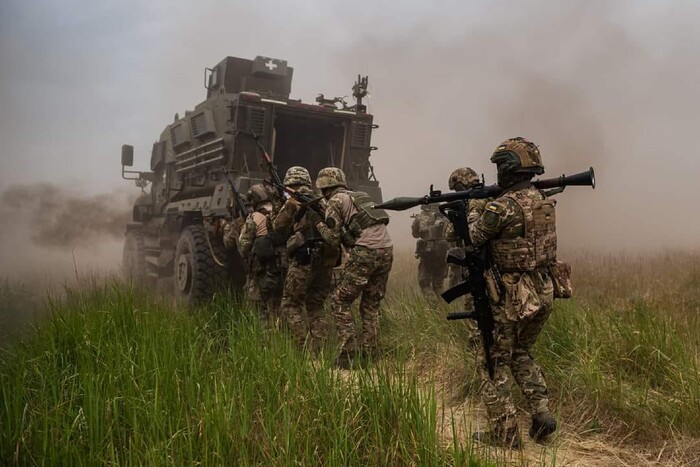
The Washington Post journalists also note that Valeriy Zaluzhny, Commander-in-Chief of the Armed Forces of Ukraine, decided to save more lives of Ukrainian soldiers:
“Instead of trying to break through the Russian defense with a massive, mechanized attack supported by artillery fire, as advised by American colleagues, Zaluzhny decided that Ukrainian soldiers would go on foot in small groups of 10 people – this approach will preserve equipment and lives but will be much slower.”
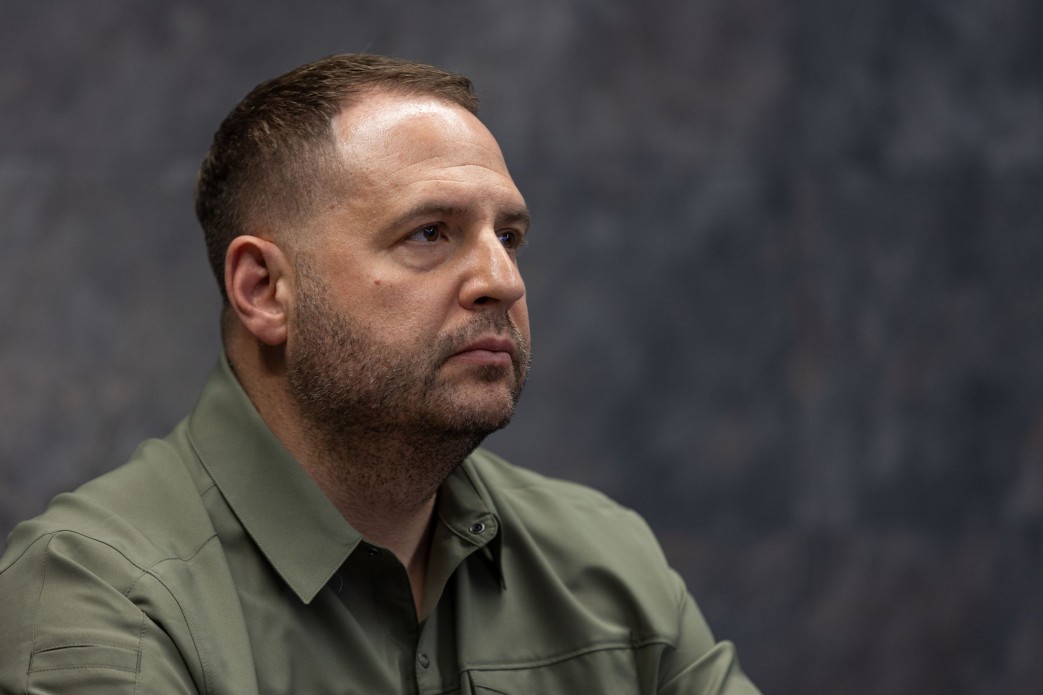
Head of the Office of the President Andriy Yermak says that “the war has entered a ‘complicated’ phase again due to Russia’s advantage in weapons and military forces.”
“Revolution of Dignity was a state coup”
There was no state coup in Ukraine. According to Article 109 of the Criminal Code of Ukraine, a state coup is a criminal offense, the commission of which is established by the court. The Ukrainian court did not make a relevant decision.
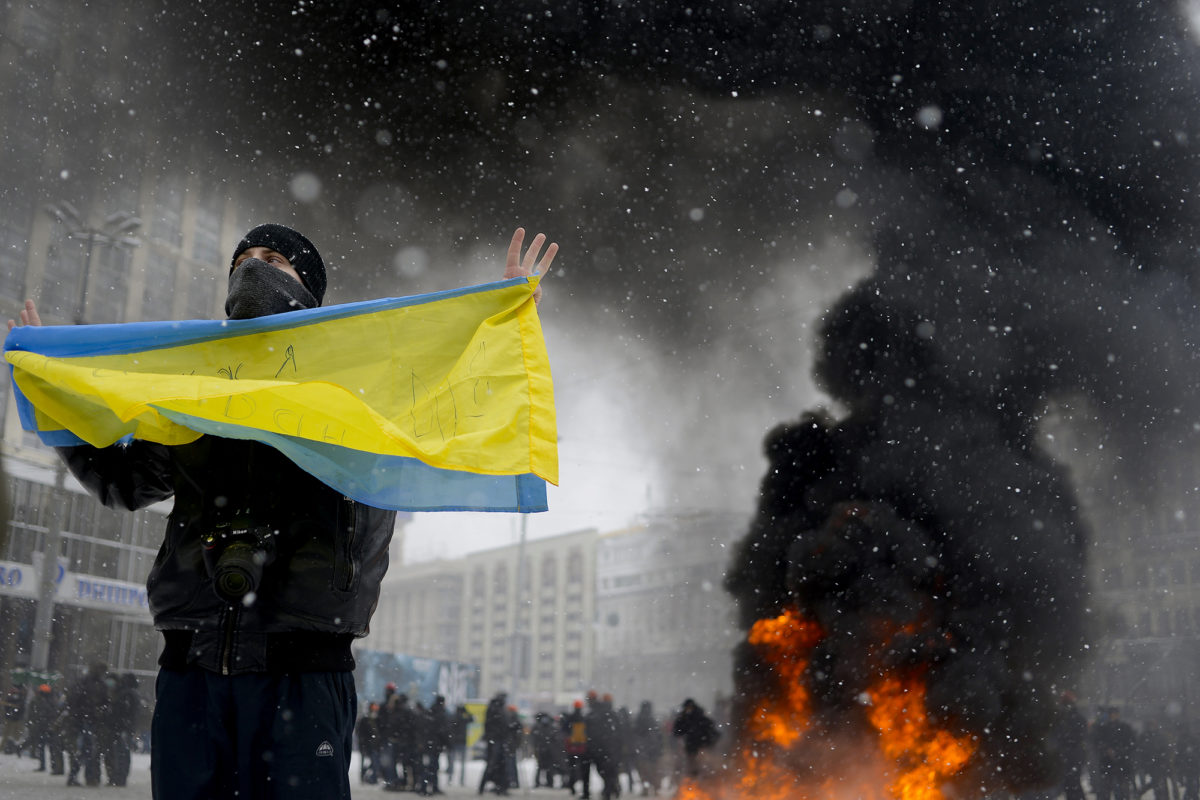
“The main signs of a state coup are its unconstitutionality, violent nature, a small number of organizers and participants, the main goal – seizure of power. The consequences of a state coup are the absence of democratic elections, persecution of the opposition, suppression of civil society institutions, usurpation of power. The events of November 2013 – February 2014 do not fall under the definition of a state coup by any of the signs. From the point of view of modern social disciplines, these events are a revolution in the modern understanding of this term, aimed at protecting democratic governance, the rights and freedoms of citizens, and the democratization of society. This revolution was mostly non-violent, mass and gained the support of the democratic world,” – as explained by the National Memorial Complex of the Heavenly Hundred Heroes – the Museum of the Revolution of Dignity.
The Revolution of Dignity was a societal response to the pro-Russian policy of then-President Viktor Yanukovych, who, among other things, refused to sign the Association Agreement with the EU.
Where does such rhetoric come from
“Elon is influenced by what he reads on Twitter. In the summer, David Ransiem subscribed to all the pages that Musk is subscribed to. It turned out that many of them are ultra-right sympathizers of Russia (including, for example, Tucker Carlson, and Elon supported him after being fired). He often comments on posts by David Sachs, who often spreads nonsense about the war in Ukraine. The only positive comments about Ukraine belong to the US State Department and Greta Thunberg.
Elon Musk also likes to read various conspiracy theorists. He wants to be a person who does not believe everything 100% and does not accept universally accepted opinions. However, in reality, he digs no deeper than a few tweets and has superficial knowledge of the things he talks about.
The circle of communication is appropriate. About Musk’s surroundings and friends is known from the biography of Walter Isaacson. Among them are Trump supporters and pro-Russian-minded people,” – explains Yarema Dukh, a Ukrainian blogger and communications expert.
After Musk bought Twitter, the network’s policy became arguably the most pro-Russian in history. Mass Russian propaganda is no longer moderated. Moreover, Elon Musk refused to restrict the accounts of Russian government structures on Twitter and to delete a tweet from the former President of Russia Dmitry Medvedev with the words “Ukraine will disappear… because it is not needed by anyone.”
“He plays for two teams – for Ukraine and for Russia, but in the end, he plays for the third – for himself,” summarizes Yarema Dukh.
***
Elon Musk serves as an example of how dangerous misinformation and misguided influence can be in the hands of prominent individuals. It is crucial for people following the words and actions of the billionaire to exercise critical thinking and filter the information provided.
Anya Ostymchuk