

Citizens of all 27 countries of the European Union elected 720 members of the European Parliament from June 6 to 9, 2024.
Although the elections were called “European”, they were actually contested by national political parties. There were currently seven of them in the European Parliament:
- a faction of the European People’s Party (EPP);
- a faction of the Progressive Alliance of Socialists and Democrats (S&D);
- a faction “Renew Europe” (Renew Europe);
- a faction of the Greens/European Free Alliance (Greens-EFA);
- a faction of European Conservatives and Reformists (ECR);
- a faction “Identity and Democracy”;
- a faction of the European United Left (GUE/NGL).
The largest of these parties was the large centre-right European People’s Party (EPP), home to Germany’s Christian Democratic Union (CDU) and Poland’s Civic Platform, followed by the Progressive Alliance of Socialists and Democrats (S&D).
Why are elections so important?
Two threatening factors distinguished the 2024 election. The first is the steady growth of the popularity of far-right, Eurosceptic, and sometimes openly anti-European political forces. The second is Russian interference in European Parliament elections, which is becoming increasingly obvious. The leaders of Belgium and the Czech Republic have publicly stated and informed the EU leadership and the governments of other member states in writing that they have intelligence and evidence of the presence of an active network of Russian spies and agents influencing the European elections.

The European elections are an important moment for our continent because they shape the decisions made at the highest supranational level.
The 2024 elections are a turning point for Europe because they will bring new members of parliament (MPs) who know what the challenge they’ll face: Russia and its influence. They will all be doing a historical term, and they need to be ready for it. Reshaping European minds is a big task, and we face the most significant enemy we could ever have: Russia.
A lot of the European decisions regarding the Russian-Ukrainian war will be debated and taken in the European Parliament; this is why it is crucial that the newly elected MPs understand the importance of their commitment. If we are weak, we will regret it for décades as an alliance and as a whole continent. It is complicated to guess precisely how the balance of power within the European Parliament will change, but we can already see that far-right movements are getting stronger and stronger. They are often strongly linked to Russia, so watching them closely will be very important.
Facing the challenge of a whole generation, we must hope for the best and prepare for the worst, – explains Louis Duclos, geopolitical analyst and former gendarmerie soldier.
How the balance of power in the new European Parliament can change
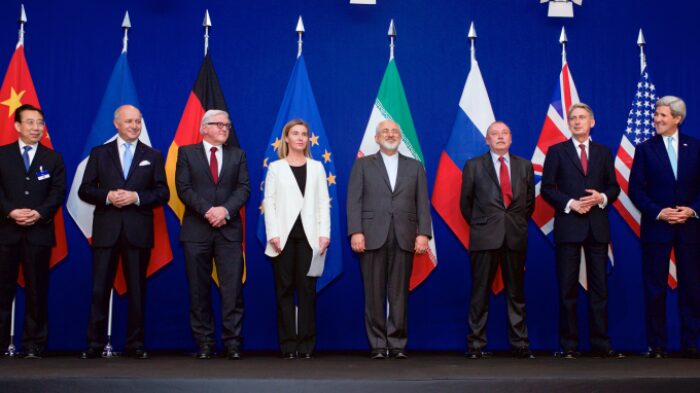
A week before the elections, right-wing, Eurosceptic and populist parties, according to the European Council on Foreign Relations (ECFR), led the polls in nine EU countries (Austria, Belgium, the Czech Republic, France, Hungary, Italy, the Netherlands, Poland and Slovakia) and were in second or third place in nine other countries (Bulgaria, Estonia, Finland, Germany, Latvia, Portugal, Romania, Spain and Sweden).
If the forecasts turn out to be accurate, then the share of far-right deputies in the European Parliament may increase to 25% (they are predicted to have 184 seats), while the centre-left, liberal and green parties, on the contrary, will lose mandates.
The most prominent factions of the “European People’s Party” (EPP) and the centre-left “Progressive Alliance of Socialists and Democrats” (S&D) could lose a significant number of seats after the elections.
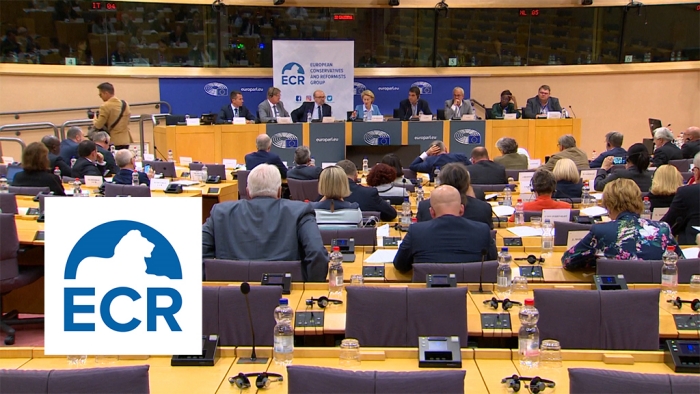
According to polls, the second largest force could be two far-right groups: “European Conservatives and Reformists” (ECR) and “Identity and Democracy” (ID). Moreover, the ultra-right “Identity and Democracy” was expected to increase its representation from the current 58 to 84 seats, while the ECR predicts an increase of 18 seats.
As a result, almost half of the seats could be won by MPs who are not part of the “grand coalition” of three centrist groups, and for the first time, the far right, conservatives, and Christian Democrats can form a right-wing populist coalition.
Polls have repeatedly shown that there is a chance that far-right political forces can win several dozen more seats in these elections. They have never been so close to gaining control over the EU.
Those political groups that unite right-wing and far-right parties are currently the 5th largest group of European conservatives and reformists and the 6th largest group that unites such anti-European and radical parties as “Identity and Democracy”. Now, there are risks that they could become the 3rd or 4th largest, – believes Stanislav Zhelikhovskyi, PhD in Political Science and an international expert.
He also adds that the parties couldn’t get a majority, but both groups could overtake the liberals from a party such as Renew Europe and could also leave behind the Greens.
In the new composition of the European Parliament, about a quarter of the deputy mandates will be held by the European far-right and European sceptics. This is the result of “fatigue” from supporting Ukraine and the strengthening of the tendency to “nationalise” the domestic and foreign policy of most EU member states.
However, the far right is divided. Excessive attention to the “legacy of the SS” in the rhetoric of the “Alternative for Germany” party pushed away from it the French “National Union” of Marine Le Pen and the Italian far-right Giorgia Meloni. Meloni’s support can be decisive for the re-election of Ursula von der Leyen as the head of the European Commission, – says Andriy Martynov, a leading researcher at the Institute of History of Ukraine.
The Ukrainian Review also sent a request to Roberta Metsola, President of the European Parliament. As soon as we receive an answer, we will publish it.
What consequences will this have for Ukraine?
The European Parliament, which is more “right-wing” in its composition, can complicate negotiations on Ukraine’s accession to the EU. However, Hungary will most likely block this process during its presidency in the second half of 2024 in the Council of the EU, – Andriy Martynov notes.
Among extreme right-wing and left-wing political groups, there are openly pro-Russian politicians who can divert the EU’s attention from Ukraine and Ukraine news war.
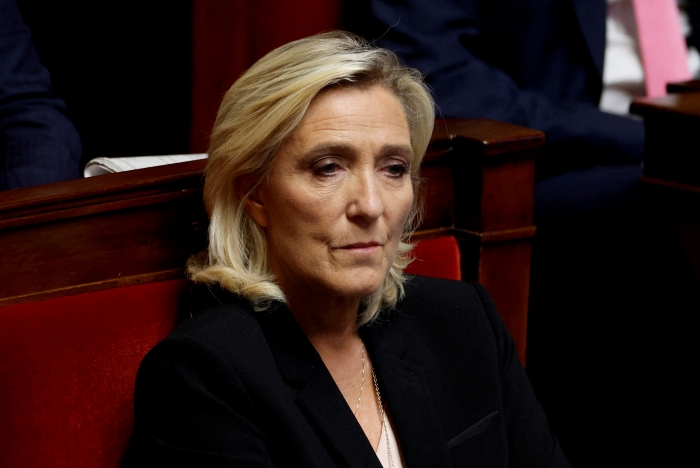
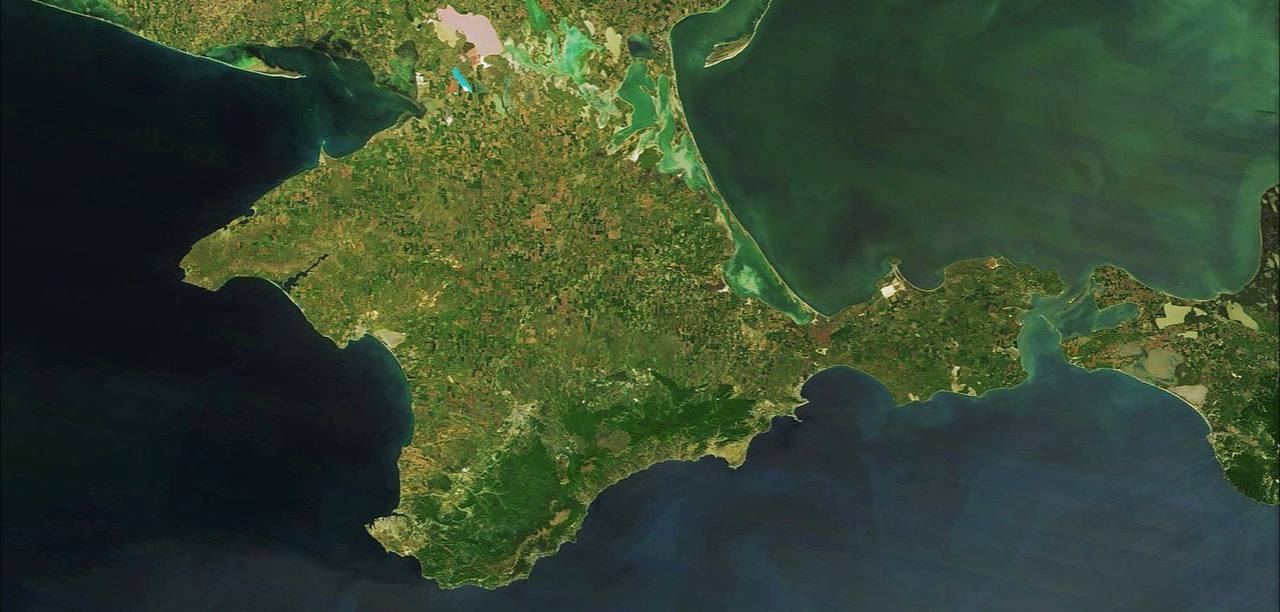
For example, the leader of the French “National Association” considers the annexation of Crimea “completely legal”. In the spring of this year, she said that if Moscow wins the war, it will be a disaster, and if Ukraine wins, it will allegedly mean “the beginning of the Third World War.” The Ukrainian Review wrote more about Marine Le Pen’s statements in this material.
From the beginning of the invasion, right-wing populists from “Alternatives for Germany” have consistently opposed the military support of Kyiv and sharply criticised the supply of German weapons to Ukraine.
Together with the Italian “League”, “Alternative for Germany” are known for their intentions to review the sanctions of the European Union imposed on Russia for the seizure of Crimea and in connection with the war in Ukraine.
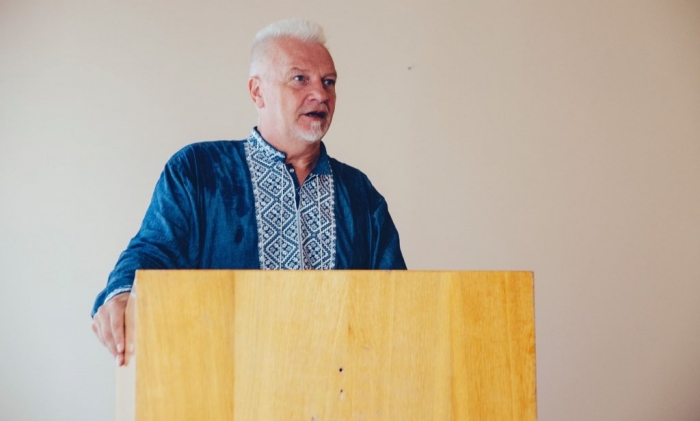
From my point of view, populist and far-right parties can get more votes, but it is unlikely that their role will be decisive in the work of the European Parliament of the new convocation. Most likely, Ukraine will not lose comprehensive European support, but the balance of power in the European Parliament may change. Forces which do not prioritise supporting Ukraine can win more votes, – says Ihor Todorov, a historian.
Stanislav Zhelikhovsky, PhD in Political Science, an international expert, adds his opinion to the topic of consequences:
I would like to note that the goal of all political groups is to maximally expand their ranks and thus gain influence on the election of heads of EU institutions and influence draft laws and their development. Therefore, in the direction in which the whole of Europe is moving.
Of course, these parties (right and ultra-right, ed.) will not win priority — they need to unite and create alliances. But the most dangerous here is precisely the tendency of increasing sympathy in European countries for such forces. The problems currently arising in Europe (in the context of economics, migration, etc.) are quite playing into the hands of these political forces. These forces are now speculating on aid to Ukraine as if we are taking part of their funds.
Russia supports such sentiments in Europe. By creating artificial migration crises (on the Polish-Belarusian border, for example), by influencing within the countries themselves, by bribing forces, etc.
The Ukrainian Review also contacted the Ministry of Foreign Affairs of Ukraine for comment. As soon as we receive an answer, we will publish it.
Results of elections
In the European Parliament elections, far-right forces either won or achieved high results in several countries. However, representatives of pro-European parties will still hold the majority in the European Parliament.
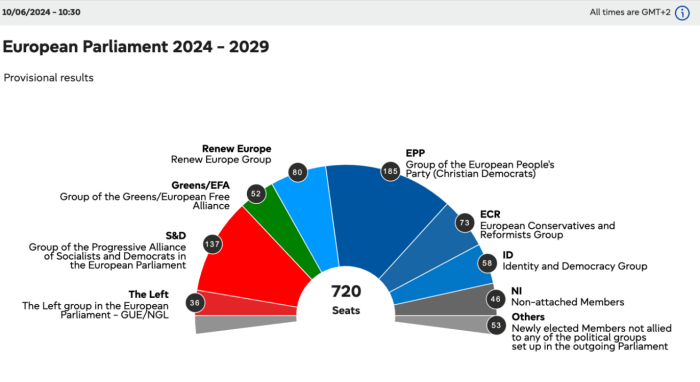
The centre-right European People’s Party (EPP) remained the largest faction in the European Parliament (according to results, they gained 10 seats and now have 186 mandates).
Two right-wing populist factions have increased their numbers. The European Conservatives and Reformists (ECR) and the far-right Identity and Democracy (ID) added a few seats (four and nine seats, respectively), but if they combine (73+58), they could become the second-largest force in the European Parliament.
Journalists from “Dzerkalo Tyzhnia” believe that the success of far-right parties might complicate the search for pro-Ukrainian solutions, but the situation is unlikely to change significantly. Much depends on personal appointments to key positions in the EU’s governing bodies.
Maria Mezentseva, Head of the Subcommittee on Approximation of Ukrainian Legislation to EU Legislation, Head of the Permanent
Delegation to PACE believes that the results of the European Parliament elections cannot be assessed as having a negative impact on Ukraine.
The Ukrainian Review has also sent a request to the Ministry of Foreign Affairs of Ukraine for a comment on the election results. We will publish the response as soon as we receive it.
***
Elections in the European Parliament are an extremely important event, especially in the context of Ukraine war now. They can shake the balance of power in Europe in favor of pro-Russian views and endanger the security of the whole world.
Anya Ostymchuk