

The Ukrainian Review offers a selection of what European, Asian, African, and other media wrote about Ukraine, including the Ukraine news war, at the end of May 2024. This will help to see which Ukraine in the news and, accordingly, in these countries’ information spaces.
Africa
Africanews – a South African media outlet with 4.3 million visitors over the past two months, does not cover any news related to the war in Ukraine, including the Russian offensive or missile strikes.
However, the journalists do report on the Russian president, Vladimir Putin. For example, they cover news such as his visit to Belarus or his expression of condolences to Iran following the death of President Ibrahim Raisi.
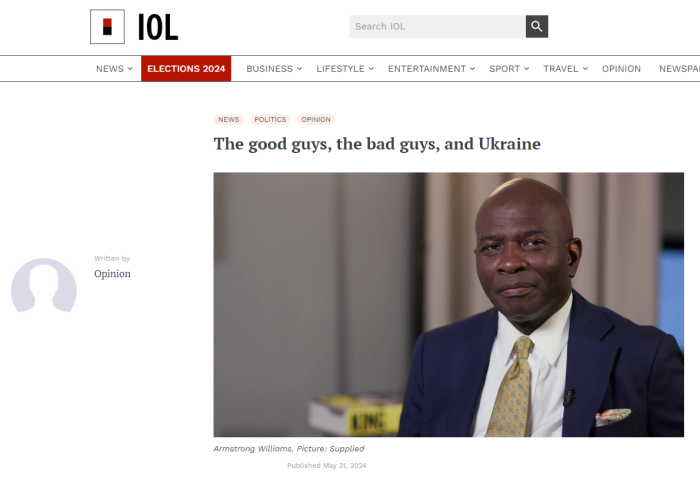
The Star is a South African media outlet with 42.3 million visitors over the past two months.
Journalists from the outlet write that without Russia, “Ukrainian peace summits” are a waste of time and that the peace summit in Switzerland offers little chance for peace to prevail.
In another piece, journalists argue that “Ukrainian borders are not sacred, not established by heaven, nor by any principle of international law.”
Europe
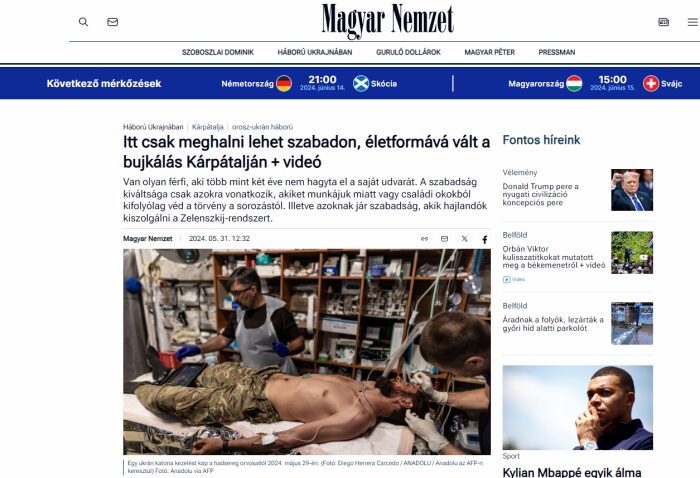
Hungarian media outlet Magyar Nemzet has 17.7 million visitors over the past two months.
Journalists present the Russian perspective on the war in Ukraine. For instance, in this article, they state that “according to Russian sources, Kyiv might prepare a provocation in Kherson.”
In another piece, journalists write about a man who hasn’t left his home for two years due to the risk of mobilisation.
Polish media outlet PolskieRadio24 has 2.5 million visitors over the past two months. It covers Russian attacks on Ukrainian cities (for example, reporting that Kharkiv was under fire, that Russians are killing Ukrainian children, and about the nighttime missile strike on May 26).
The publication PAP has 20 million visitors over the past two months. It similarly writes about the consequences of Russian attacks (for example, about infrastructure damage in the Lviv region and the shelling of Kharkiv).
Chine
Chinese media outlet CGTN, which has 28.3 million visitors over two months, continues to refer to the Russia-Ukraine war as “tensions” and “conflict.”
For example, in this article, journalists quote Putin saying, “The conflict with ‘Nazi’ Ukraine was inevitable, and the West is planting historical nonsense in the minds of millions.” They also quote his statement in this article that Poland has not given up its dream of seizing part of Ukraine.
At the same time, CGTN reports that Ukraine continues to sign security agreements with partners and imposes new sanctions against Russian legal and physical entities. However, it cites military news from the Russian side, such as claims that Ukraine shelled a city in Luhansk with ATACMS.
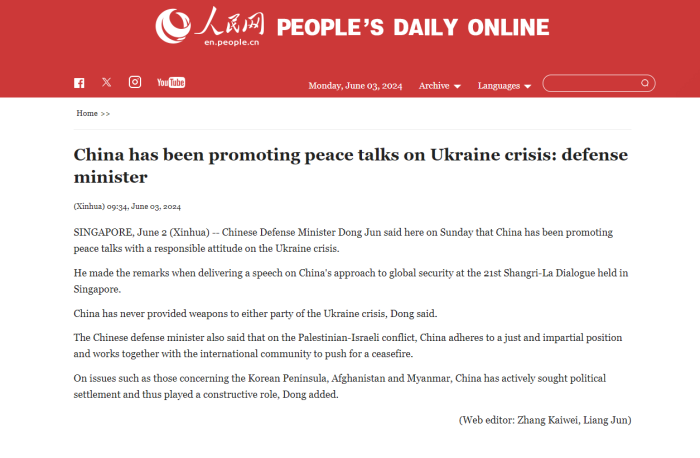
Another media outlet, People’s Daily, which has 1.3 million visitors over two months, similarly refers to the war as a “conflict.”
It covers topics such as “China promoting peace talks regarding the Ukrainian crisis” and quotes Putin stating his openness to dialogue about the “Ukrainian crisis.”
However, the publication lacks information on the Ukrainian Peace Formula and does not report on the consequences of Russia’s military actions on Ukrainian territory.
USA
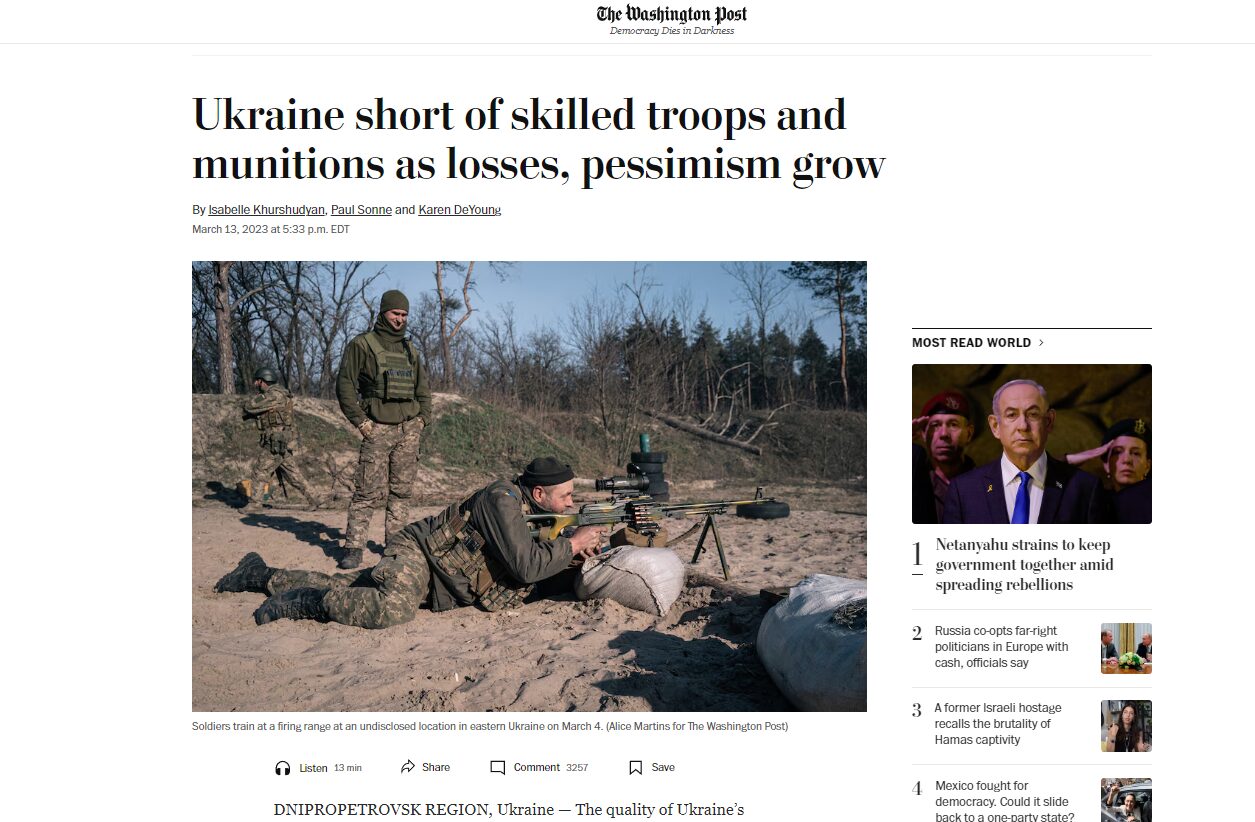
The Washington Post has 417 million visitors over two months. The journalists publish more report-based and analytical articles. For example, they discuss how Ukraine can best utilise the U.S. aid package, whether the defence can prevent Ukraine from losing, and the shortage of qualified troops and ammunition in Ukraine.
Politico, with 250 million visitors over two months, covers the impact of Russian strikes on Ukraine (such as attacks on Ukraine’s energy infrastructure). It also reports on President Zelenskyy’s efforts to persuade the broader international community to support Ukraine. Additionally, they write about how President Joe Biden has further entangled the U.S. in the conflict in Ukraine.
***
The analysis of how foreign media cover the Ukraine Russia war news demonstrates the political orientation of these countries. Some adhere to Russian narratives and report Russian news about Ukraine, while others support Ukraine, show war in Ukraine news or strive to maintain objectivity.
Anya Ostymchuk