

Russian propaganda since the beginning of the illegal annexation of Crimea in 2014 and the aggression in the East of Ukraine has demonized and discredited the Ukrainian military, in particular, the symbols and slogans they use.
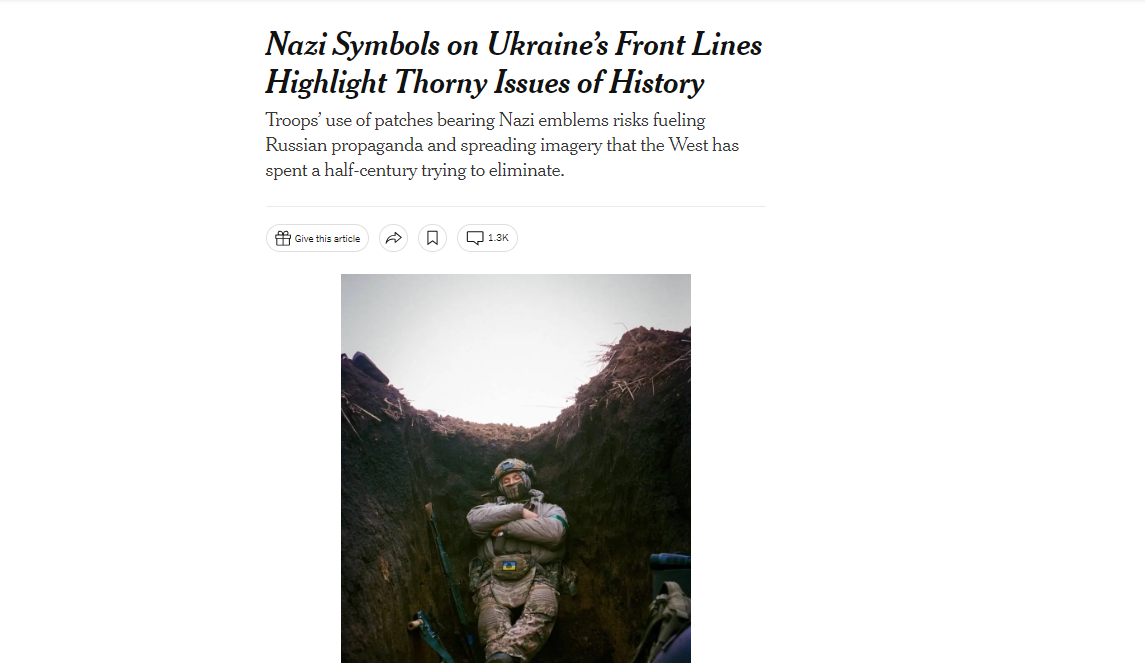
The New York Times published an article in which they analyzed in detail the symbols that can be found on the patches of the Armed Forces of Ukraine — Totenkopf, Sonnenrad, described their origin, and took comments from experts who explained what meaning these symbols have for soldiers:
“Ihor Kozlovskyi, a Ukrainian historian and religious scholar, noted that symbols have a meaning that is unique to Ukraine, and they should be interpreted not from the perspective of how they were used elsewhere, but from the point of view of Ukrainians.”
Contrary to this opinion, journalists noted that the use of Nazi symbols in the Ukrainian military fuels the words of the President of the Russian Federation that Ukraine is a Nazi state.

American newspaper and digital media The Hill criticized the article:
“Nazi symbols in photos of the Ukrainian military appear so often that this is not just a coincidence, but evidence that there are people in the military forces who openly promote Nazi ideology.”
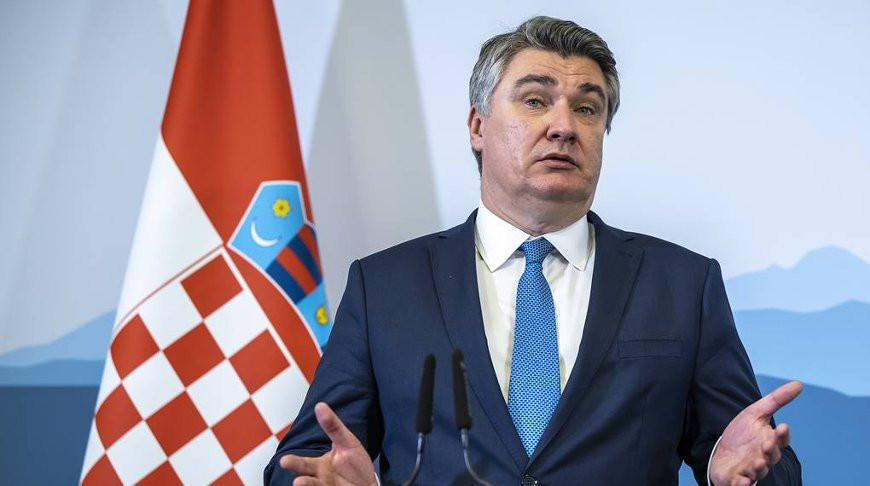
Recently, in addition to the discussion about symbols, there was also a discussion about the Ukrainian rallying cry “Glory to Ukraine”. The President of Croatia, Zoran Milanovic, expressed himself as follows:
“This is the cry of the most radical chauvinists of Western Ukraine, who collaborated with the Nazis and killed thousands of Jews and Poles… I don’t want to hear that in Croatia.” [he made such statements even before the outbreak of war — ed.].
The Ukrainian Review decided to conduct its own research into the meaning of the symbols and slogans used by the Ukrainian military.
Slava Ukraini | Glory to Ukraine
We spoke with Ihor Burkut, candidate of historical sciences, and political scientist, about the shout “Glory to Ukraine”.
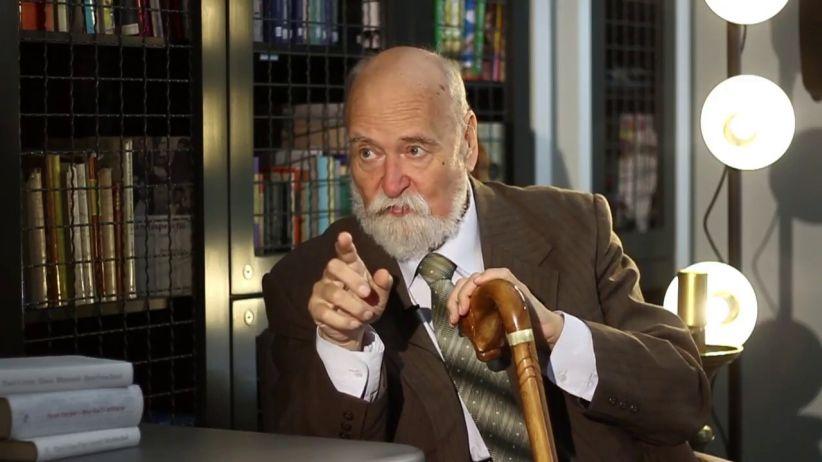
– When did the cry “Glory to Ukraine” appear?
– The expression “Glory to Ukraine!” was first documented in a letter from Panteleimon Kulish to Taras Shevchenko dated July 25, 1846. At the beginning of the 20th century. this is how the patriotic Ukrainian youth of Trans-Dnieper Ukraine, in particular, in Kharkiv Oblast, was greeted. And after the revolution of 1917, the expression instantly spread throughout Ukraine, it was often heard at rallies and demonstrations.
– Where did this saying originate?
– Greetings “Glory to Ukraine!” was introduced in the military units of the “Black Zaporizhia” of the Ukrainian People’s Republic, in the units of the serdyuks (guards) of Hetman Sagaidachny. And the Haydamaks, who fought for the Kholodnoyarsk Republic in 1919, also greeted themselves with the words “Glory to Ukraine! — Glory to the heroes!” Thus, the slogan was not born in Western Ukraine, but in Eastern Ukraine, and during the struggle for Ukraine’s independence in 1917-1921, it was widely spread. It was strictly prohibited in the USSR. It was preserved only in the West of Ukraine, and in 1941 the Bandera OUN approved the greeting “Glory to Ukraine!” and the answer “Glory to the heroes!”. The slogan received a new life after the collapse of the USSR, it was remembered throughout Ukraine — from the East, where it was born, to the West, where it lasted the longest.
About the “Black Sun”
Let’s continue the conversation with Igor Burkut about symbols.
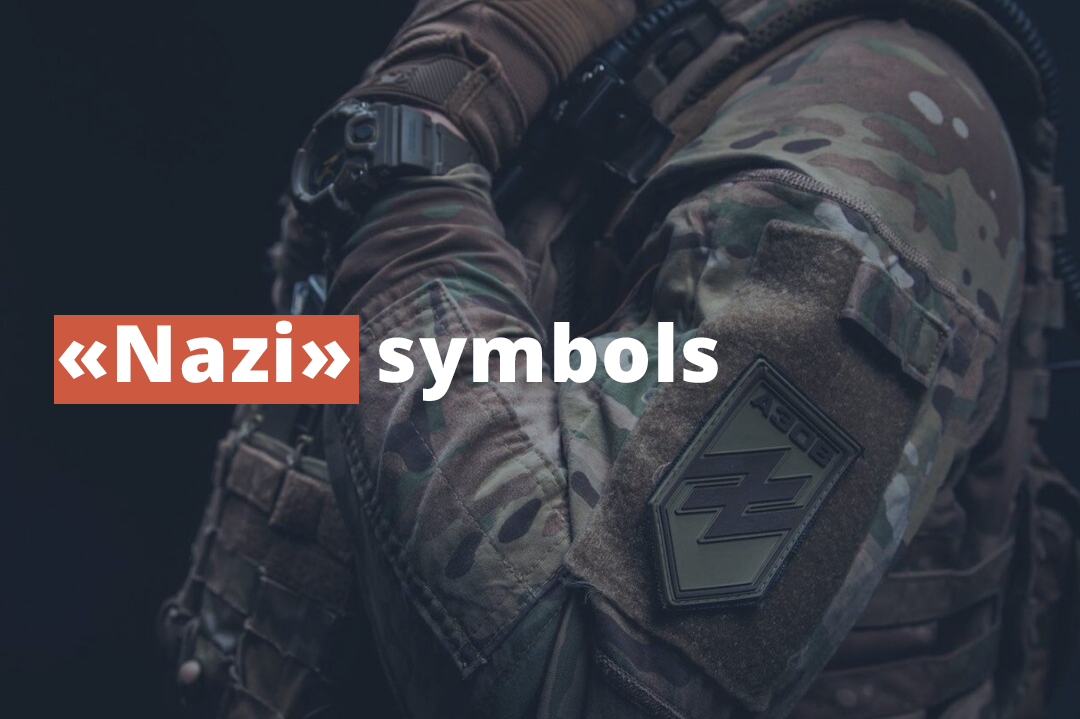
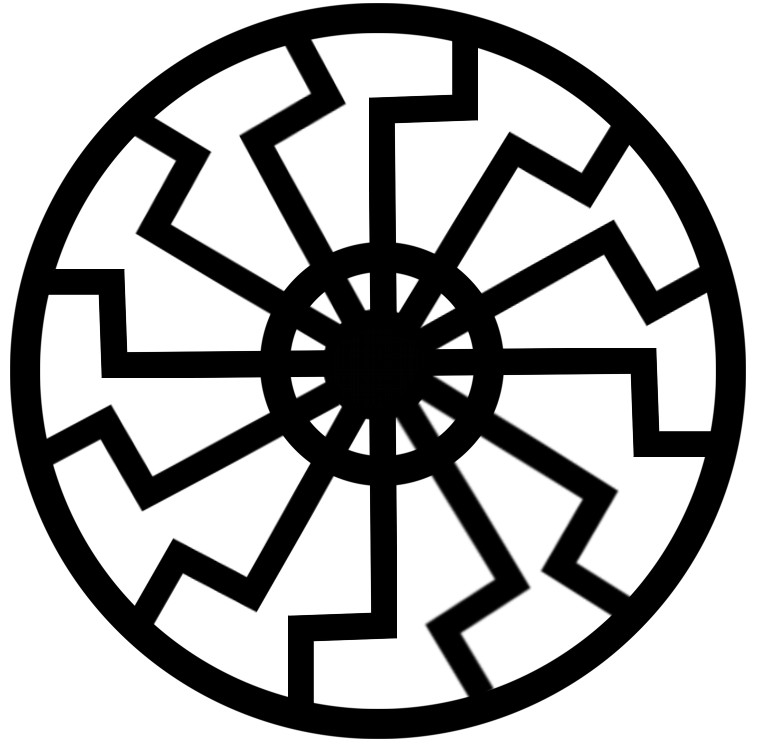
Black Sun” is an ancient occult symbol known in Slavic and Scandinavian tribes since pre-Christian times. It was considered a powerful symbol that provides a direct connection with ancestors. Only magicians, magicians, and priests could use it, ordinary people were forbidden, so that they would not harm themselves and others due to ignorance. In the Middle Ages, the sign was used by alchemists. And in Hitler’s Germany, occultists serving the Nazi leadership declared it an “Aryan symbol” and Reichsführer SS Himmler ordered the “Black Sun” to be depicted in the hall of the SS Wewelsburg Castle, hoping that this sign would help win the war. Of course, he didn’t help. And in 2014-2015, the “Black Sun” symbol was used by the fighters of the Ukrainian “Azov” regiment on their chevrons in its original Slavic meaning – as a sign of connection with ancestors and the continuation of their heroic traditions.
“Idea of the Nation”
“Another symbol is used on the chevrons of Ukrainian soldiers, which the anti-Ukrainian forces are trying to portray as “Nazi”. This is the “Idea of the Nation” sign, consisting of the superimposed letters I and N, with which these two words begin. The symbol is very similar to the long-known in Germany extra-alphabetic rune “Wolfsangel” [“wolf’s hook” — ed.]. It got its name from a sharp hook attached to a tree, on which a piece of meat was strung. Trying to swallow the food, the wolf got hooked and became a victim of the hunter. The rune symbolized protection, as well as capturing the enemy. During mass peasant uprisings in Germany in the XV century, the rebels used the “Wolfsangel” as their battle symbol. And in Hitler’s Germany, it was made a sign of some military units. The “wolf hook” symbol is also traditional in German heraldry, it is present on the coats of arms of many cities: Burgwedel, Erwitte, and some others. The Ukrainian military uses its own symbol, which only resembles “Wolfsangel”, but is not related to it by its origin and has nothing to do with the symbols used in Hitler’s army”, – Igor Burkut.

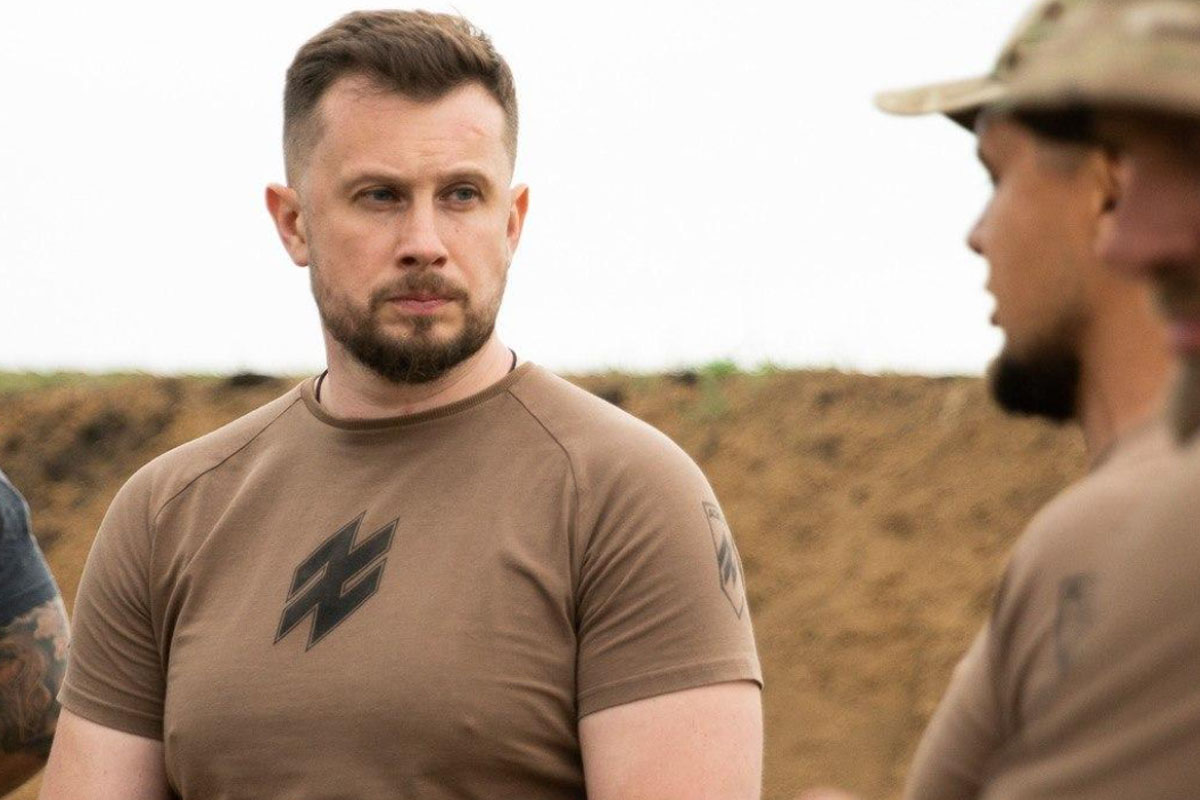
The first commander of the “Azov” regiment (the military formation of the National Guard of Ukraine, which uses this symbol), Andriy Biletsky, also denied the connection with Nazi symbols:
“I suspect that this very symbol was mistaken for a Nazi symbol. If so, then the statement is strange. At least a dozen cities in France, Belgium, and Germany have a similar sign on their coats of arms and city seals. And I am not going to give up the symbol for the sake of mindless political correctness, for which dozens of boys died.”
Totenkopf | Death’s head
“Most of the falsifications concern the image of skull and crossbones on the chevrons of Ukrainian servicemen. They are accused of using SS symbols, from which they conclude that modern Ukrainian soldiers are “Nazis”. But the image of skull and crossbones is an ancient symbol of death in many cultures. In Christianity, it was believed that washing the skull of Adam with the blood of Jesus washes away the sins of mankind and herald’s eternal life. Therefore, often in military symbols, the skull and bones symbolized contempt for death, this sign was worn by units that were distinguished by special courage. In the Prussian army, such a unit was formed in 1741 – the 2nd Life Guard Hussar Regiment of Queen Victoria of Prussia, the so-called “black hussars” — they wore black uniforms, and on their headdresses, there was an image of skull and crossbones”.
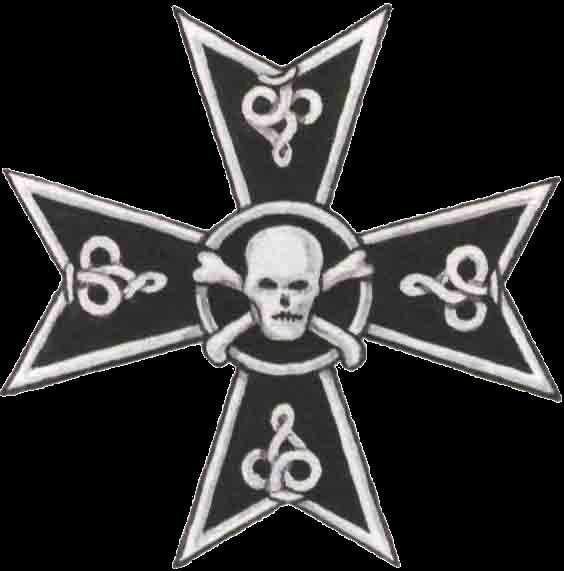
“According to this model, in 1776, the 5th Alexandria Hussars of Her Majesty Empress Alexandra Feodorovna Col. was created in the Russian Imperial Army. That is, the black uniform and Adam’s head on the hats were also worn by the Russian “black hussars”. By the way, in 2019, the modern Russian army tried to revive the “black hussars of death”: the 15th separate motorized rifle “peacekeeping” brigade was given the standard of the Alexandria regiment and given the honorary name “Alexandriyska”. In this context, it is necessary to remind that the Nazis, when creating the SS criminal organization, drew on the traditions of the Prussian “Black Hussars” when designing uniforms for it. They placed the sign of a dead head on caps, daggers, and a ring of honor. Since that time, many people have associated “Totenkopf” (“Death’s head”) primarily with the SS – “Hitler’s Black Guard”, although this symbol was used much more widely in many countries. At the end of the First World War, the image of a skull with crossed bones was worn on the chevrons of the Kornilovtsy, the shock units of the Russian army. During Ukraine’s struggle for independence in 1917-1921, the image of Adam’s head was used in some parts of the UNR army — in particular, the “Black Zaporizhia”. The skull and crossbones were also painted on Ukrainian armored vehicles. During the Second World War, this symbol was used on different sides of the front. Thus, the Serbian Chetnik rebels, who fought for the revival of royal Yugoslavia and fought both against the Nazis and the Croatian Ustasha, as well as against Tito’s communist partisans, wore images of skulls and crossbones on their headdresses. Such a symbol was also on their black flag. Therefore, this symbol cannot be associated only with the SS criminal organization, it has existed for many centuries and among different peoples. It is currently used in some units of the Armed Forces of Ukraine, which rely on old Ukrainian traditions, both religious and military”, – Ihor Burkut.
“Nazi symbols are too often found among the Ukrainian military”
“What is “too often”? Perhaps the speaker has done thorough research and has physical evidence? The Ukrainian military takes a lot of photos and video material about the war. They share their experiences, with shocking stories, and show evidence of war. Many photos of the military themselves are published, because thousands of Ukrainians who have never served before joined the Armed Forces. So what exactly are the photos in question? Give the names and surnames of these military personnel. After all, in our time, with the help of artificial intelligence (AI), you can generate a lot of material: even the Pope in a Nazi uniform.
If the author of the comment was frightened by a tattoo with a swastika or other symbols, then he should turn to the history of religions. This symbol is much older than Nazism. The swastika, or spinning wheel, is a symbol of the sun, which was worshiped by the peoples of Eastern Europe. Moreover, this cult is spread to other continents. It should be understood that modern Ukraine is not monotheistic. Many current church rites are connected with pre-Christian beliefs, and many Ukrainians sympathize with older beliefs. Every year, Ukrainians paint chicken eggs (a symbol of life) for Easter, and the most skilled ones paint eggs according to ancient traditions. And the swastika is one of the key symbols. There are many variations of it,” – explains Svitlana Suhak, musician, researcher of cultural studies, and author of digital visualization of ancient Kyiv.
Nazis in Ukraine? As part of the Russian propaganda
The Ukrainian Review has already written about the existence of Nazism and supporters of this ideology in Ukraine.
“In the absence of specifics and facts, this thesis contains at the same time a very specific and very serious accusation — of promoting an anti-human ideology. And this could be called banal populism, which, unlike terrorism, is not prohibited by any convention. But the conditions when Ukraine is facing Russian aggression, which has caused thousands of deaths, deprived millions of Ukrainians of their homes, and the entire population of Ukraine — the basic right to security, has called into question the security of the entire world, this populism is no less dangerous than terrorism.
The tactical goals of this populism:
- demonization and defamation of the Ukrainian military and the Armed Forces of Ukraine in general;
- discrediting the image of Ukraine;
- deprive Ukraine of international support;
- to legalize Russia’s destruction of the Ukrainian people.
In this perspective, it should be recalled that Ukraine, like its citizens, recognizes all international norms against extremism, terrorism, and Nazism, among others. This is confirmed by the ratifications of international conventions, the Constitution of Ukraine, and numerous norms in the legislation. Additionally, in 2015, Ukraine adopted the law “On Condemnation of Communist and National Socialist (Nazi) Totalitarian Regimes in Ukraine and Prohibition of Propaganda of Their Symbols.” None of these legislative provisions causes any objection among the citizens of Ukraine”, — adds Svitlana Suhak.
Spreading information about Nazi symbols and sentiments among the Ukrainian military is nothing more than an attempt to demonize, and undermine the authority and trust in the Armed Forces of Ukraine.
Anya Ostymchuk
The editor or members of the editorial board are not responsible for the author’s opinions and manuscript contents. All symbols presented are taken from open sources and used for demonstration purposes. The editors strongly oppose all forms of discrimination on national, religious, racial or other grounds.