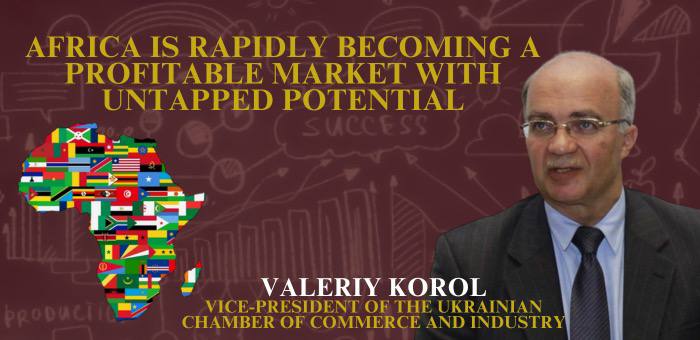


Today, Africa is rapidly becoming a profitable market with untapped potential.
With a growing population, rich natural resources, and increasing purchasing power in some countries, Africa presents a unique opportunity for Ukrainian companies looking to expand their presence and benefit from the continent’s significant economic growth.
Africa is by no means a homogeneous continent. Even the differences between regions within a single state can be vast. Each individual country and region requires a highly individualised approach.
A brief overview of promising markets and areas of cooperation for Ukrainian companies, the features and challenges of doing business, and some practical recommendations for entering and operating on the African continent and in individual countries.
Food products
Exporting food products to Africa opens up significant opportunities for Ukrainian enterprises seeking new markets. Food products constitute the most significant part of household expenditures on the continent, accounting for about 40% to 60%. Most African countries cannot fully supply themselves with these products and require imported goods.

Pharmaceutical and medical products
Although there is some local pharmaceutical production, African countries mainly import medicines and vaccines, typically from countries with advanced pharmaceutical industries.
Essential medical equipment, including surgical instruments, diagnostic tools, and hospital supplies, is often imported due to the lack of local production capabilities in these specialised areas.
Chemical products
Many African countries import various industrial chemicals used in manufacturing processes, including acids, solvents, and polymers. These chemicals are needed for textiles, plastics, and construction industries. The largest importers of industrial chemicals in Africa are Nigeria, South Africa, Egypt, and Kenya.

Construction materials
Local production meets only a particular portion of the demand. Importing construction materials such as specialised cement, steel reinforcement, and high-quality glass is necessary for large-scale infrastructure projects and regular construction.
Across Africa, the construction sector has a significant need for imported products to support growth and development. The largest importers are North African countries, Nigeria, and South Africa. Among the materials for which local production does not fully meet demand:
- Specialised roofing materials, modern facade materials, and flooring materials.
- Concrete additives, waterproofing products, and adhesives.
- Heavy equipment, excavators, cranes, specialised equipment for various tasks, and general construction tools.
- Modular building units and structural components for fast and cost-effective construction.
- Intelligent building systems, modern construction technologies, and innovative technologies.
- Cement, concrete products, and building aggregates.
Vehicles
The import of vehicles, especially buses, is crucial for Africa due to rapid urbanisation, population growth, and the need for efficient public transportation. As many African countries invest in infrastructure and experience economic growth, the demand for reliable transportation systems is increasing. Local vehicle production is often limited, making imports necessary to meet the needs of public services, tourism, and trade. Additionally, there is a growing interest in fuel-efficient and environmentally friendly vehicles to support sustainable urban transport, further driving the relevance of vehicle imports across the continent.
Other areas worth attention
The renewable energy sector in Africa is rapidly expanding, driven by the continent’s need for sustainable energy solutions and abundant natural resources.
Solar energy is one of the fastest-growing areas, with countries like South Africa, Kenya, and Nigeria leading the importation of photovoltaic panels and related technologies.
Hydropower remains extremely important in countries like Ethiopia and Uganda, where significant investments are being made in turbines and generators for large-scale projects such as the “Grand Ethiopian Renaissance Dam”. Meanwhile, the demand for energy storage systems is growing in countries like South Africa and Kenya, which are integrating renewable energy sources into their grids.
Biomass and waste-to-energy conversion technologies are developing in Ghana, Kenya, and Nigeria, where importing technologies and equipment helps address waste management and energy diversification challenges. Overall, importing renewable energy technologies and equipment to Africa is expected to grow by 10-15% annually, with this sector playing a vital role in the continent’s energy future.

GENERAL RECOMMENDATIONS FOR DOING BUSINESS ON THE CONTINENT
- Each country on the continent, each region, and each province differs significantly from the others. These differences can lie in business approaches, local government corruption, safety, solvency, infrastructure, etc. Understanding these differences can help build stronger relationships with partners and customers and ultimately achieve success in business relations.
- Africa is the most linguistically diverse region in the world. English is commonly used in Northeast and Southern Africa, but entrepreneurs doing business in Northwest Africa will need to hire a translator for French or Arabic.
- Each country in Africa has its own set of laws and regulations governing business. It is essential to understand and comply with them, as failure to do so can lead to large fines or even legal problems. It is also advisable to collaborate with local experts who can help navigate the legal, customs, and other complexities of doing business in Africa.
- Personal relationships are significant in most African countries, as trust and mutual respect are often critical factors in successful business operations. In many African cultures, business decisions are made not only based on contracts and formal agreements but also on personal relationships that are formed over time. By building solid relationships with partners, investors, and clients, businesses can gain an advantage through loyalty, long-term cooperation, and opening up new market opportunities.
- Dealing with local bureaucracy in most African countries can become a significant challenge for entrepreneurs, and officials often expect “gifts” to speed up procedures.
- For marketing, it is essential to use not only global platforms like Facebook and Google Ads but also local platforms, including Vskit and Bumpa (Nigeria), Ayoba, Zulzi, and Kandua (South Africa), Mookh (Kenya), TrotroTrends (Ghana), Mwananchi (Tanzania), and others.
- It is essential to keep in mind that local entrepreneurs often prefer their own people when signing contracts.
- Many African countries are very unstable, so it is important to have political risk insurance, which is provided by the Multilateral Investment Guarantee Agency (MIGA) of the World Bank and several national development agencies.
- Infrastructure such as transportation, energy, and telecommunications may be underdeveloped in many parts of Africa. This can affect logistics and overall business operations. Investing in reliable infrastructure solutions or partnering with local companies familiar with the landscape can help mitigate these issues.
- Access to finance can be a severe obstacle for businesses in Africa. Despite growing interest from international investors and development financial institutions, local financing opportunities are limited. Often, foreign financial institutions refuse to provide loans for business development in Africa.
- Although Africa’s population is young and growing, it often lacks adequate education and skills. Projects involving local communities may usually require significant investment in staff training.
- It is worth seeking assistance from Ukrainian diplomatic missions in African countries and from African countries’ representations in Ukraine. They can often provide valuable contacts and up-to-date information on specific countries and regions. As of August 2024, Ukraine has diplomatic missions in 10 African countries: Egypt (Cairo), South Africa (Pretoria), Morocco (Rabat), Kenya (Nairobi), Nigeria (Abuja), Ethiopia (Addis Ababa), Algeria (Algiers), Tunisia (Tunis), Senegal (Dakar), and Ghana (Honorary Consulate in Accra). Representatives of the Ukrainian Chamber of Commerce and Industry, who work in twelve countries on the continent, will also become professional assistants in developing Ukrainian business on the African continent.

By Valeriy Korol, Vice-President of The Ukrainian Chamber of Commerce and Industry