

From July 11 to 12, the NATO summit will be held in Vilnius (Lithuania), where security guarantees and Ukraine’s accession to the Alliance will be discussed. The closer this date is, the more active the discussion of analysts on this matter becomes.
Some believe that Ukraine should wait for powerful armed support, while others see prospects for accelerated accession. We also joined this debate and asked two political scientists what their expectations were.
Who will be the main ally of Ukraine at the summit
Currently, NATO includes 31 countries, and it is so easy to find allies of Ukraine among them. Certain countries, such as Poland, had a pro-Ukrainian position from the very beginning of the full-scale invasion, but others, such as Turkey, took a more neutral position.
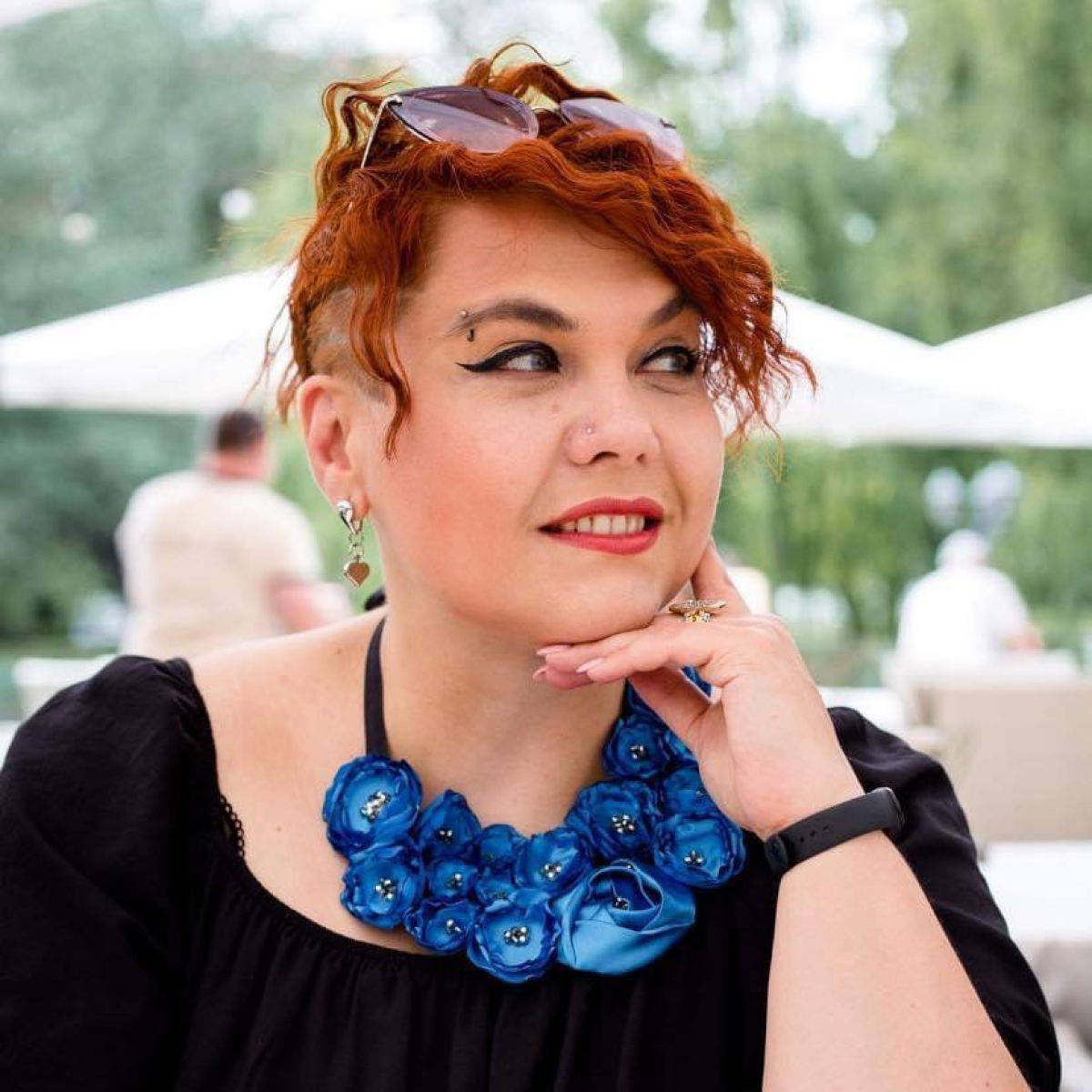
We asked Oleksandra Reshmedilova, a political scientist, an expert of the United Center for Political Forecasting, what to expect from the summit, and she answered the following:
“Consultations are underway, and first of all, we see statements somewhere from Stoltenberg, somewhere from Macron, somewhere from Biden, that, in principle, there are talks about accepting Ukraine under an accelerated procedure. And there is a serious calculation for this, at least Ukraine expects to receive a certain road map in terms of how to act”.
She singled out the most proactive position of the US and Britain, which can contribute to an accelerated decision.
“First, on the one hand, Biden insists on accepting Ukraine in an accelerated regime without a MAP*, and the US will probably lobby for this moment, not only that, perhaps, help will come from Britain. Macron’s rhetoric has changed. Information appears in the Western press that France can directly change its position and thereby support Ukraine”.
*The Membership Action Plan (MAP) – a NATO programme of advice, assistance and practical support tailored to the individual needs of countries wishing to join the Alliance. Participation in the MAP does not prejudge any decision by the Alliance on future membership. Bosnia and Herzegovina is currently participating.
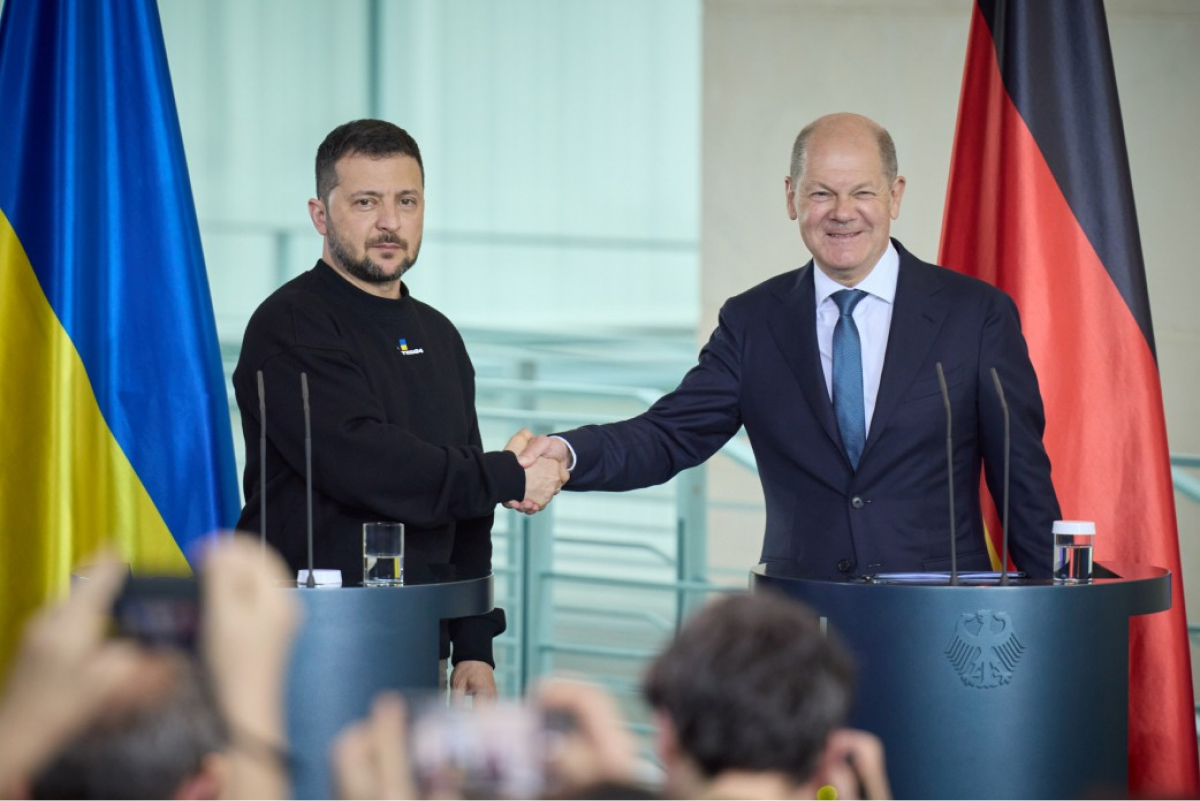
However, she added that a lot will depend on Germany’s position. That is why, just on the eve of the summit in Vilnius, consultations are taking place with Berlin. It is interesting to see what statements he will make, and whether there will be statements from the Chancellor of Germany on the eve of the summit itself.
There are certain conditions that slow everything down
Oleksandra Reshmedilova emphasized that not all countries of the Alliance are unanimous in their views. Yes, there is a position, for example, of Jens Stoltenberg, there is a position of Anders Fogh Rasmussen, there are statements that it will be easier to control Ukraine and the supply of those weapons that have arrived here.
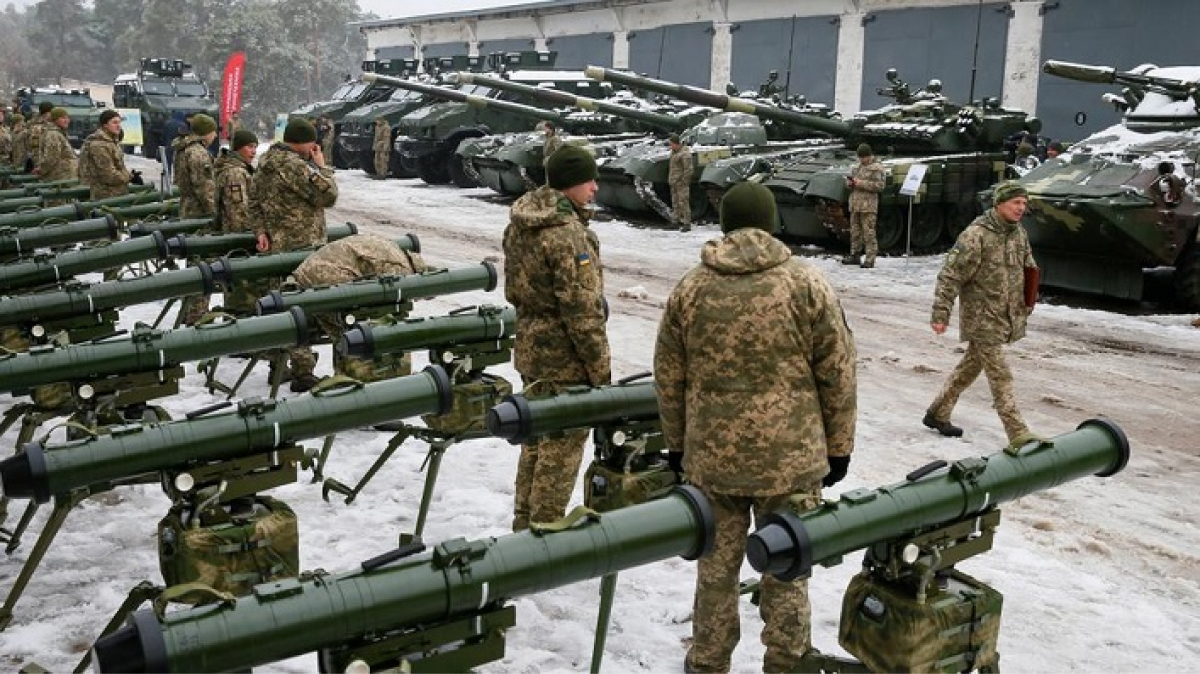
“In this way, in fact, everyone will win, that is, there will be a win-win situation. On the other hand, there are serious fears, because they are not in a hurry to fight for Ukraine yet. I think that the Vilnius summit will really show additional agreements specifically on financing, on the provision of weapons and ammunition. But it is interesting whether factories will be built here, whether we will be able to produce weapons, not only supply them, get them from suppliers”.
The question is left open. But instead, there is another statement from the Americans that corruption schemes can become a certain obstacle, the expert said:
“And so this is like a warning that it is necessary to fight with it and eliminate these known cases when there is procurement, especially for military purposes or around the army. All this must be done very quickly, like homework. And the question is what position the West will stand on. Does he see evolution and change, or on the contrary, does he see only the strengthening of corruption schemes”.
What is the Kyiv Security Treaty and the Israeli Model of Guarantees
The new international agreement on security guarantees for Ukraine will be based on a similar system that Israel currently has. It will prioritize the supply of weapons and advanced technologies to Kyiv. President of Poland Andrzej Duda said this in an interview.
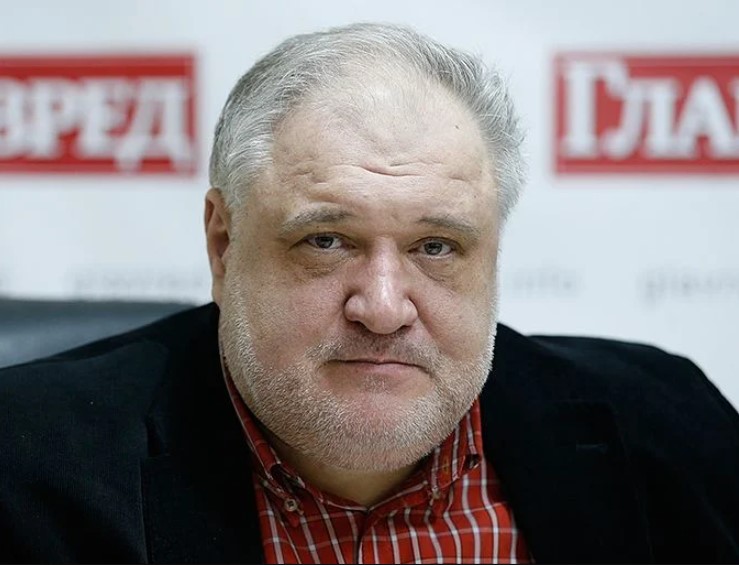
We asked Volodymyr Tsybulko, an expert of the United Center for Political Forecasting, what to expect from these guarantees. He replied that we cannot yet easily join NATO according to Finland’s scenario. Let’s not be in a hurry to write about Sweden because Turkey spoiled the scenario a little for her. He believes that Ukraine is unlikely to be accepted while it is in a state of war and is conducting hostilities.
“But there is one important element in Finland’s scenario – the provision of security guarantees for the period until Article 5 is extended to the country before full membership. That is why a different model is emerging – similar to the US security guarantees for Israel [Israel was designated as a major non-NATO ally in 1987 by US President Ronald Reagan – ed.], or South Korea, or Japan. After all, the mentioned countries are not members [of NATO], but all arms markets for NATO partners are open to them, and the most important thing is that a direct agreement with the USA allows immediate security decisions to be made, without complex agreements that eat up precious time to repel aggression”.
He added that because of this, at the Vilnius summit, Ukraine will most likely receive many good proposals regarding weapons, and assurances of an accelerated accession scenario after the end of hostilities. But here it is important that Ukraine demonstrates a set of administrative and legislative decisions that would testify to the real intention of acquiring full membership in NATO.
The Kyiv Security Treaty, which provides for the organization of these security guarantees on the Israeli model, will also be considered. In general, it provides conditions for strengthening Ukraine’s defense capabilities.
“The Kyiv Security Treaty is perceived by many in the West as a maneuver by Bankova to delay Ukraine’s acquisition of full membership in NATO, but not everything is so one-dimensional. Because the West itself is not quite ready to answer the question – “if not NATO, then what?” After all, Ukraine needs NATO, primarily as an incentive for internal political transformations, for the modernization of state institutions”, – emphasized Tsibulko.
He also shared his opinion on the creation of the “Ukraine and NATO Council”, which will be a window to Ukraine’s future membership. According to this document Ukraine will have the authority to convene meetings of this council and apply for assistance, which individual member states will then be able to provide.
“Therefore, the creation of the “Ukraine and NATO Council” will be a new step in the perspective of gaining membership, but will the creation of such a council make it possible to compensate for the MAP itself? After all, militarily, Ukraine has actually achieved harmonization with NATO standards, but how long will it take to complete the political transformations? And how, in fact, Vilnius can give Ukraine not only beacons on security issues, but also the first sketches of post-war recovery”.
Tsybulko believes that the Kyiv Security Treaty more or less clarifies the contractual position of Ukraine. The question of the property of the aggressor country is still discussed, and the legislative provision of sequestration of such property in favor of Ukraine in the first place is important in NATO countries.
What conditions can be put forward to Ukraine
Oleksandra Reshmedilova believes that it is still difficult to predict what the position of the USA will be or what the position of Germany will be. But many are counting on the fact that, after all, Ukraine will get a certain positive effect. In her opinion, it is necessary to see whether the summit in Vilnius will resolve the issue, for example, regarding Sweden.
“Because Finland and Sweden are cases that Ukraine is focusing on and they see how quickly they can accept Ukraine into NATO. And if it was still possible to reach an agreement in Finland and Sweden, for example, with Turkey. She has her position and is actually in no rush to let them give the green light completely until she resolves these issues that are important to them, these issues of legislation. That is, we can get certain specific actions, but with many conditions. And for us, such conditions can be conditions, for example, from Turkey, from Hungary and other countries, which can be, if not against, then let’s say, demonstrate their position”.
She singled out an important point – the creation of the Council and the abolition of the Ukraine-NATO commission. This is an important step, because since 1997 Ukraine had a commission to which we reported more.
“This is the concept of a relationship where there is a certain patronage and there is a reporting party. The Council will give Ukraine a full, full-fledged right to vote and, most likely, while it will be some kind of more formal structure with subdivisions, institutions, etc., according to the statements. That is, cooperation will be multi-level. At first, this idea was received quite skeptically, but on the other hand, it is necessary to show the changing evolution of Ukraine-NATO relations from the 90s to the present. The emergence of this Council may mark a fundamentally new stage”.
Currently, about 80% of Ukrainians polled are in favor of joining NATO. But it was not always so. The results of sociological surveys show the dynamics of changing attitudes towards NATO.
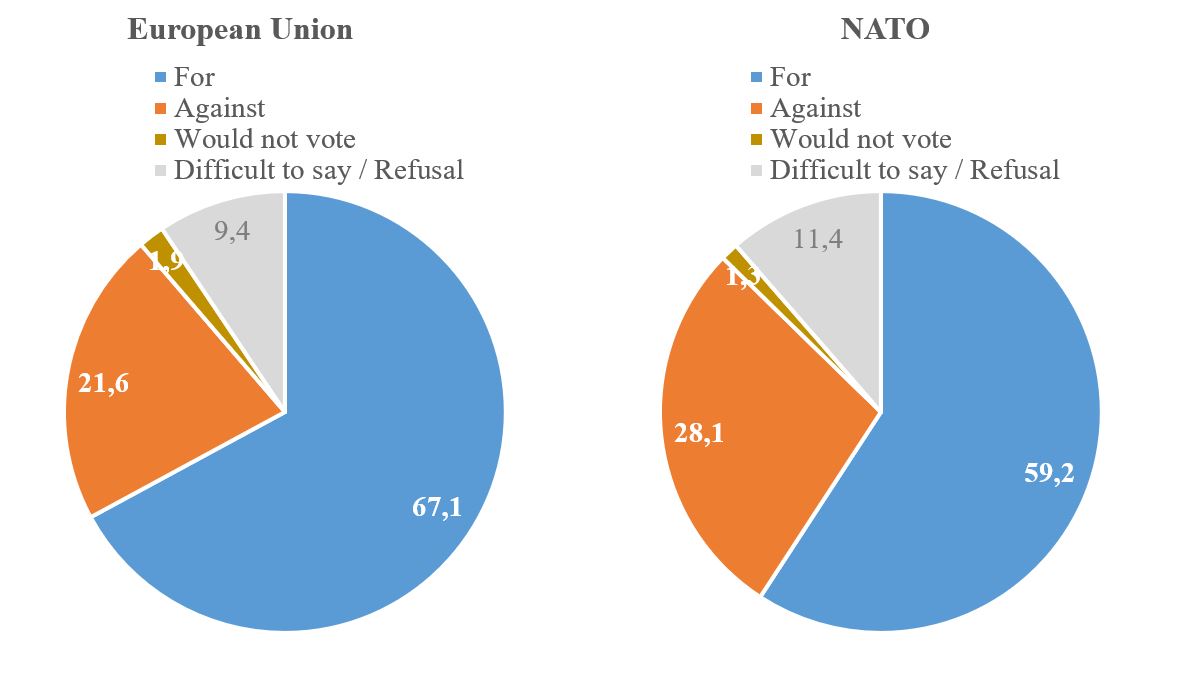
If in 2000-2013 support did not exceed 30%, in some years it dropped to 15%, then after the start of Russian aggression in 2014, the number of NATO supporters increased to more than 50%.
How a threat from the Russian Federation can speed up Ukraine’s accession to NATO
Oleksandra Reshmedilova suggests that there are currently two main ideas – whether the effect of the summit will be positive or negative.
“The positive effect may be related not only to the readiness or unreadiness of NATO. It can also be due to threats. It is not for nothing that Stoltenberg declares that, for example, nuclear weapons may be present on the territory of Belarus by the hands of Moscow. It is not for nothing that Biden makes statements that he believes in the reality of the threat from the Russian Federation regarding tactical nuclear weapons. All this indicates that Ukraine is forced to defend not only itself, but also NATO member states”.
She added that it may happen that they will take the step of accelerated acceptance of Ukraine also because of forced circumstances, because of threats, because of aggression.
“And let’s see what will actually become this key moment. The summit is important, but let’s say that in addition to the summit, there are other important events and relationships. I can list them so easily, they are the Bucharest summit, the G7, Chisinau, and London. And all these sites are aimed at strengthening Ukraine, strengthening and strengthening our partnership relations. Relations with NATO should also be treated as partnership, not just rescue”.
Reshmedilova added that this is not only about our security. It can be assumed that the NATO member countries, which are the eastern flank of the alliance, will do everything to ensure that the principle of collective security is implemented. And Ukraine became a part of it.
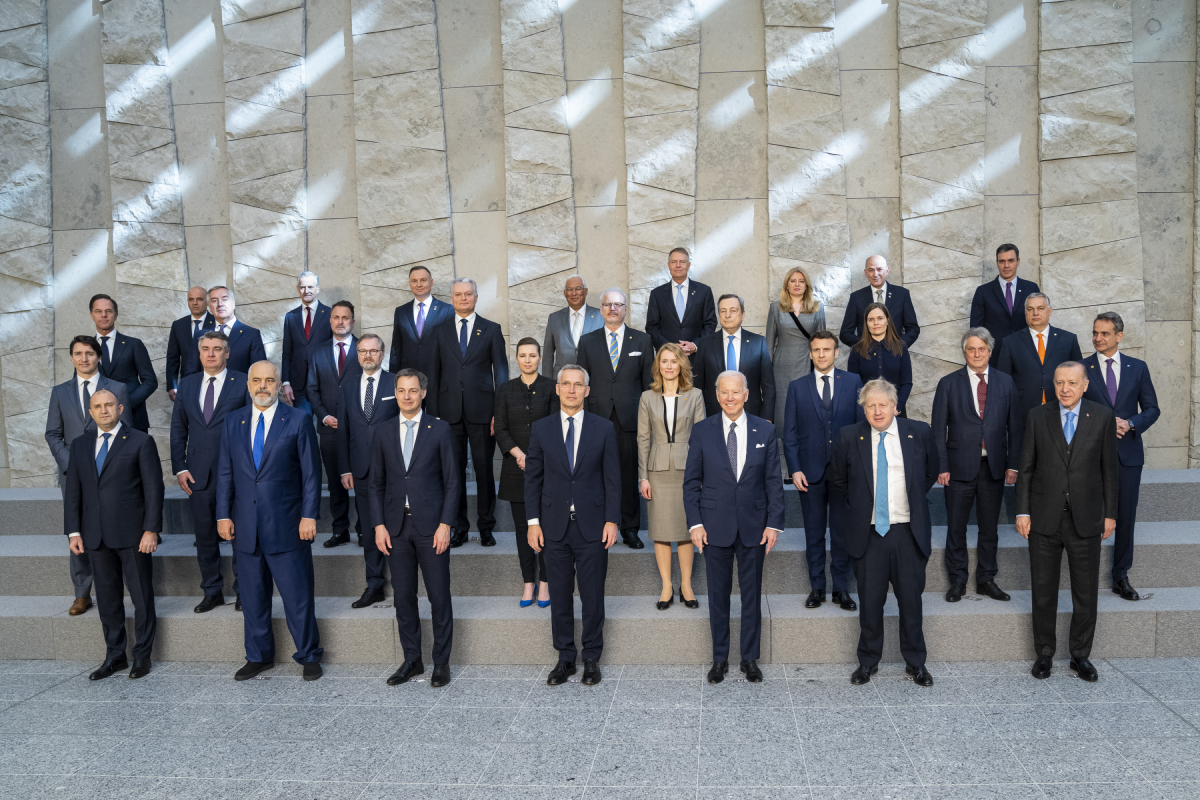
It is not yet known what results to expect from the NATO summit in Vilnius, but both experts express positive hopes. It is most likely that Ukraine will receive new security guarantees and financial assistance. It is also possible that a special “Council of Ukraine and NATO” will be created, which will be a stepping stone to accelerating Ukrainian accession to the Alliance.
Tetiana Stelmakh