


The Russian army is storming the Luhansk and Donetsk regions with full force. They still want to win, no matter what. Soldiers Rodion and Oleg are sticking together with their comrades. There are good reasons for that.
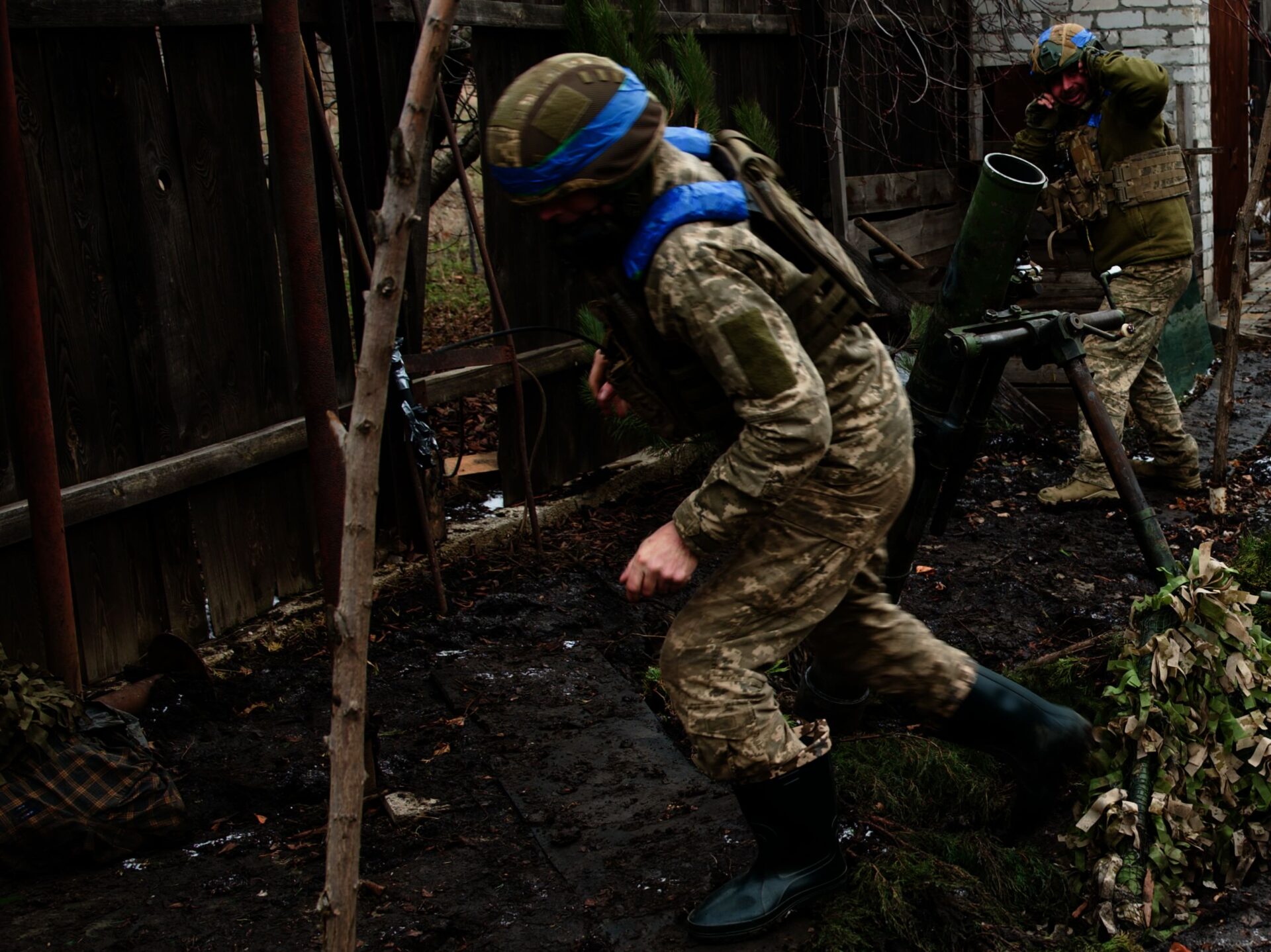
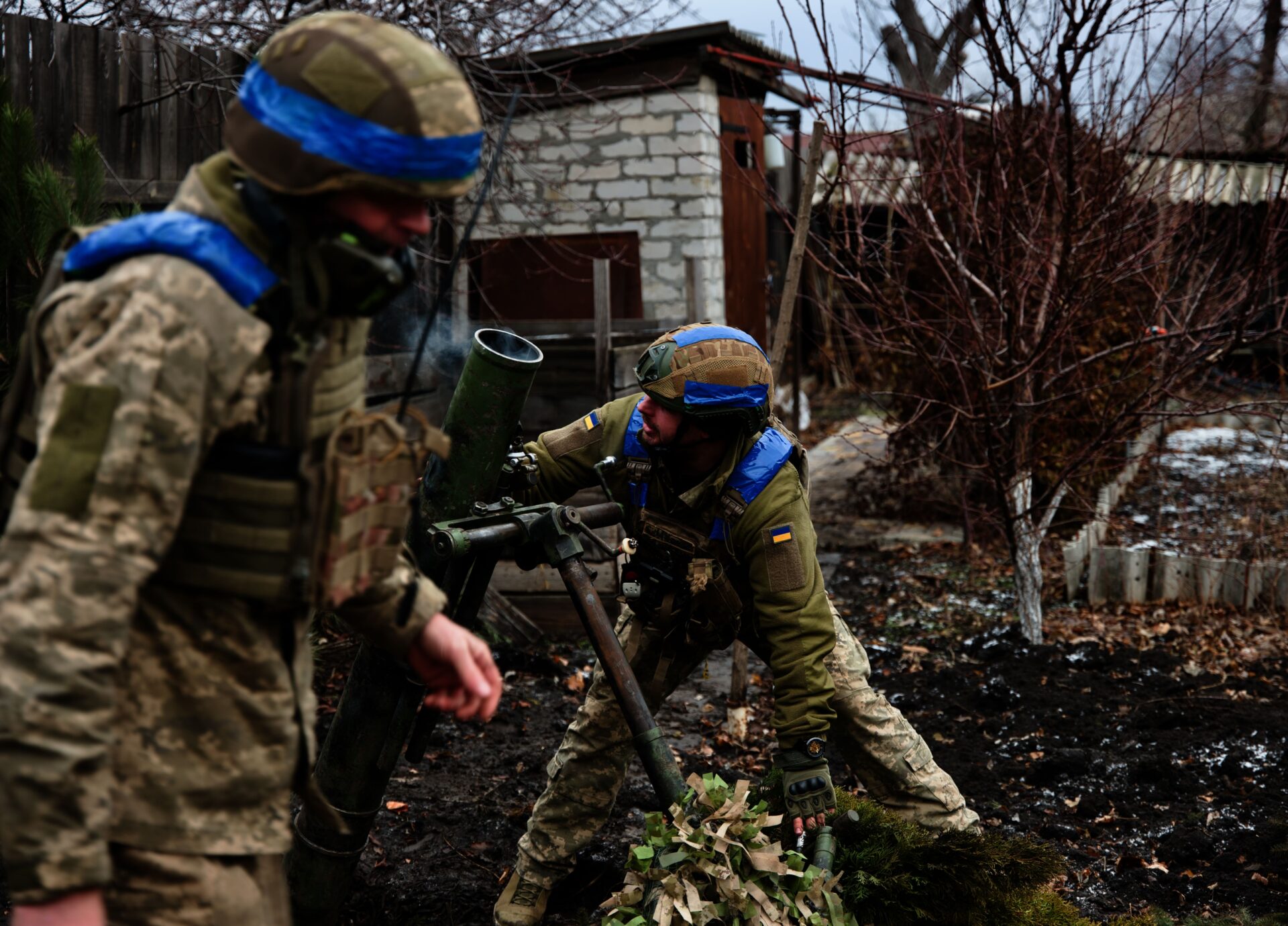
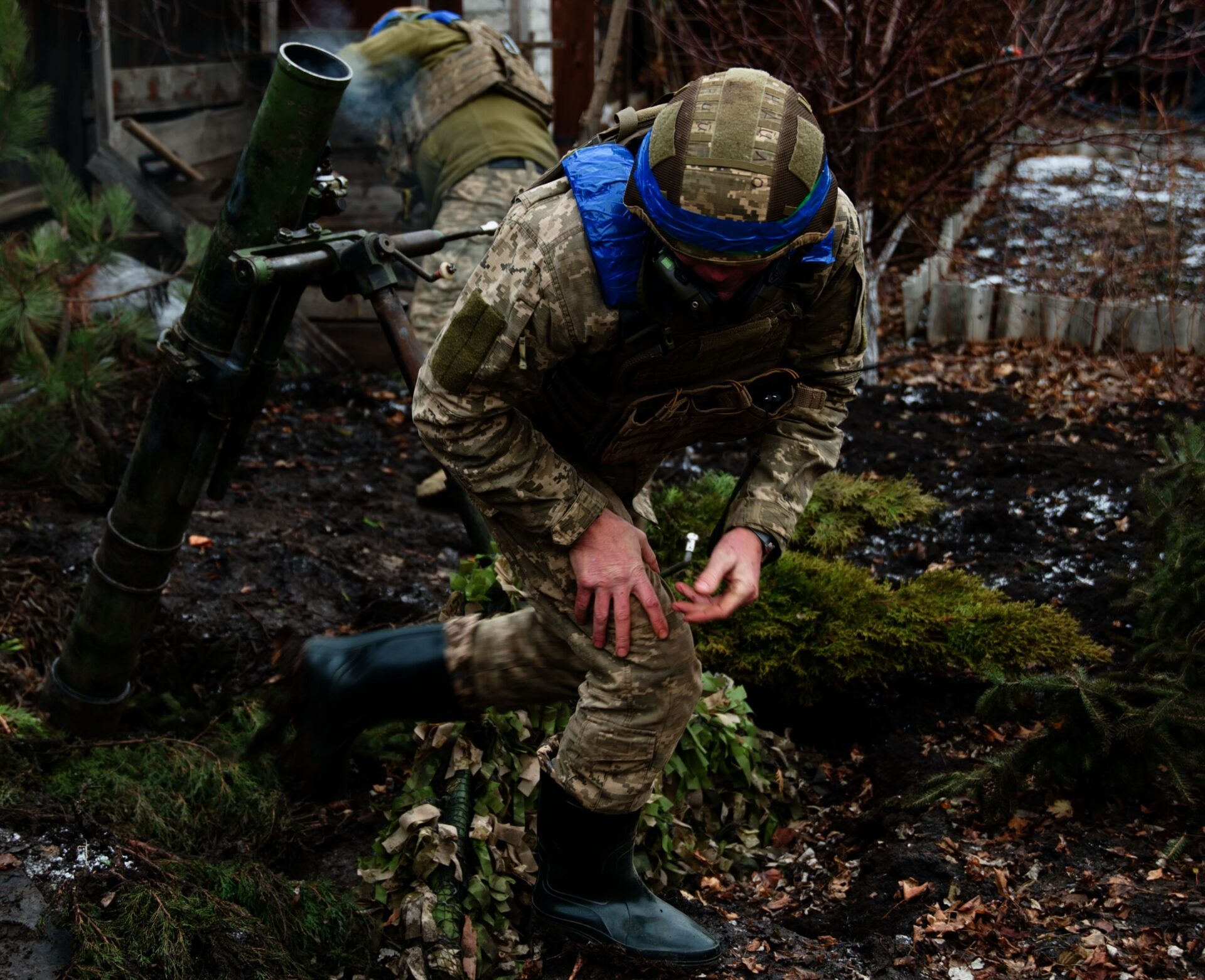
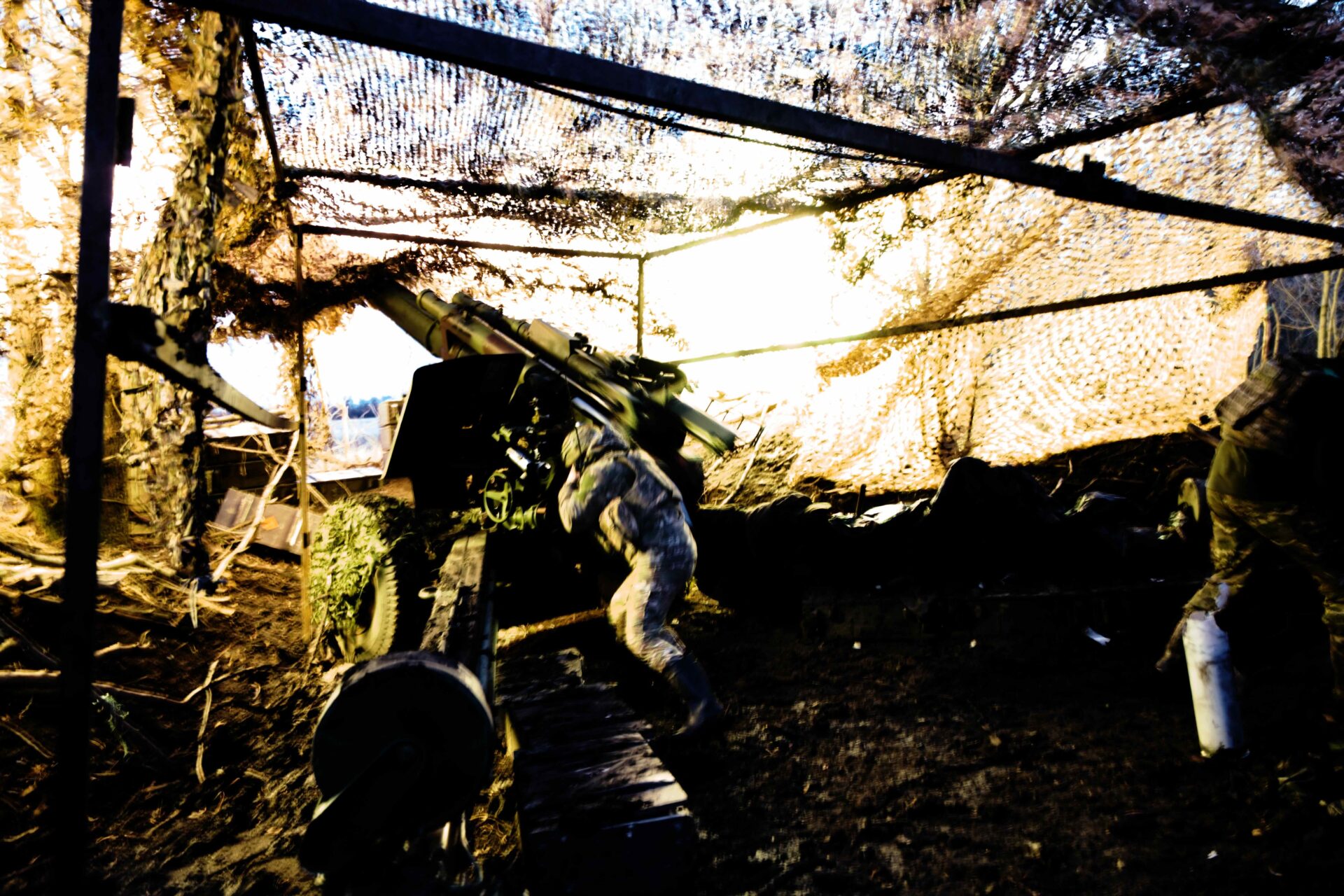
Pokrovsk front. We need to act quickly. Spend as little time as possible outside the shelter. Russian kamikaze drones bring death quickly, with reconnaissance drones it comes with a delay. Everything works like clockwork. Target coordinates are transmitted by radio from the fire control center. They reach the battery commander in a vegetable cellar converted into a dugout. Two soldiers quickly run to the mortar. It is a 120-millimeter mortar, made in Ukraine. A soldier hurries to the ammunition bunker, a white-painted tool shed. He is loading grenades. Meanwhile, two others are removing camouflage netting and branches to make the cannon invisible to Russian drones from the air.
The coordinates are set using a sighting device. Meanwhile, they take out a grenade. A soldier carefully inserts it into the machine gun’s barrel and hides behind a wooden box. Then the third of them detonates the grenade using a remote control. A powerful explosion is heard, and the barrel ejects a projectile in a cloud of fire. The game is repeated. New coordinates are transmitted by radio to make adjustments. Target coordinates are usually provided by drones or infantry in combat.
The trio fires three shots. Then the soldiers quickly disappear into an abandoned house. The residents of the neighboring village have long since scattered. But the abandoned houses are not quiet. Instead, the war rages on. Less than two kilometers away, Russian infantry launches an attack. Mortar shells are aimed at them. The targets are mostly Russian assault units.
Muffled artillery strikes are heard almost continuously. They are sharp and crackling when Ukrainians are firing nearby. Shots from the Russian side are muffled. A shell whistles over the position. The fall is too far away to disturb them. A few minutes later, the next order comes and a new target. And it all happens again. Every day, the cannon fires up to 40 shells into the sky. The commander sits in the twilight of the vegetable cellar thanks to a Starlink internet connection.
Rodion is 29 years old and commands three guns. A 125-millimeter cannon and two more Italian-made guns with 82-millimeter shells.
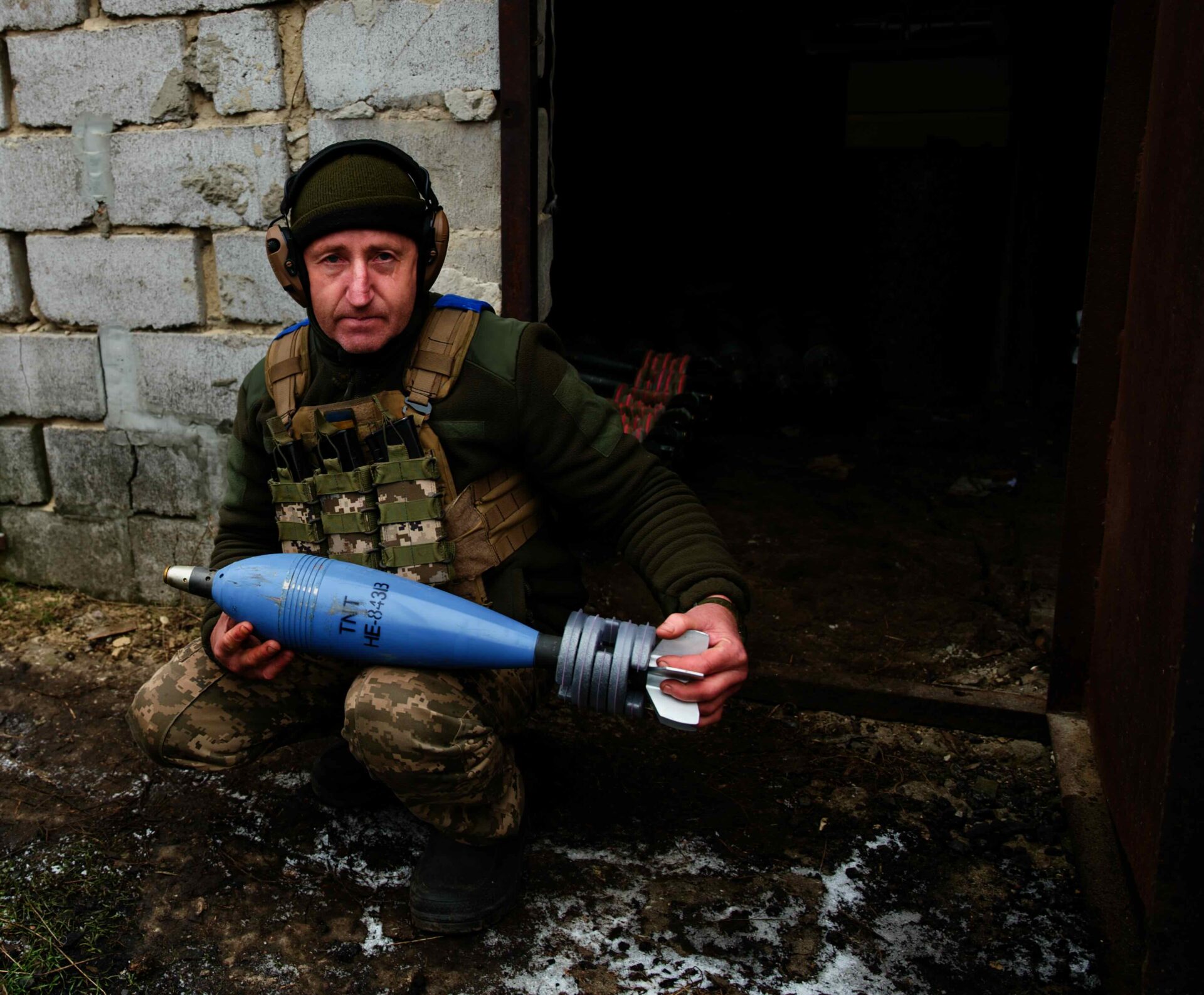
We do not use 82-millimeter shells at all. Their explosive power is too low. We cannot penetrate the roof under which Russian soldiers are hiding. They are useless for this battle, – he says.
A lot is at stake on the frontline near Pokrovsk. If the city falls, an important transportation hub will be in Russian hands. And a coal mine that is important for steel production. And steel, in turn, is what the war needs.
Rodion used to build houses as a construction worker in Poland and Germany. Now he watches with rage as Russian attacks destroy villages and towns. Pokrovsk is about to become the second Bakhmut, a city destroyed.
Will a frozen front mean the end of this madness? Rodion shakes his head.
Then the Russians could continue to rearm in peace. They have put their entire economy on a war footing. The big attack will take place in a few years. It will be aimed not only at Ukraine, – the 29-year-old is sure.
Numerous observers have also warned of this scenario. There is evidence that Russia is arming itself intensively and at a high rate. The new EU Commissioner for Defense, Andrius Kubilius, warns that Russia is producing tanks that are already in stock. He fears that Europe is not prepared to withstand a Russian attack.
For months, the Russian army has been brutally pushing its way to Pokrovsk, despite its losses and destruction. Now the invaders are just a few kilometers from the city. Observers believe that Pokrovsk will fall. Rodion and his comrades are firing from all guns to prevent this from happening. In recent weeks, Russian troops have stepped up their attacks even more.
This may well be a sign that they want to make up for lost time at any cost before a possible freeze on the front. They definitely want to take Pokrovsk. This opens the way for a further offensive on the Dnipro, – he explains.
The important industrial and financial metropolis is 165 kilometers away.
But we’re not there yet, we’re at war, – explains Rodion, who is disappointed with the West’s support, – Until now, we’ve always received just enough to keep us afloat. So we never really had a chance.
UA War Infographics‘ data is alarming for the defense. In November alone, Russian troops seized 702.1 square kilometers of Ukrainian territory. This is five times more than in all of 2023. In January 2024, for example, it was only 31.1 square kilometers.
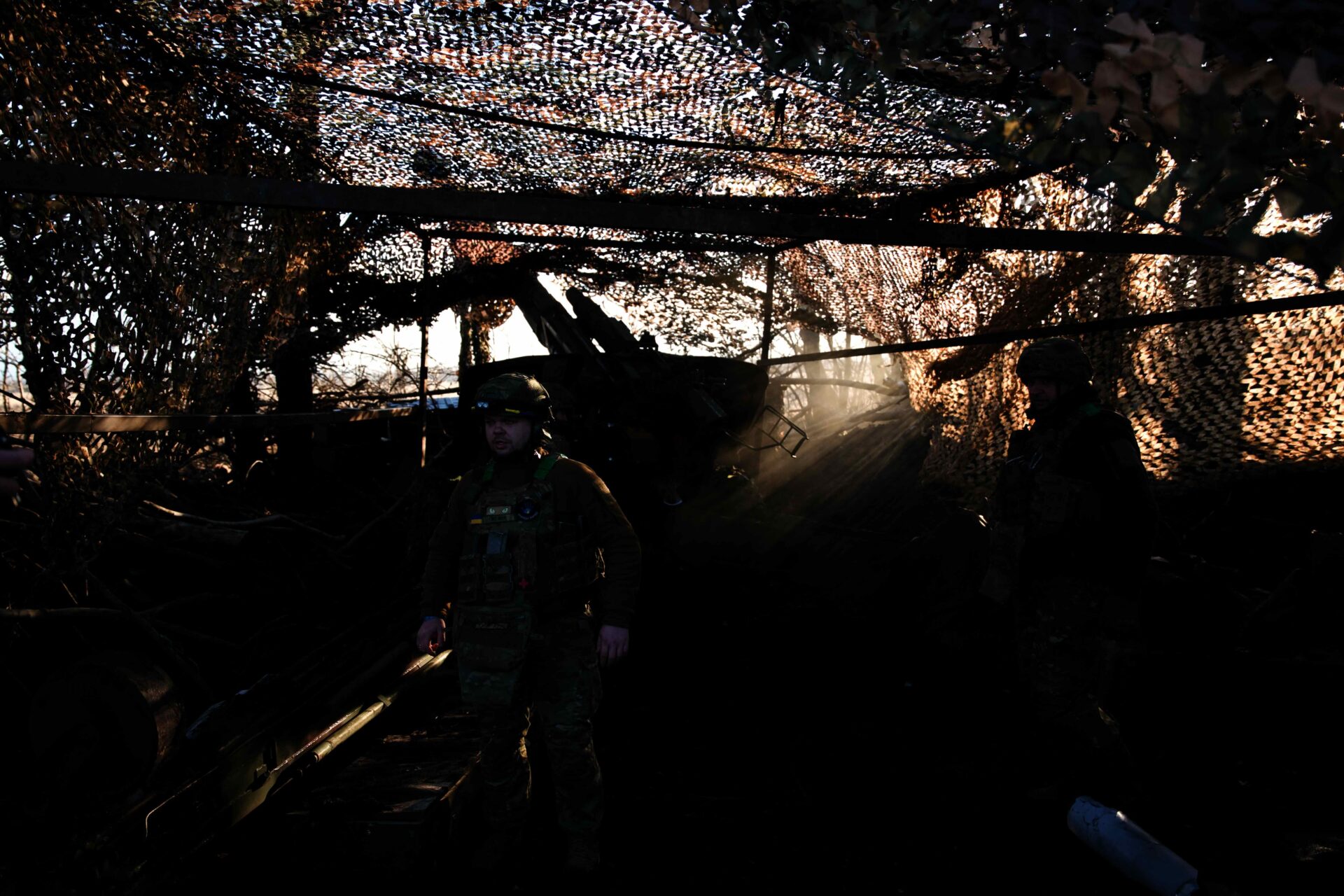
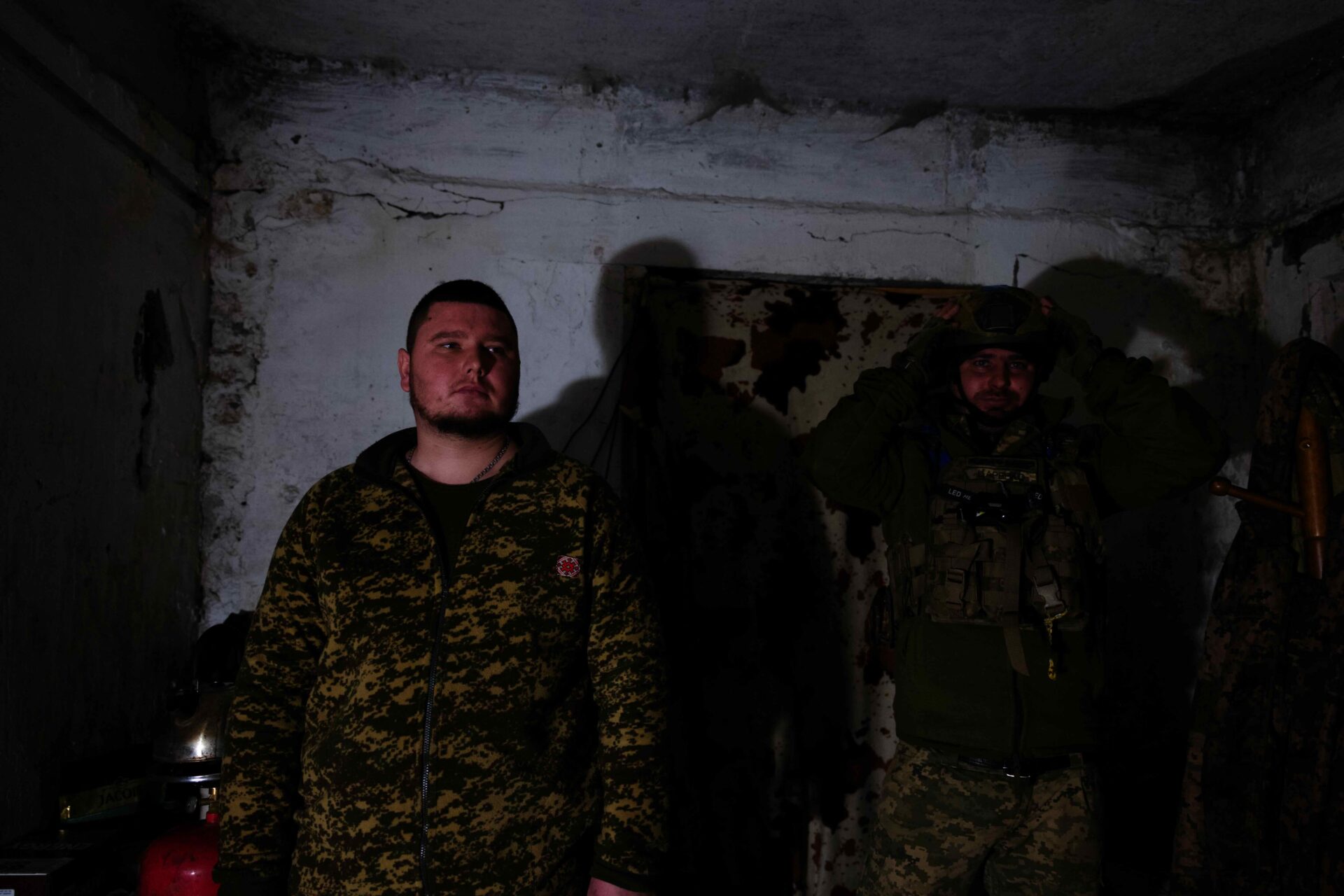
For Oleg, these are not just numbers. He is fighting on the Toretsk front. The destroyed city is nearby: a deserted field of ruins. The 30-year-old is fighting in a unit consisting of police officers. Each of them joined the military service voluntarily.
There were six of them in my unit, and one was killed, – the young man explains. – I did a lot of patrolling. When I went to serve, my wife threatened to divorce me, – the father of a four-year-old daughter says with a light laugh. Then he becomes serious. – I fought in Bakhmut as an infantryman. It was hard. The Russians were destroying the city piece by piece with artillery, – the fighter says.
He misses his family. He has a small clip from September on his smartphone. He returns home with a huge bouquet of flowers for the holiday. His little daughter rushes to him, the father kneels down so that the child can fall on his neck.
My wife took this, – the father says proudly.
By “freezing” the front line, he may be able to return to his family, or at least get more than just a two-week vacation every six months.
In 30% of cases, it sounds good, but in 70% of cases, I know it won’t do much good. It will just give the Russians time. Putin wants a great empire, – he is also convinced of that.
At one time, Russia, together with the United States and the United Kingdom, guaranteed the inviolability of Ukraine’s borders. In return, Ukraine handed over its entire nuclear arsenal to Russia in 1994 as part of the Budapest Memorandum. At the time, Ukraine was the third largest nuclear power in the world. In 2014, Russian troops occupied Crimea and moved the war to Donbas.
The majority of people in Ukraine are convinced that they cannot rely on Putin’s word. People are aware of what is happening in the territories occupied by Russia. Eyewitnesses and human rights organizations report systematic torture, thousands of missing persons, murders and arbitrariness. Anyone who refuses to accept a Russian passport in the occupied territories is threatened with losing their property next year. Access to healthcare and education facilities is already difficult.
Putin’s Russia advocates lawlessness and dictatorship in Ukraine. Contracts become invalid for the Russian dictator as soon as they cease to be profitable for him. Commentators in the Ukrainian media mostly agree with this.
The freezing of the front did not work between 2014 and 2022, – Oleg recalls.
But Trump’s demands are clear. As president of the United States, he wants to freeze the front line. A united Europe could compensate for the loss of American support with a strong show of force. Russia’s overall economic potential is less than that of California. But support in Europe, as well as in Germany, is eroding. People in Ukraine are well aware of this. The electoral successes of Alternative für Deutschland and Sarah Wagenknecht, as well as far-right parties close to Putin across Europe, are shocking news for a country suffering from war.
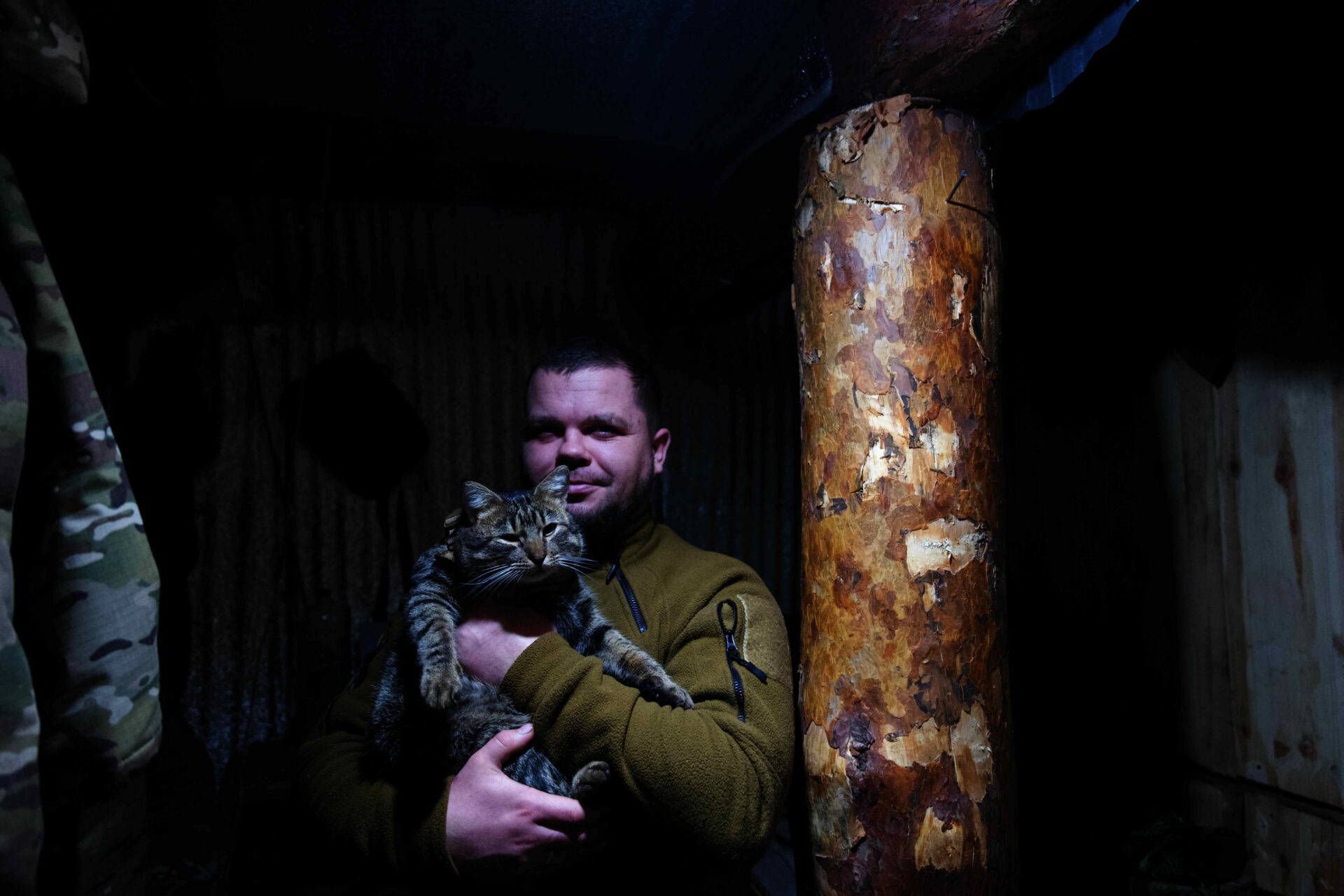
Oleg strokes his cat “Maron”’s fur in an earthen dugout.
He saved us from a mouse infestation in the bunker, – the fighter says. – Now we can only do one thing. Fight and hold on. It would be nice if we finally had at least enough ammunition.
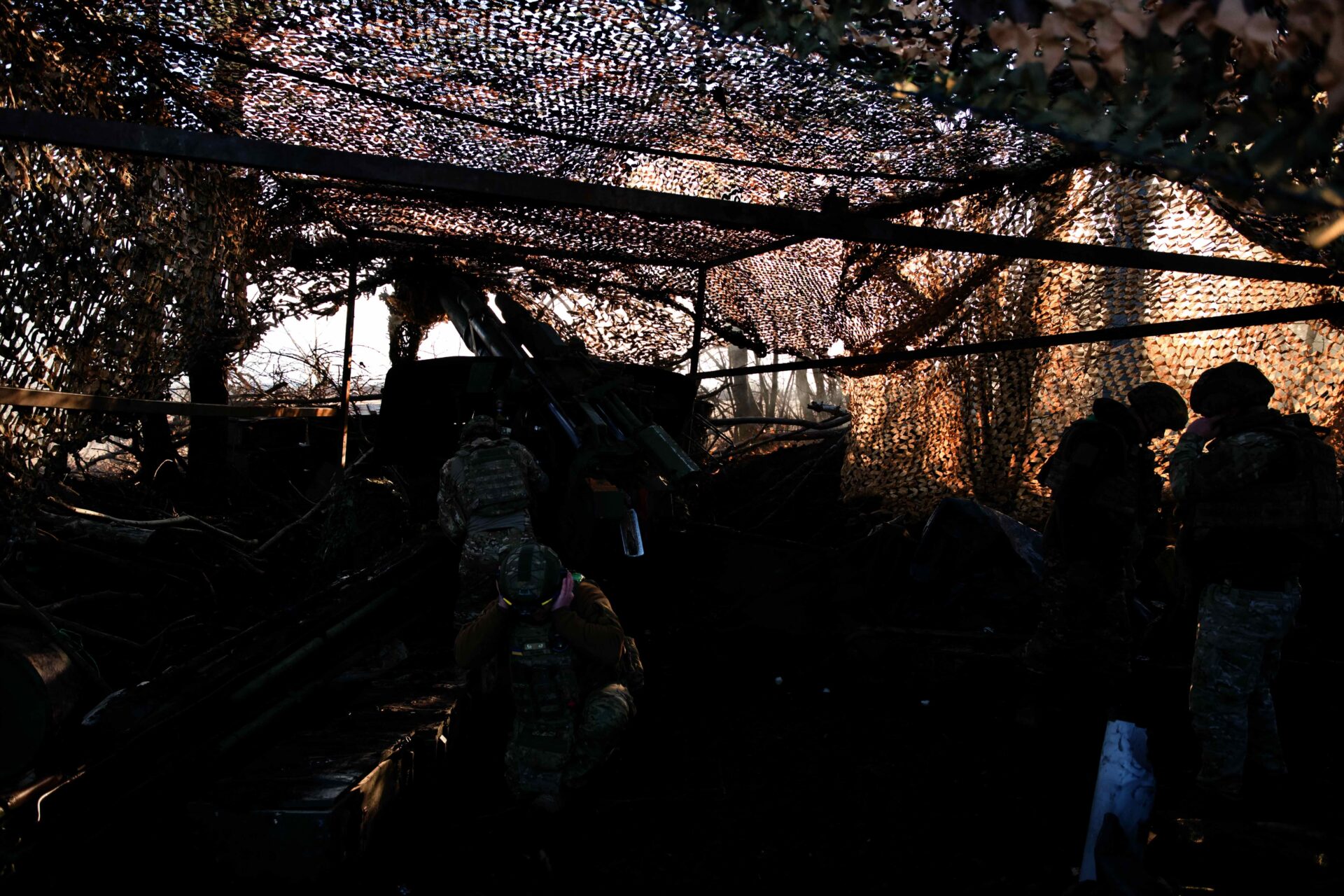
Then the order to perform the task with the coordinates comes over the radio. A few minutes later, the howitzer fires. Russian units start a new attack.
Till Mayer (text and photos)
Journalist Till Mayer has been documenting the war in eastern Ukraine since 2017. Since the beginning of the full-scale invasion in February 2022, he has been regularly reporting on the consequences of Russian aggression against Ukraine for our editorial team. He has won several awards for his photography and reporting. His collection of reports “Europe’s Front: The War in Ukraine” was recently published by ibidem.

